Don’t Die Twice

Recently I have been reflecting on a particular chapter in the last book Rabbi Lord Jonathan Sacks published just before his death. The book is titled Morality: Restoring the Common Good in Divided Times and the chapter that I have in mind is titled “Victimhood.”

Rabbi Sacks opens the chapter with a discussion of Yisrael Kristal, a Holocaust survivor who lived to be 113.

During the Holocaust, Yisrael’s wife and children were murdered. And, after years in ghettos and concentration camps, he weighed just 82 pounds.

We learn that Yisrael remained a religious Jew throughout his life. He married another survivor with whom he had children and they settled in Haifa and opened a business selling sweets and chocolates as he had done in Poland.

Rabbi Sacks goes on to compare Yisrael Kristal to Abraham insofar as Yisrael was able to integrate into his life completely the transformative idea: “To survive tragedy and a trauma, first build the future. Only then, remember the past.”

“There are real victims,” Rabbi Sacks affirms. “And they deserve our empathy, sympathy, and compassion. But there is a difference between being a victim and defining yourself as one. The first is about what happened to you. The second is about how you define who and what you are. The most powerful lesson I learned from these people I have come to know, people who are victims by any measure, is that, with colossal willpower, they refused to define themselves as such.”

Continue reading

An Exemplary Eulogy

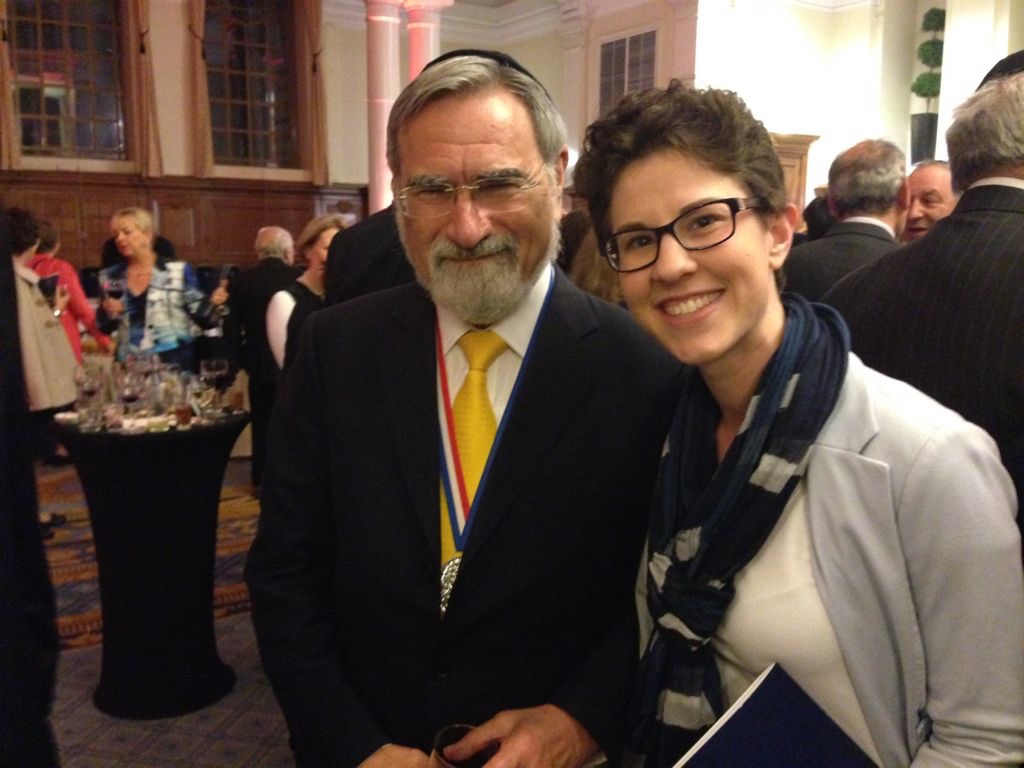
One of the most amazing speeches I ever had the privilege of hearing in person was delivered by Gila Sacks, the daughter of Rabbi Lord Jonathan Sacks. Gila delivered this speech to honour her father on the occasion of him being awarded the Templeton Prize in 2016.

A few years after that event, just this past fall, Rabbi Sacks passed away. When I watched the eulogy (below) that Gila delivered, many of the same qualities I had so admired about her Templeton speech shone through this one as well:

In this eulogy, Gila speaks to her father’s conviction that things can change and people can be responsible for changing them as well as to his character in forging his own children to become who they were created to be.

These are not mere words of sentimentality. What makes the eulogy so compelling is how Gila weaves the lessons from her father together with anecdotes from her ordinary, daily life along with what she learns and grapples with in the Bible.

I was struck by how well this eulogy fulfills the Jewish custom of eulogizing and lament, which has its basis in when Abraham eulogized and mourned his wife Sarah.

According to Jewish tradition, as discussed in this article, “When composing a eulogy, the goal is to praise the deceased, evoke an emotional reaction from the listeners, inspire listeners to improve their own lives by finding the qualities mentioned within themselves, and to consider their own legacies.”

Gila’s eulogy of her father is exemplary of this in every respect. She honoured her father well by reminding her listeners of their own capacity to build the world from love and responsibility.