In his splendid essay “On the Meaning of Sunday,” Joseph Ratzinger wrote about how the early Christians would say, “Without the day of the Lord, we cannot live.”
Take a look at how he describes this existential priority and what it means in the lives of those who hold to it:
“Without the day of the Lord, we cannot live.” This is not a labored obedience to an ecclesiastical prescription considered as some external precept, but is instead the expression of an interior duty and, at the same time, of a personal decision. It refers to that which has become the supporting nucleus of one’s existence, of one’s entire being, and it documents what has become so important as to need to be fulfilled even in the case of danger of death, imparting as it does a real assurance and internal freedom. To those who so expressed themselves, it would have seemed manifestly absurd to guarantee survival and external tranquility for themselves at the price of the renunciation of this vital ground. […] For them it was not a question of a choice between one precept and another, but rather of a choice between all that gave meaning and consistency to life and a life devoid of meaning.
I often think about this passage when reflecting on contemporary Christians who risk their lives to go to church in countries where there is severe persecution and repression.
There is indeed something luminous in the witness of those who would risk their lives to affirm the values that make life altogether precious in the first place.
It is a profound and potentially orienting question to contemplate: What is it in our lives without which our survival has no value?
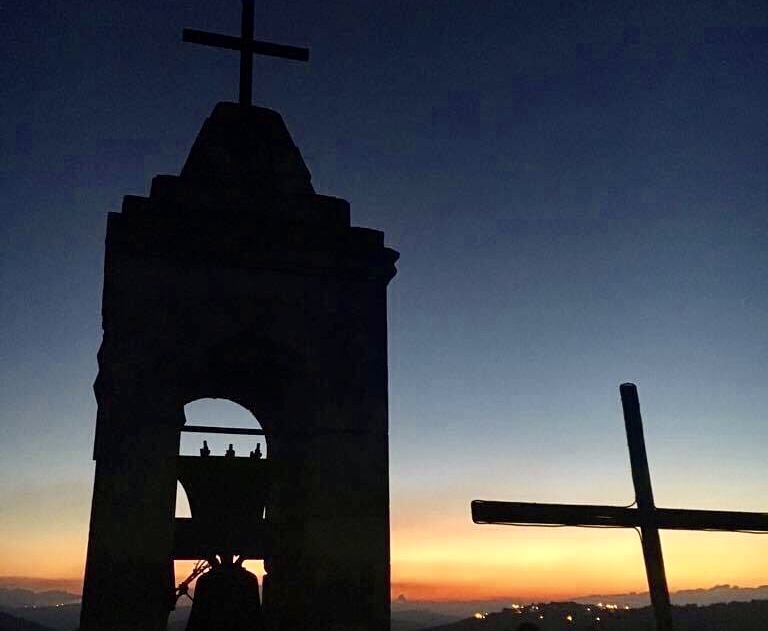
Photo: Maronite Church in Kfar Baram in northern Israel in summer 2017
 DYING TO MEET YOU