In this clip, Rabbi YY Jacobson tells a powerful story about what saved a certain man when he was forced to undergo a death march as a child after his father had just been murdered.
Here’s that story:

In this clip, Rabbi YY Jacobson tells a powerful story about what saved a certain man when he was forced to undergo a death march as a child after his father had just been murdered.
Here’s that story:
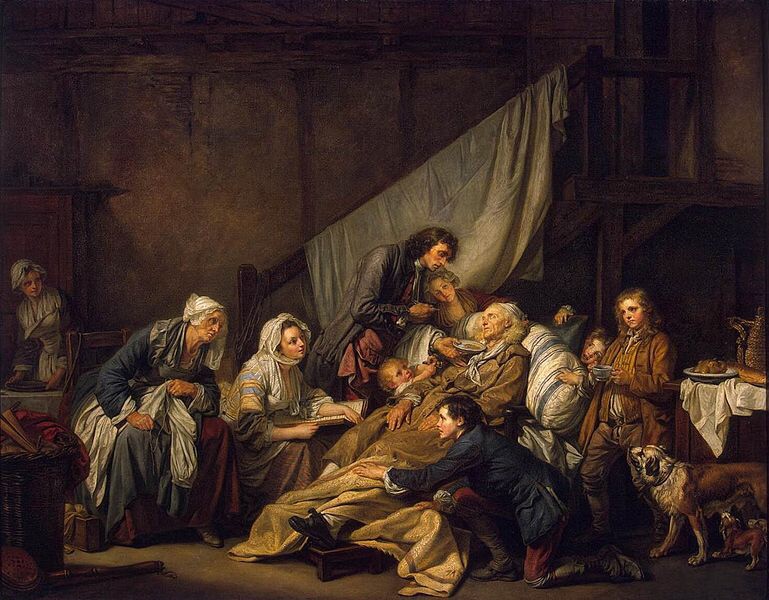
Today I came across this striking passage in Edmund Burke’s Reflections on the Revolution in France:
To avoid therefore the evils of inconstancy and versatility, ten thousand times worse than those of obstinacy and the blindest prejudice, we have consecrated the state, that no man should approach to look into its defects or corruptions but with due caution; that he should never dream of beginning its reformation by its subversion; that he should approach to the faults of the state as to the wounds of a father, with pious awe and trembling solicitude. By this wise prejudice we are taught to look with horror on those children of their country, who are prompt rashly to hack that aged parent in pieces, and put him into the kettle of magicians, in hopes that by their poisonous weeds, and wild incantations, they may regenerate the paternal constitution, and renovate their father’s life.
There is a relationship between filial piety and patriotism. The reverence we have for the traditions of our political communities is analogous to the reverence we have for our parents. Are we able to receive from our parents and from our tradition?
To what extent is our political culture reflective of “hack[ing] that aged parent”?
What difference could restoring filial piety have on renewing authentic patriotism?
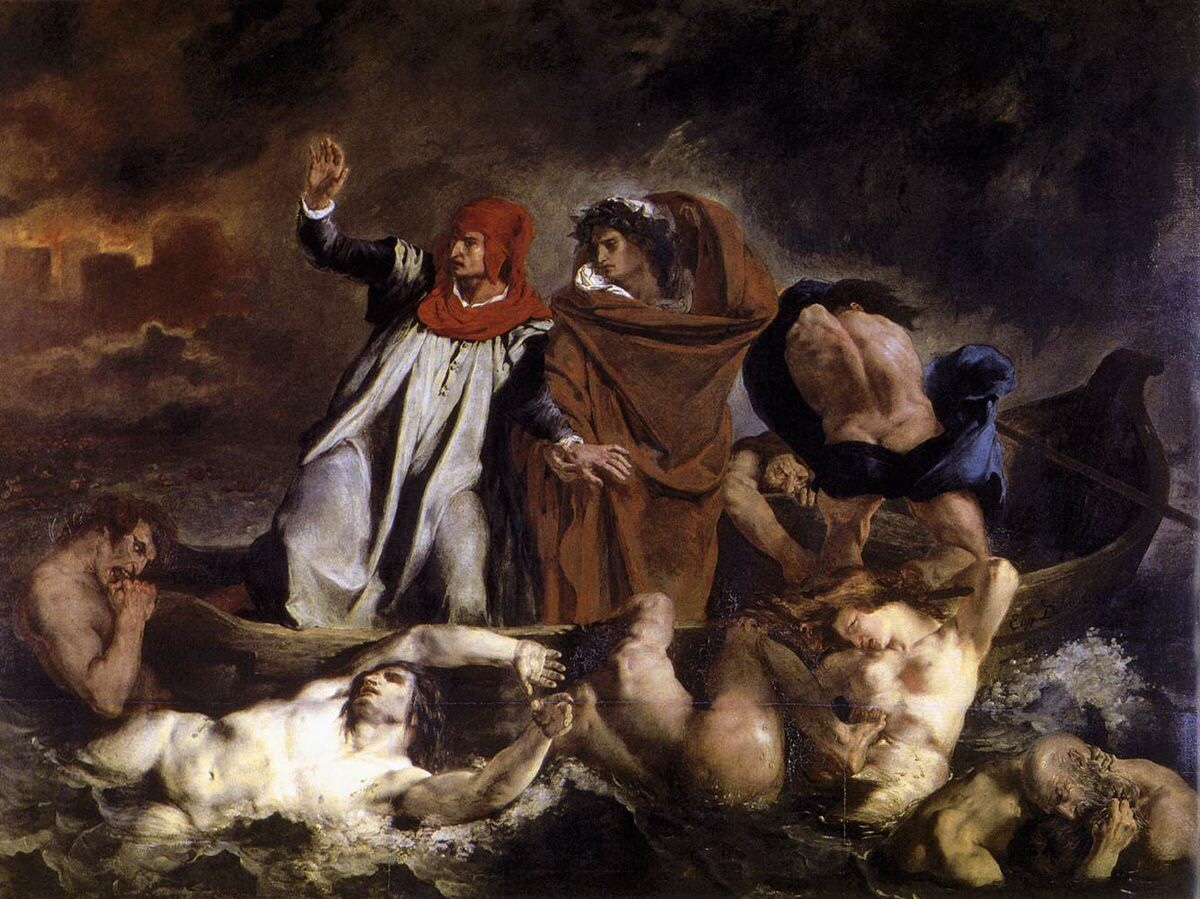
Fr. Mark Goring, CC of the parish I attended in Ottawa likes to preach often on the first verse of the second chapter of the Book of Sirach which says, “My child, if you aspire to serve the Lord, prepare yourself for an ordeal.”
It is a startling sentence when we stop to think about it because most of the time we go through life trying to prepare ourselves for loving relationships, meaningful successes, a reasonable amount of prosperity, and an abundance of opportunities.
What, if anything, are we doing to prepare ourselves for an ordeal, for tests, for trials?
What young person, on being asked what he or she is doing or hopes to do, will respond that they are preparing themselves to suffer hardships honourably?
And yet, the verse above speaks about “preparing yourself” – not even being prepared simply by God or by circumstances – but intentionally and resolutely preparing yourself for the tests and trials of life that are sure to come.
What difference would it make if we set ourselves up not only for success but for ordeals?
And, what sort of education and training constitute such preparation?
I just came upon this evocative sermon on death by John Henry Newman called “The Lapse of Time.”
Such is death considered in its inevitable necessity, and its unspeakable importance—nor can we ensure to ourselves any certain interval before its coming. The time may be long; but it may also be short. It is plain, a man may die any day; all we can say is, that it is unlikely that he will die. But of this, at least, we are certain, that, come it sooner or later, death is continually on the move towards us. We are ever nearer and nearer to it. Every morning we rise we are nearer that grave in which there is no work, nor device, than we were. We are now nearer the grave, than when we entered this Church. Thus life is ever crumbling away under us. What should we say to a man, who was placed on some precipitous ground, which was ever crumbling under his feet, and affording less and less secure footing, yet was careless about it? Or what should we say to one who suffered some precious liquor to run from its receptacle into the thoroughfare of men, without a thought to stop it? who carelessly looked on and saw the waste of it, becoming greater and greater every minute? But what treasure can equal time? It is the seed of eternity: yet we suffer ourselves to go on, year after year, hardly using it at all in God’s service, or thinking it enough to give Him at most a tithe or a seventh of it
It is rare to think with this level of attention about the brevity of life.
However, some people do.
A couple years ago, I went to meet someone at his office where I noticed a poster with many small dots on it in rows and columns.
When I asked this man about it, he explained that it is a sort of life calendar depicting how many weeks he has to live if he lives the average lifespan of someone in his demographic.
He showed me the point in the poster at which he is now and explained that having this reminder in his office of the shortness of life spurs him on to tackle his tasks with resolve, gratitude, urgency, and enthusiasm.
To me, this memento mori exemplified the conscientious of which Newman speaks.
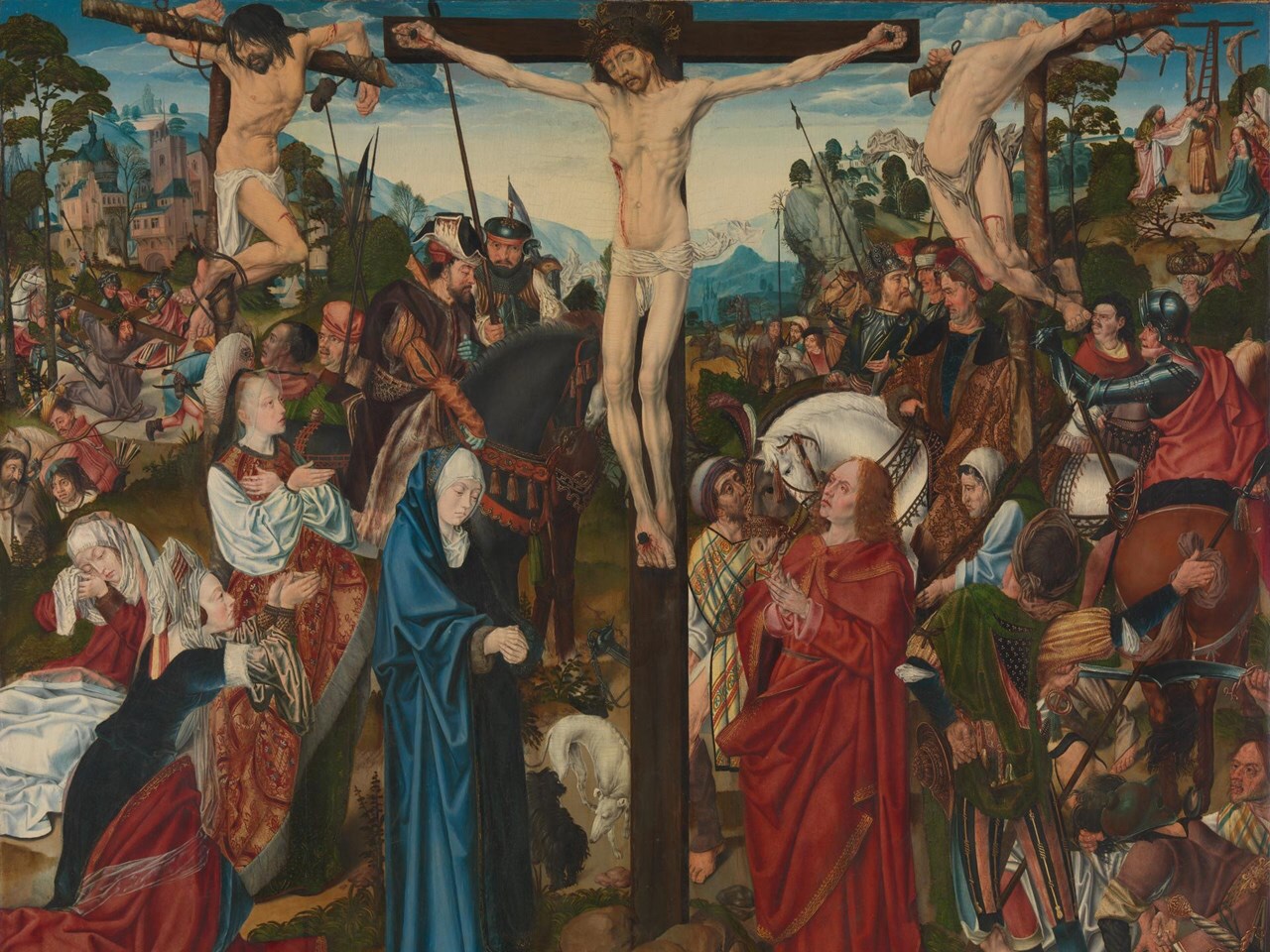
I recall reading in a biography of Cecily Saunders, the founder of the modern hospice and palliative care movement, that she had been struck by how many women were pioneering and influential in the care of the dying throughout the centuries.
This is something that I contemplate whenever I look at religious art depicting the women at the scene of the Crucifixion.
In his letter on the dignity and vocation of women, John Paul II wrote:
Indeed, the Gospels not only describe what that woman did at Bethany in the house of Simon the Leper; they also highlight the fact that women were in the forefront at the foot of the Cross, at the decisive moment in Jesus of Nazareth’s whole messianic mission. John was the only Apostle who remained faithful, but there were many faithful women. Not only the Mother of Christ and “his mother’s sister, Mary the wife of Clopas and Mary Magdalene” (Jn 19:25) were present, but “there were also many women there, looking on from afar, who had followed Jesus from Galilee, ministering to him” (Mt 27: 55). As we see, in this most arduous test of faith and fidelity the women proved stronger than the Apostles. In this moment of danger, those who love much succeed in overcoming their fear. Before this there were the women on the Via Dolorosa, “who bewailed and lamented him” (Lk 23:27). Earlier still, there was Pilate’s wife, who had warned her husband: “Have nothing to do with that righteous man, for I have suffered much over him today in a dream” (Mt 27:19).
It is interesting to consider the impact that art can have on the imagination and also on forming a person’s sensitivity to his or her role to play within a society.
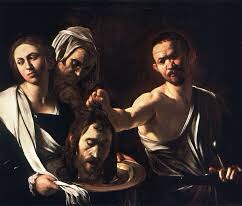
On this feast day of St. John the Baptist, this is a quick post to direct you over to this History.com article, “Where is the Head of Saint John the Baptist?“
In it, Sarah Pruitt tells us:
According to different traditions, no fewer than four locations lay claim to the murdered saint’s head. In Damascus, Syria, the Umayyad Mosque was built in the eighth century A.D. on the site of a Christian church named for John the Baptist; his head is said to be buried in a shrine there. A skull identified as the head of John the Baptist is on display at the Church of San Silvestro in Capite in Rome, built to house artifacts from the Roman catacombs. The 13th-century cathedral in Amiens, France was built specifically to house the head of John the Baptist, which a Crusader supposedly brought back from Constantinople in 1206. And in Munich, Germany, the Residenz Museum includes John’s skull among a number of relics collected by Duke Wilhelm V of Bavaria with the Pope’s permission in the mid-16th century.
Such stories show how martyrdom can multiply a saint’s legacy and that, far from destroying a person – even if the relics disappear – their presence can extend throughout the world.
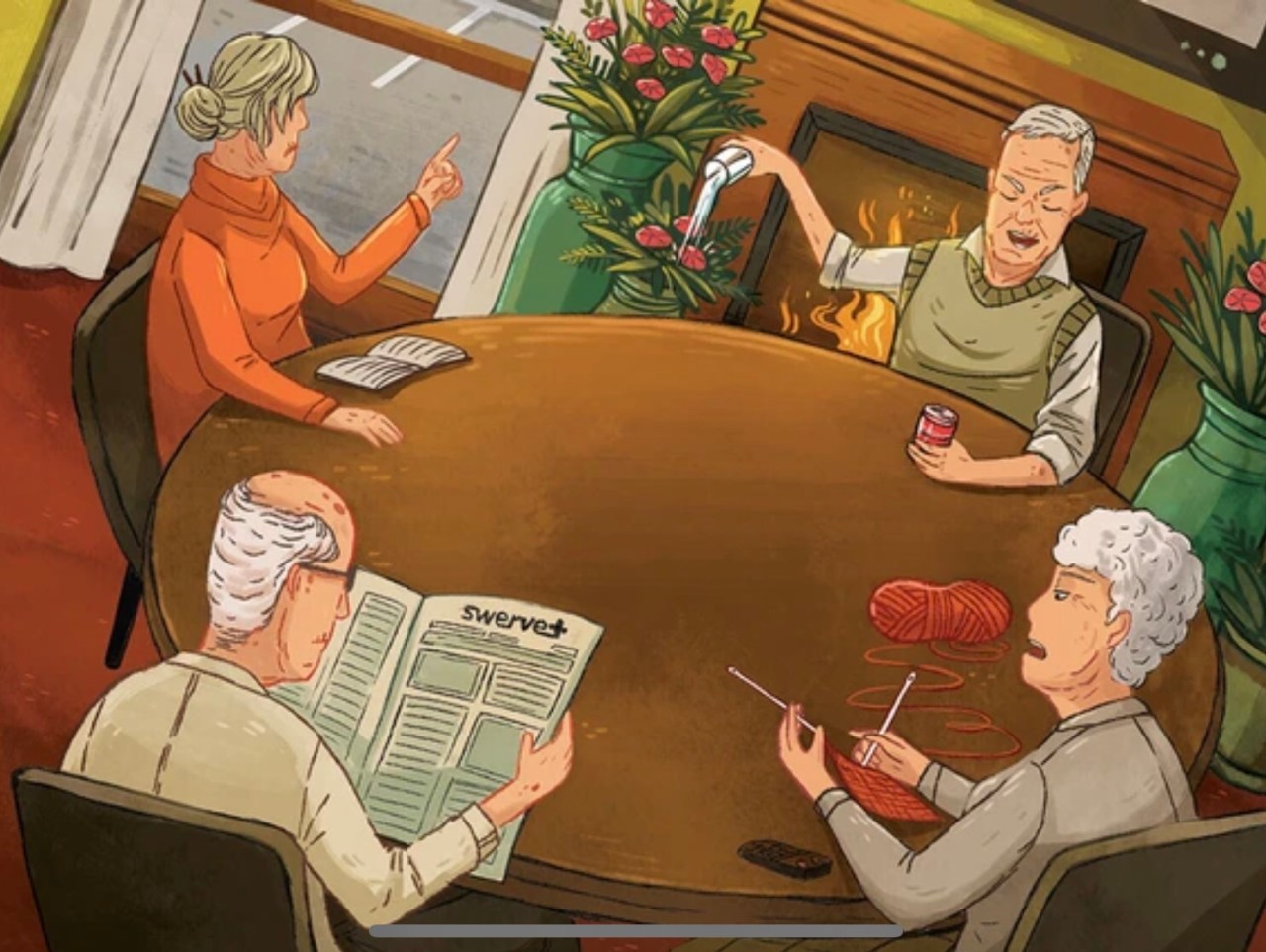
Even though it was published five years ago, I still remember this news article in my local paper in which an 89-year-old man describes his life at a retirement home.
It begins with this section on small talk:
Unlike soldiers, prisoners or students, we at the lodge are here voluntarily and with no objective other than to live. We don’t have a lot in common other than age (and means). However we are encrusted with 70 or 80 years of beliefs, traditions, habits, customs, opinions and prejudices. We are not about to shed any of them, so the concept of community is rather shadowy.
The common topics of conversation are the weather and the food, and since they both change every day, most of us never lack for conversation. For those contemplating a move to a lodge such as ours, it is wise to polish up their encrustations to make them as smooth and inoffensive as possible.
Thus we engage in the never-ending table talk with the minimum of disagreement.
Now I understand that the piece is intended to be a bit humorous in a certain way, but I haven’t been able to forget the grim picture painted in those short paragraphs.
By contrast, consider the aspirational vision that Rabbi Abraham Joshua Heschel gives us in his piece, “To Grow in Wisdom”:
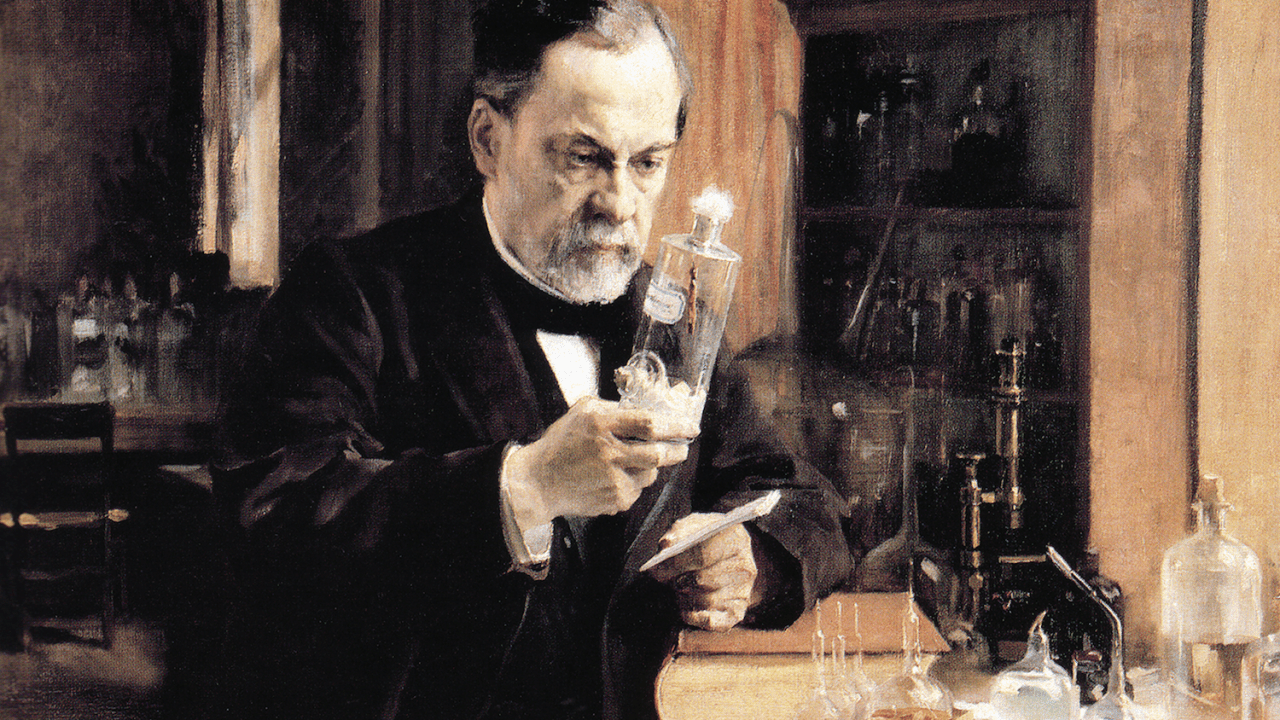
This is the neat story of how Alfred Nobel was inspired to establish the Nobel Prize after becoming unsatisfied with the foretaste of what his legacy would be when his brother’s death was accidentally reported to be his own.

This is a short post to direct you over to the excellent, thoughtful piece by Joshua Briscoe published in the summer edition of The New Atlantis titled, “Dying, But Not Alone.”
Here are two of my favourite paragraphs:
A patient’s choice to end her life is not “defined” by her, if by that we mean that it is a choice that is just about herself. Rather, it is a declaration about what kind of life is worth living. It is thus also a statement about other people’s lives, a statement to others about when their own lives are worth living or not.
[…]
This is why choices about how we die are not just about us; they are also about how others think about us and are involved in our care. When someone says, “I would never want to live like that,” “She’s just a shell of who she once was,” or “This death is undignified,” the person is expressing our culture’s prejudices about aging and dying, and in doing so is further reinforcing them and thus shaping how others view themselves.
A lot has been written about the lonely and solitary dimensions of death but not enough attention is paid in our time to its social dimensions. Briscoe highlights this in his piece and makes the case that our cultural attitudes toward death concern and implicate us long before the hour of our death.
Be sure to take a look at his piece, here.
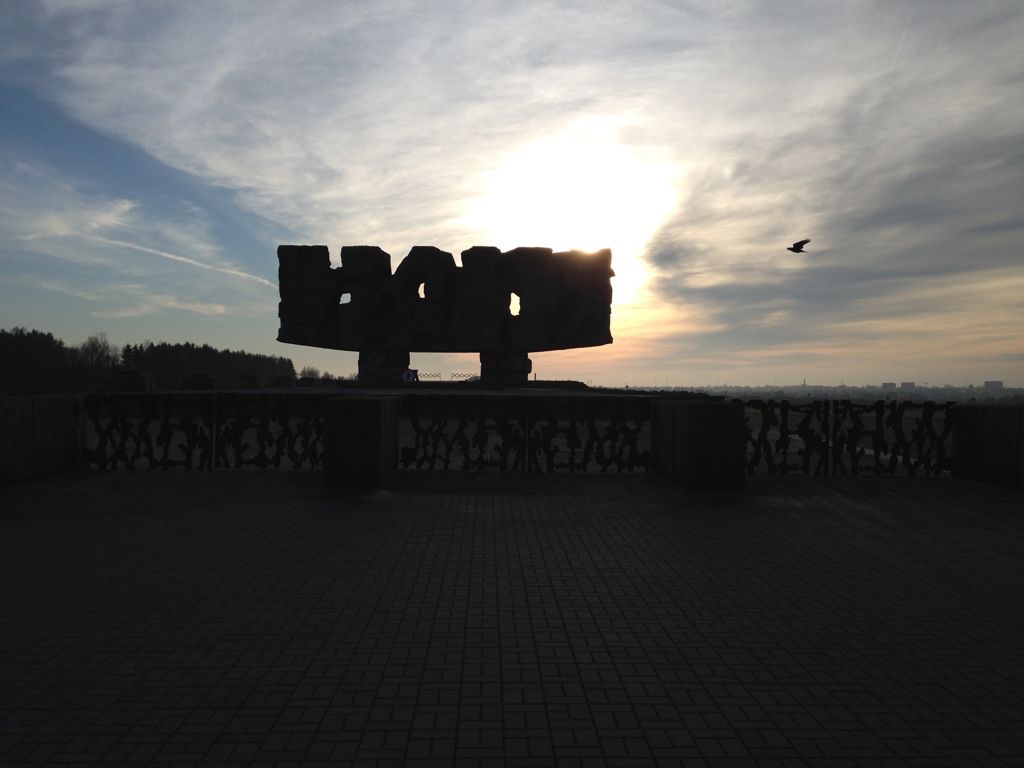
During my studies in Poland, I learned about a satellite campus of the Catholic University directly across the street from the former Nazi concentration camp, Majdanek.
One of my roommates was studying journalism there and I asked her what it is like to go to school across from the former camp.
She admitted that she no longer thinks about it every time she goes to class. But, she recalled, “One Friday, a professor gave us an assignment just when we all thought we would have a free weekend. Naturally, we started to complain a bit. Then he told us to think about what had happened across the street and take some perspective before we grumble about an assignment, and we all fell silent.”
 DYING TO MEET YOU