I Asked My Grandfather What He Hoped I Would Do in Life

Throughout Pope Francis’ pontificate, he has been emphasizing the value of encounter between the young and the old. One of my favourite quotations ever of his is this: “We, the elderly, can remind young ambitious people that a life without love is arid. We can say to young people who are afraid that anxiety about the future can be beaten. We can teach young people too in love with themselves that there is more joy in giving than in receiving. The words of grandparents have something special for young people. And they know it.”

I think the reason I appreciate this quotation so much is because these are indeed the very things my grandfather taught me and, equally, the very things I most needed to learn from him.

My grandfather was deaf in his 80s and 90s, but his mind remained sharp until his death. I wrote to him A LOT and was the scribe at family dinners, usually transcribing the flow of the entire conversation for him.

One day, several years ago, I decided to ask my grandfather what he hoped I would do in my future, what he thought I would be.

The answer he gave me in this 1-minute clip is one of my most precious memories.

Indeed those words were special, and I knew so right away.

Jordan Peterson challenges us to have strength at funerals

This evening I finished reading Jordan Peterson’s latest book, Beyond Order: 12 More Rules for Life.

In the last chapter, Rule XII: Be grateful in spite of your suffering, Peterson mentions that he has repeatedly suggested to his various audiences “that strength at the funeral of someone dear and close is a worthy goal” and he notes that “people have indicated to me that they took heart in desperate times as a consequence.”

After a worldwide book tour and many other public appearances, Peterson has had the opportunity to test and play with his ideas with many audiences. And it is interesting to read his thoughtful reflections based on his careful observation of the reactions of persons in the audience.

Earlier in the book, he mentions, as he has said elsewhere, that he sees people’s faces light up whenever he speaks about responsibility. Peterson is keenly aware that people have been raised with a greater emphasis on rights and the corresponding sense of entitlement that ensues with this focus. Yet, a sense of responsibility is what ennobles and fills persons with a sense of their proper dignity and capacity.

Accordingly, this challenge to have strength at funerals is an extension of his usual exhortation to responsibility.

He writes:

Continue reading

#IamWithYouAlways

Pope Francis has initiated a World Day for Grandparents and the Elderly which was held this year on Sunday, July 25th with the theme, “I am with you always” (Mt 28:20).

Speaking about the day, His Eminence Cardinal Kevin Farrell said, “The World Day for Grandparents and the Elderly is a celebration. We really needed it: after such a difficult year we truly need to celebrate, grandparents and grandchildren, young and old. ‘We should celebrate and rejoice’ says the Father in the parable. A new page opens after dramatic months of difficulty. Pope Francia invites us to take a step further, he speaks to us of tenderness. Tenderness towards the elderly is needed because, as the Holy Father recalls in the message we present to you today, the Virus ‘has been much harsher with them’. For this reason, the Pope hopes that an angel will visit, and will come down to console them in their solitude, and he imagines that this angel looks like a young person who visits an elderly person.”

Dr. Vittorio Scelzo added, “In these days we will launch a social campaign and invite everyone – especially the younger people – to tell about the visits and initiatives that will develop using the hashtag #IamWithYouAlways.”

Below are some of the kinds of tweets I found when searching this hashtag. It is wonderful to see this civilizing initiative of valuing the elderly more profoundly.

Continue reading

Suffering is a school in humility

A friend of mine just sent me this article of his, “Cancer is back, so I have a request …

In it, Charles Lewis discusses his ambivalence about writing and speaking publicly about his illness.

Of course, in reading a column about it, his decision is made clear and obvious.

The first reason he gives for being public about it is because he hopes that others will pray for him.

A second reason he discerns is that he does not want to go through the burden alone or for he and his wife to shoulder it privately.

A third reason, which I found particularly interesting comes up when Lewis concludes, “Besides, why hide it? Would not that be a form of pride?”

Continue reading

The little deaths of goodbyes

I am getting ready to leave Canada’s capital city of Ottawa where I have lived and worked for the past four years.

As I prepare to leave, there are many farewells with friends. More subtle, however, is the occasional realization of having attended my last mass in a certain church, of having had my last coffee at a certain cafe, and of having brunched for the last time at a certain favourite restaurant.

Yes, I could be back here one day. But for now, I am saying goodbye and it’s uncertain whether or not I will ever be back to these specific people and places again. A lot of change happens year to year and the people who adorned your life in one season may not be there in the next.

This, I think, is one of the challenges of uprooting oneself or even of being uprooted due to some necessity.

But there is also something beautiful about it because, as I prepare to leave, my heart fills with gratitude and a sense of the preciousness of all of these particular encounters.

If there were not a last time for certain experiences and visits, there would not be the same sense of their value.

Perhaps this is partly what is meant by Augustine’s meditation on the Psalms: “He begins to leave who begins to love.”

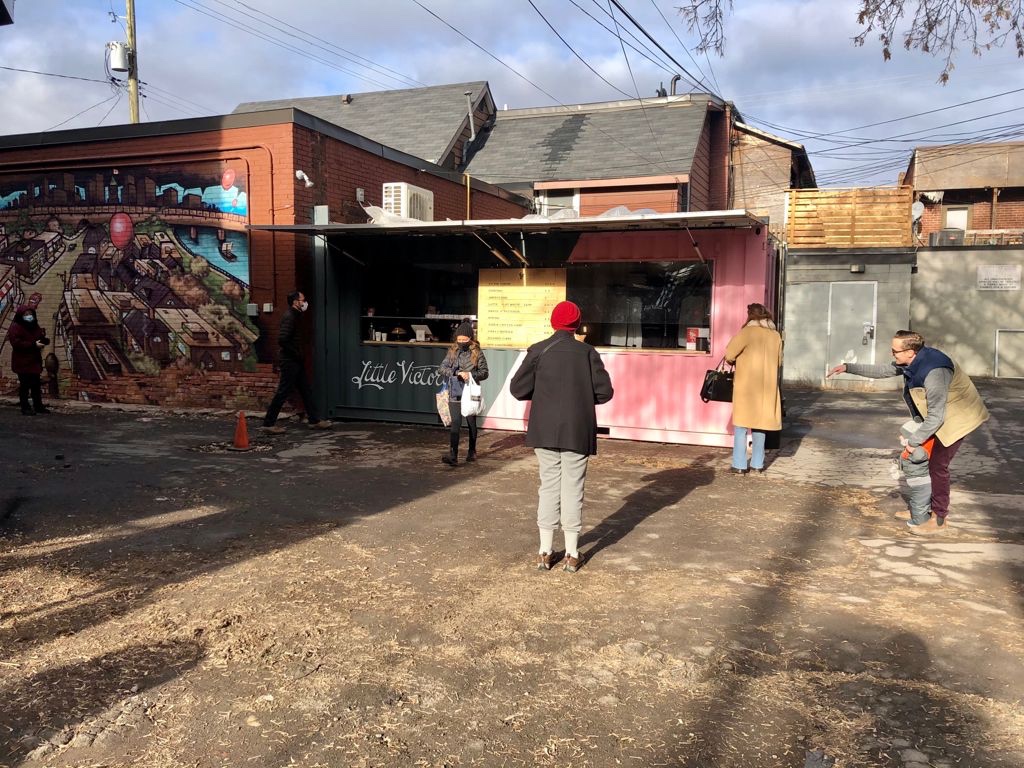
Photo: The Shipping Container Coffee Shop Little Victories on Bank Street


The loss of a whole world

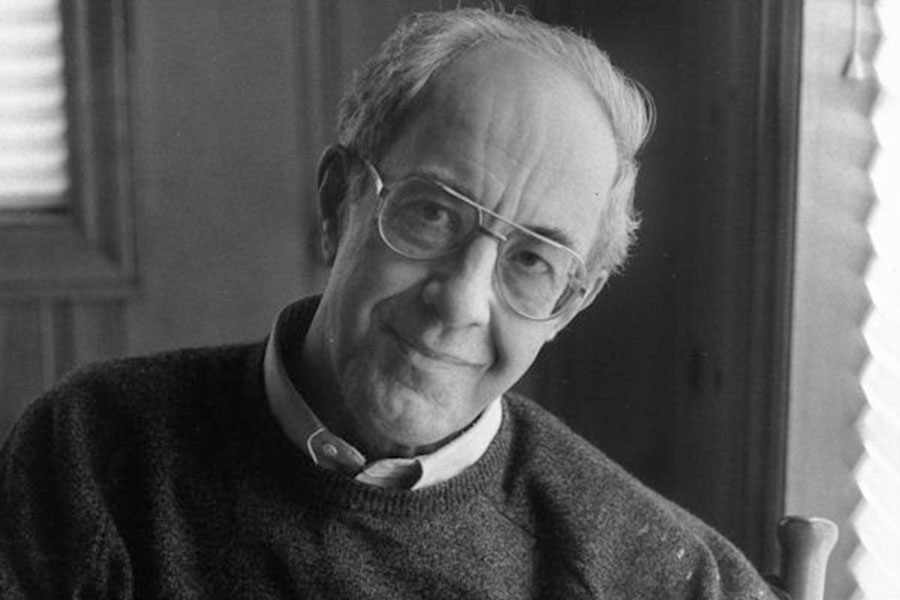
In a collection of letters by Henri Nouwen, I came upon this one that he wrote following the death of his mother:

OCTOBER 25, 1978

Dear Jim,

A few days ago I returned from Holland, where I buried my mother. Only five weeks ago she was with me in New Haven. She returned four days afterwards with my Father after the internist had discovered a tumor which caused the jaundice. Two weeks later she was operated on, a week after that she died. I am still in a daze. Everything seems different to me and I am slowly rediscovering the world which she loved so much. She has been so much part of my life that I have to do some real relearning. I am spending a still week at a retreat center trying to let my mother’s death reform me and lead me to new fields. It is all very intimate and very deep, very sad and very joyful, very beautiful and very painful. I am trying to write a little bit about these last few weeks, but I am still too close to all that has happened to do it well and with the necessary peace of mind. But I keep trying. It seems at this moment my way of letting her spirit come to me. I am still somewhere between Easter and Pentecost not knowing what really has happened. Keep me in your prayers and pray for her. Nobody has ever been as close to me as she was and never did I lose anyone whom I loved so deeply. Somewhere life needs to be rediscovered. But I am sure that her death will mean many new births for me.

Best wishes,
Love,
Henri

Continue reading

Exile as a Living Death

A friend of mine recently shared with me about how the Roman poet Ovid described exile as a living death.

This friend has also written a splendid essay reflecting on her own experience of ostracization due to cancel culture in the light of the broader tradition of our civilization.

In it, she writes:

Yet, while I don’t mean to downplay the pain of the experience, this may also be the greatest blessing of exile: it is a social murder, a death within life, which forces us into confrontation with our own finitude. If the goal of philosophy is to learn how to die, then there is no better way to practice it. Stripped of all illusions and pretense, the petty dust of life can sometimes give way to a lucid clarity. In exile, we are made to remember our true homes, while we still have time make ourselves worthy of returning there.

This is one of the best pieces I have read on cancel culture and is an excellent example of empirical and existential political theory.

Go check out Caylan Ford’s piece “They Can’t Cancel Your Soul” in the American Mind by clicking here.

Painting: “Dante in Exile” by Domenico Peterlini

Moving into grief instead of moving on from it

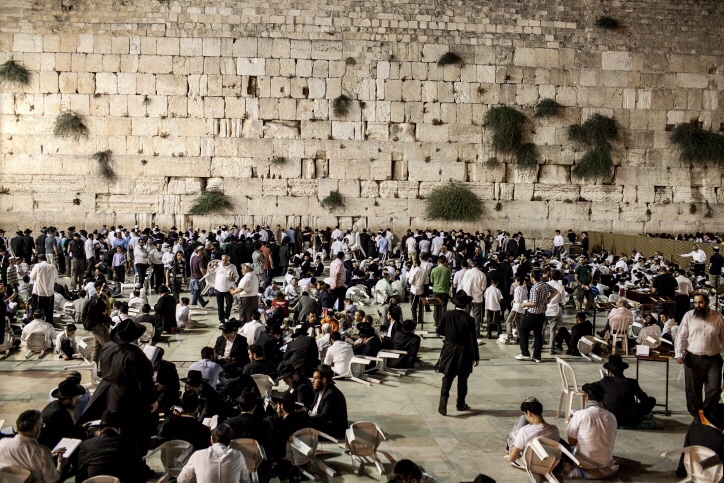
This past weekend (from Saturday night to Sunday night) was Tisha B’Av, the Jewish date for communal mourning of the destruction of the temples in the Jerusalem as well as all other tragedies that have befallen the Jewish people through history.

A few years ago, I had the opportunity to experience Tisha B’Av in Jerusalem and perhaps that will provide inspiration for another post.

Today, however, I wanted to share something I heard on Yocheved Davidowitz A Deeper Conversation podcast episode for Tisha B’Av.

In it, she discusses the solidarity Jews experience in mourning loss collectively and also the profound rituals Jews have for funerals and the grieving process.

Yocheved then discusses how, in her work as a therapist, she would notice the sense of dread people have about feeling sadness and mourning.

Continue reading

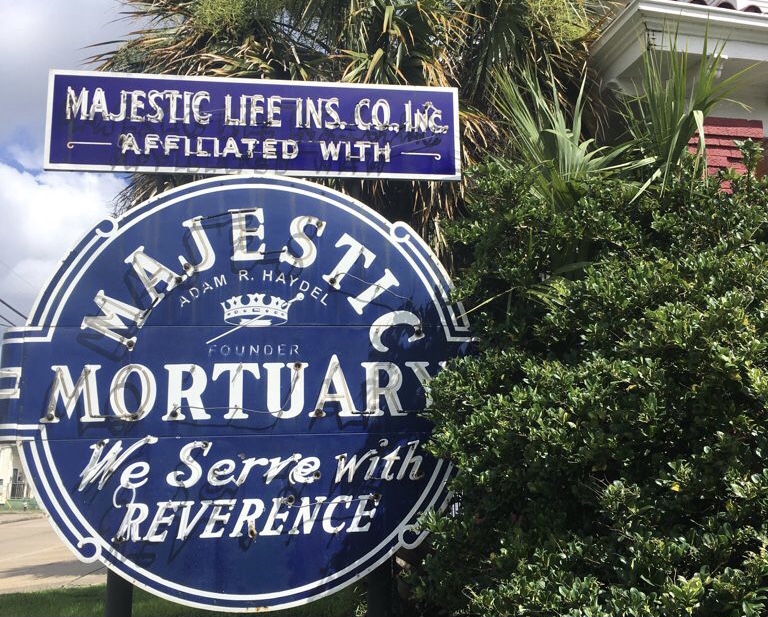
“We serve with reverence.”

My friend just sent me this photo of the sign outside of Majestic Mortuary Service Inc., a funeral home in New Orleans.

The motto caught her attention, and I can see why.

The dead are not the only ones who deserve to be treated with reverence, of course. For the living, too, this is their due. Yet, if you went to a restaurant that advertised “We serve with reverence”, you might think that’s a bit much.

This, however, shows my point that how we die (and how we naturally conduct ourselves before the mystery of death) has the power to humanize our culture.

Continue reading

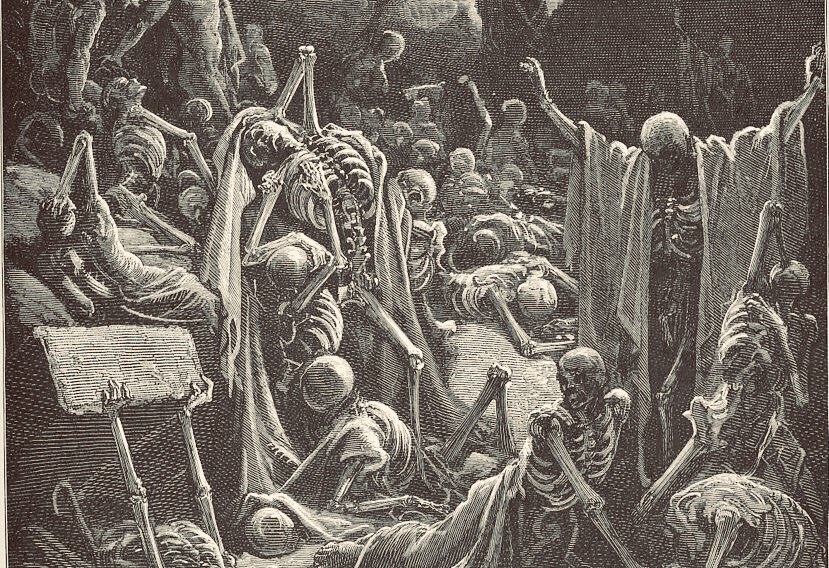
Initial hypothesis about resurrection

After nearly 200 days of blogging about death every day, where is this leading?

I find myself becoming fascinated and absorbed by the topic of the resurrection of the dead.

As a friend remarked to me the other day, this is one of the most fundamental beliefs underlying our civilization and yet, it is a teaching about which most people are, if they are being honest about it, rather incredulous or indifferent.

My very preliminary hypothesis is that belief in resurrection is subliminally decisive to how we live and that it has wide-ranging implications in ethics, technology, and culture.

To play with these ideas, we can ask: What difference does it make whether or not we believe in a resurrection of the dead? What are the practical consequences in our lives of its possibility or impossibility?

Another question: If people believed in the resurrection of the body, what would it change in our public bioethics?

I do not yet have many answers to propose. However, my first intuition is that the precariousness of our embodiedness needs redemption.

Whether this redemption is possible and whether we stake (or mistake) our hope about it in the correct place is, I think, a more interesting and practical question than many realize.