This evening my friend shared a story with me about a couple she knows.
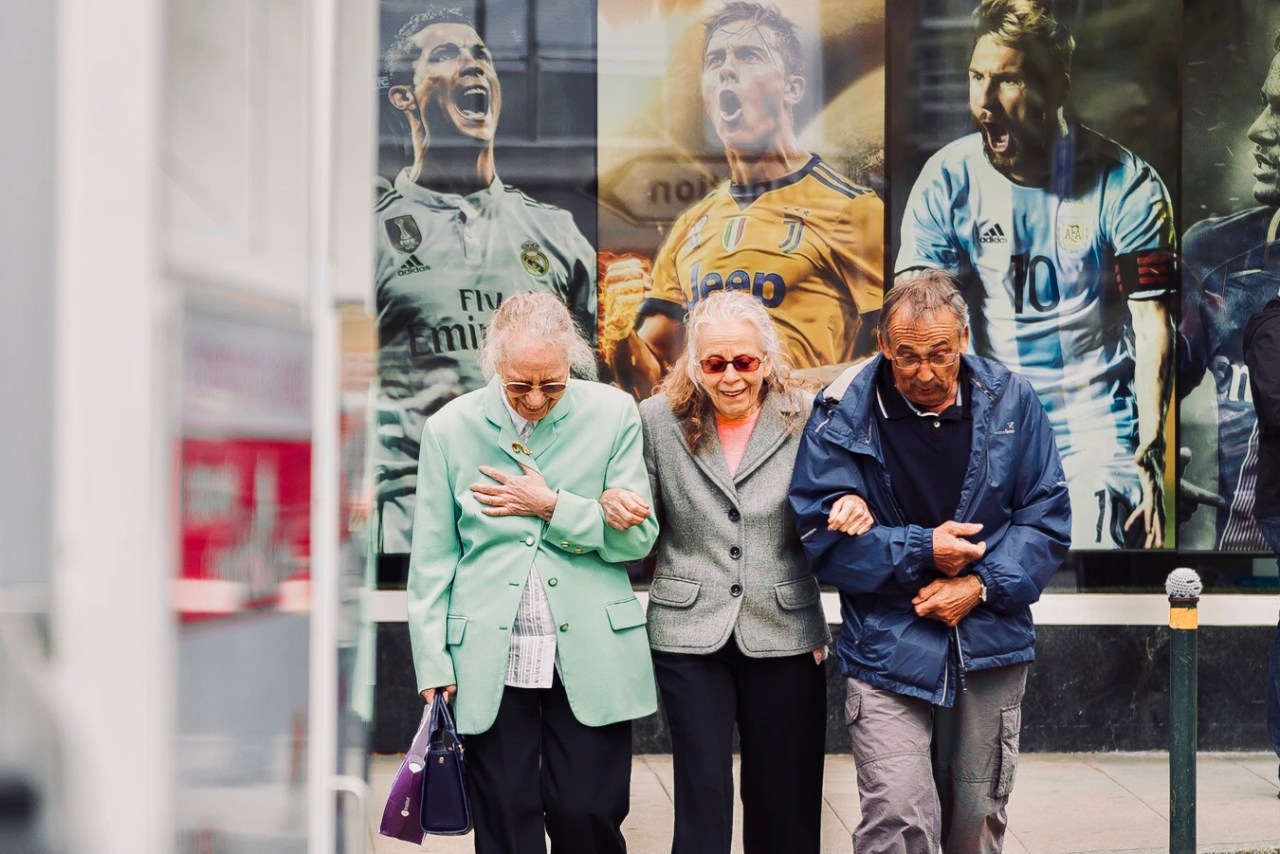
The couple is in their 80s and both the husband and wife are undergoing the loss of their memory.
This couple has been married for more than sixty years and they have three adult children.
One son and one daughter, who each have families of their own, have been committed to caring for their aging parents in the home in which they had all spent their life together as the children were being raised.
In an effort to preserve the routine and normalcy of family life, and in order to avoid needing to put the parents into a long-term care home, the adult son and daughter have developed a ritual of care.
Every single day, for the past six years, the daughter arrives to the home at 11:00 a.m. to serve her parents lunch.
And every single day, for the same six years, the son has arrived at 5:00 p.m. to serve dinner to his parents and then to open the door to the personal support workers who then take over in assisting with the parents’ care into the evening.
Elderly
Can the old and young be friends?
Here is a short piece I wrote a few ago on the value of and the possibility for intergenerational friendships.
During the Year of the Family, Pope Francis devoted one of his Wednesday addresses to the elderly and another one to grandparents. He thinks that part of the culture of death is a poverty of intergenerational friendships: “How I would like a Church that challenges the throw-away culture with the overflowing joy of a new embrace between young and old!” What are the obstacles to such an embrace? In his Ethics, Aristotle observed that young people tend to seek pleasure in friendships and that the old tend to seek friends for utility, but that good, enduring friendships involve being friends for the other’s own sake. Given the distinct tendencies to which the old and young are prone, can they actually be friends?
Aristotle observed “the old need friends to care for them and support the actions that fail because of weakness” and friendships aimed at useful results tend “to arise especially among older people, since at that age they pursue the advantageous.” Because of their frailty, older people may depend on others to ensure their physical wellbeing and because of their age, they may be especially concerned about conserving their acquisitions. He says, “Among sour people and older people, friendship is found less often, since they are worse-tempered and find less enjoyment in meeting people, so that they lack the features that seem most typical and most productive of friendship. That is why young people become friends quickly, but older people do not, since they do not become friends with people in whom they find no enjoyment—nor do sour people.”
This is coherent with 89-year-old Douglas Walker’s account of life at a retirement home: “Unlike soldiers, prisoners or students, we at the lodge are here voluntarily and with no objective other than to live. We don’t have a lot in common other than age (and means). However we are encrusted with 70 or 80 years of beliefs, traditions, habits, customs, opinions and prejudices. We are not about to shed any of them, so the concept of community is rather shadowy.”
Continue readingPrepare to fall
This evening I was speaking with one of my dear friends who is a doctor.
She told me, “I know you’re looking for uplifting stories for your blog, but lately I have been seeing a lot of elderly patients who have had bad falls. Since many of them live alone and are not able to get back up by themselves, sometimes they are not found until the next day or two. When that is the case, the person may be found sitting in their own feces or urine, profoundly helpless, until a support worker or relative comes to visit.”
Of course the best situation is when a vulnerable person can live in a family home so that their presence and wellbeing is continually and naturally monitored by their loved ones. The next best thing for the elderly would be to live in retirement homes where many services are provided and there are attendant nurses. This, however, is quite expensive and not within everyone’s reach.
On hearing about this from my friend, I remembered a recent conversation I had with a senior buddy of mine with whom I have been having weekly phone calls throughout the pandemic.
He and I have never met, but we have sure gotten to know one another through our Wednesday visits.
This gentleman with whom I speak just turned 90-years-old. His wife passed away last year and so he lives alone. Some of his adult children who live in town visit him and each week he brings his 88-year-old sister some shawarma.
Unflinching from the sacrifice
I’m thankful to a friend who reminded me that today is the feast day of St. Gianna Beretta Molla and who, accordingly, suggested that I devote today’s post to her.
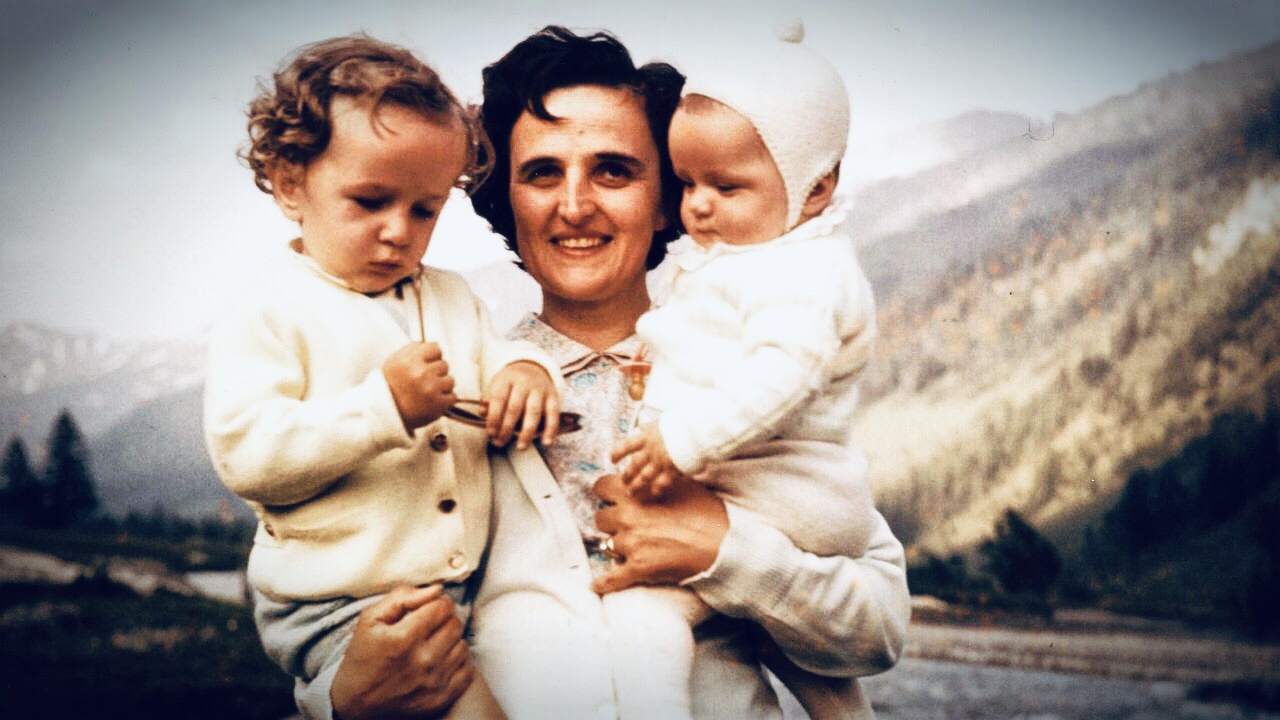
Gianna was an Italian Catholic pediatrician and mother of four. She is known for refusing life-saving medical interventions that would have resulted in the death of her fourth child with whom she was pregnant at the time.
While it would have been morally licit for her to opt for the interventions in an attempt to save her own life, since the loss of her child would have been wholly unintended and inadvertent, Gianna was willing to die in order that her unborn child might live.
How someone comes to such a decision with faith and courage is almost never momentary happenstance. As John Paul II put it– that Gianna knew how to offer her life as a sacrifice was the crowning of an exemplary existence.
Facing Up to One Another
There is a philosopher named Emmanuel Levinas who said, “The relationship with the face is immediately ethical in nature. The face is what you cannot kill, or at least in the sense that says: ‘thou shalt not kill’.”
And so, whenever I see a news article accompanied by an image of an elderly person’s hand, or a syringe, or an empty hospital hallway, this quotation always comes to my mind. How different it is to actually see faces. It is almost as if seeing faces (even if only as images) is to be given a different set of facts altogether.
Continue readingA Feast of Encounter between Generations
“When anxiety was great within me,
your consolation brought me joy.”
– Psalm 94:19
Today Christians celebrate the Feast of the Presentation of the Lord commemorating when Jesus was brought to the temple by Mary and Joseph.
About this feast, Pope Francis says:
Continue readingWhat Care for the Elderly Really Costs Us
In Henri Nouwen’s book Aging: The Fulfillment of Life, he tells this anecdote:
Not too long ago a thirty-two-year-old, good-looking, intelligent man, full of desire to live a creative life, was asked: “Jim, what are your plans for the future?” And when he answered: I want to work with the elderly and I am reading and studying to make myself ready for that task,” they looked at him with amazement and puzzlement. Someone said, “But Jim, don’t you have anything else to do?” Another suggested, “Why don’t you work with the young? You’ll really be great with them.” Another excused him more or less, saying: “Well, I guess you have a problem which prevents you from pursuing your own career.” Reflecting on these responses, Jim said: “Some people make me feel as if I have become interested in a lost cause, but I wonder if my interest and concern do not touch off in others a fear they are not ready to confront, the fear of becoming an old stranger themselves.”
Commenting on this, Nouwen expounds, “Thus care for the elderly means, first of all, to make ourselves available to the experience of becoming old.” And, in another place he asks, “How can we be fully present to the elderly when we are hiding from our own aging? How can we listen to their pains when their stories open wounds in us that we are trying to cover up?”
Continue reading