Can the old and young be friends?

Here is a short piece I wrote a few ago on the value of and the possibility for intergenerational friendships.

During the Year of the Family, Pope Francis devoted one of his Wednesday addresses to the elderly and another one to grandparents. He thinks that part of the culture of death is a poverty of intergenerational friendships: “How I would like a Church that challenges the throw-away culture with the overflowing joy of a new embrace between young and old!” What are the obstacles to such an embrace? In his Ethics, Aristotle observed that young people tend to seek pleasure in friendships and that the old tend to seek friends for utility, but that good, enduring friendships involve being friends for the other’s own sake. Given the distinct tendencies to which the old and young are prone, can they actually be friends?

Aristotle observed “the old need friends to care for them and support the actions that fail because of weakness” and friendships aimed at useful results tend “to arise especially among older people, since at that age they pursue the advantageous.” Because of their frailty, older people may depend on others to ensure their physical wellbeing and because of their age, they may be especially concerned about conserving their acquisitions. He says, “Among sour people and older people, friendship is found less often, since they are worse-tempered and find less enjoyment in meeting people, so that they lack the features that seem most typical and most productive of friendship. That is why young people become friends quickly, but older people do not, since they do not become friends with people in whom they find no enjoyment—nor do sour people.”

This is coherent with 89-year-old Douglas Walker’s account of life at a retirement home: “Unlike soldiers, prisoners or students, we at the lodge are here voluntarily and with no objective other than to live. We don’t have a lot in common other than age (and means). However we are encrusted with 70 or 80 years of beliefs, traditions, habits, customs, opinions and prejudices. We are not about to shed any of them, so the concept of community is rather shadowy.”

Continue reading

“If we die, we want to die together.”

Today I listened to this podcast episode that one of my best friends recommended in which Rahf Hallaq, a 21-year-old English language and literature student, speaks about the terror of experiencing the Israeli airstrikes in Gaza.

“She’s so articulate in humanizing herself and her community,” my friend told me in offering the recommendation.

When I listened, I was amazed. I think it is the first time that I ever cried while listening to a podcast. In fact, there were a couple occasions that I teared up while listening to Rahf share her story.

Apart from geopolitical calculations and political arguments, Rahf gives us a window into the impact that wider events are having on her own life in a way that is very concrete and personal.

In fact, Rahf’s testimony reminded me of what Eva Hoffman noticed about a Dutch Jewish woman who kept a diary during the Holocaust when she said, “Etty Hillesum lived at a time when the macrocosm of historical events almost completely crushed the microcosm of individual lives.”

Like Etty Hillesum, Rahf Hallaq, through this podcast episode, sought not so much to give a sweeping account of the political situation as to give us an account of her own soul.

It is moving to hear of her speak about her passion for books.

“My dad is the one who made the love of books grow inside me,” she reflects.

Then she shares about the impact of reading Orwell’s 1984 saying, “I mean, when you’re living under oppression, and when you read those books, you feel like you’re not the only one who’s going through this. You feel like these words are actually speaking about you and to you. They give you the power to talk about your own ideas after that.”

Naturally, she was totally devastated about the bombing of a local bookstore that was connected to so many memories for her and her friends.

In the episode, Rahf also speaks about how families in Gaza all huddle together in the same room during the airstrikes because, “If we die, we want to die together.”

Listening to her speak about how her dad used to try to tell her that the bombs were fireworks, in an effort to put her at ease, is also heartbreaking.

My friend was completely right. This story humanized Rahf and the people of Gaza.

It is hard to fathom the real lives of Gazans, but hopefully Rahf will be able to continue bearing witness to “the microcosm of individual lives” by sharing her own experiences with such candor and poise.


What does it mean to follow an exemplar?

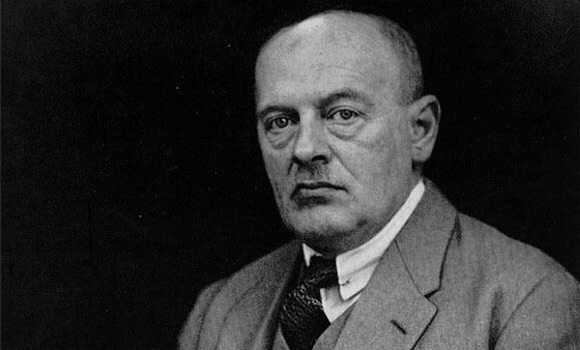
The very interesting philosopher, Max Scheler, died on this date in 1928. He was a prominent influence in ethics, phenomenology, and personalism. He had an eclectic trajectory involving his German Jewish background, his youthful interest in Nietzsche and Marx, his gradual embrace of Catholicism, and his eventual distancing from the Church.

Scheler was quite interesting and imaginative and the impression he made on twentieth century thought is detectable, particularly in many Jewish and Catholic thinkers who address such topics as shame, resentment, and values.

Today I was returning to his book Person and Self-Value and, in particular, to the third section on “Exemplars of Persons and Leaders” in which he reflects on the question of what is actually meant by following an exemplar:

Continue reading

Twitter Has a Character Limit that Epitaphs Do Not

Twitter has a character limit – by which I do not mean the 160 maximum characters allowed in a Twitter bio nor the 280 maximum characters allowed in a tweet.

Of course I mean to highlight the limits we find in bio blurbs and tweets when it comes to revealing anything substantive about a person’s actual character from a moral standpoint.

However, it is not the circumscribed brevity that leads to the omission of character.

The case in point for this for me came from reading Martin Mosebach’s The 21: Journey into the Land of Coptic Martyrs.

In the chapter titled, “With the Martyrs’ Families”, Mosebach recounts travelling to visit the homes of the families of the Coptic Christians who were martyred by Islamists on the coast of Libya in 2015.

These poor Egyptian Christian martyrs did not have Twitter accounts. In fact, Mosebach gives us a sense of their lifestyle by indicating that these men didn’t sleep on sheets, didn’t have bathtubs, and were likely acquainted with fleas and lice.

Continue reading

Thou shalt not kill a book

This evening I’m thinking about these passages from Areopagitica, John Milton’s defense of freedom of speech against the restrictions of his day:

[…] for books are not absolutely dead things, but do contain a potency of life in them to be as active as that soul was whose progeny they are; nay, they do preserve as in a vial the purest efficacy and extraction of that living intellect that bred them. I know they are as lively, and as vigorously productive, as those fabulous dragon’s teeth: and being sown up and down, may chance to spring up armed men. And yet, on the other hand, unless wariness be used, as good almost kill a man as kill a good book: who kills a man kills a reasonable creature, God’s image; but he who destroys a good book, kills reason itself, kills the image of God, as it were, in the eye.

[…]

We should be wary, therefore, what persecution we raise against the living labours of public men, how we spill that seasoned life of man preserved and stored up in books; since we see a kind of homicide may be thus committed, sometimes a martyrdom; and if it extend to the whole impression, a kind of massacre, whereof the execution ends not in the slaying of an elemental life, but strikes at that ethereal and fifth essence, the breath of reason itself; slays an immortality rather than a life.

Why are these excerpts coming back to me tonight?

Three years ago on this date, I was attending an event hosted by the Montreal Press Club with keynote speaker Dr. Jordan Peterson to honour the inaugural “Freedom Award” recipient Raif Badawi.

Continue reading

The Opposite of Autonomy

This morning, a topic of Sunday brunch conversation concerned determining the opposite of such words as “autonomy” and “abandonment.” My friend and I wanted equally precise and forceful words that denote the antidotes to these terms without these being too vague or all-encompassing.

In considering this, I came upon not a word, but a paragraph that I do consider to quite aptly describe the opposite of autonomy. And since it took an entire piece for Marina Keegan to beautifully explore “the opposite of loneliness“, we can certainly afford to take a look at this paragraph from Paul Quenon’s book, In Praise of the Useless Life: A Monk’s Memoir.

This is a book I read a few years ago that I find myself recommending to more and more friends often these days.

It is in the epilogue, where the author is describing what he has found monastery life to be, that I consider somewhat of an exposition of the opposite of autonomy:

Continue reading

Canadian Student Discovers his Online Course is Taught by a Deceased Professor

This evening over dinner, my friend and housemate shared a news story from a month ago about a university student in Montreal who was surprised to discover that his current art history professor had, in fact, already been deceased for two years.

Aaron Ansuini had been following an online course through Concordia University when he Googled the professor to find his email address but instead found his obituary.

The university says the prerecorded material was in no way meant to be deceptive. Nevertheless, the student’s Twitter thread recounting his surprise amassed hundreds of thousands of likes and retweets.

He wrote:

Continue reading

Dietrich von Hildebrand on how death summons us to what’s essential

One of my very favourite organizations, the Hildebrand Project, is committed to advancing the legacy of Dietrich von Hildebrand and of the wider personalist tradition.

Most recently, the Hildebrand Project team republished Dietrich von Hildebrand’s existential and theological meditation, Jaws of Death: Gate of Heaven, which the twentieth-century philosopher wrote shortly before his own death.

The book is divided into two sections – the first of which considers the Natural Aspect of Death and the second of which considers Death in the Light of Christian faith.

Continue reading