Alyssa Boyd: What Makes A Good Death?

Most of these daily posts contain my own musings. However, my intention with this blog is always to point to whatever is most beautiful and good in the culture and today that means pointing you to a wonderful short reflection by Dr. Alyssa Boyd. She is one of the co-founders of The Living Wish Foundation about which I wrote here.

Dr. Boyd is the medical director at a hospice and she recently wrote about what makes a good death:

I find myself constantly ruminating over this question and am regularly fascinated and surprised by the variations in responses that I see.

It is easy for me to say what a “good death” looks like from the comfort of the nurse’s station. The patient is peaceful and comfortable with family and loved ones by their side. Their final wishes have been honoured. They die quick enough that their loved ones don’t have to sit vigil for more than 48 hours but slowly enough that everyone has had a chance to say their goodbyes. Perhaps the only way my ideal scenario has evolved over time is the additional clause that “there are no COVID restrictions.”

But, that is my own bias. When you are sitting on the other side of the bed, all the above may seem like irrelevant platitudes, only visible as an outsider, as the family grieves through the worst days of their life. If I have learned anything in my musings around “a good death,” it is that I must constantly be open-minded to each family’s unique expectation and not point out anyone else’s silver linings.

Despite my attempts to shelve my own beliefs around this, I will confidently profess that yesterday I was given the gift of bearing witness to a TRULY good death.

Continue reading in Georgian Life Magazine, here.
Encountering St. Camillus

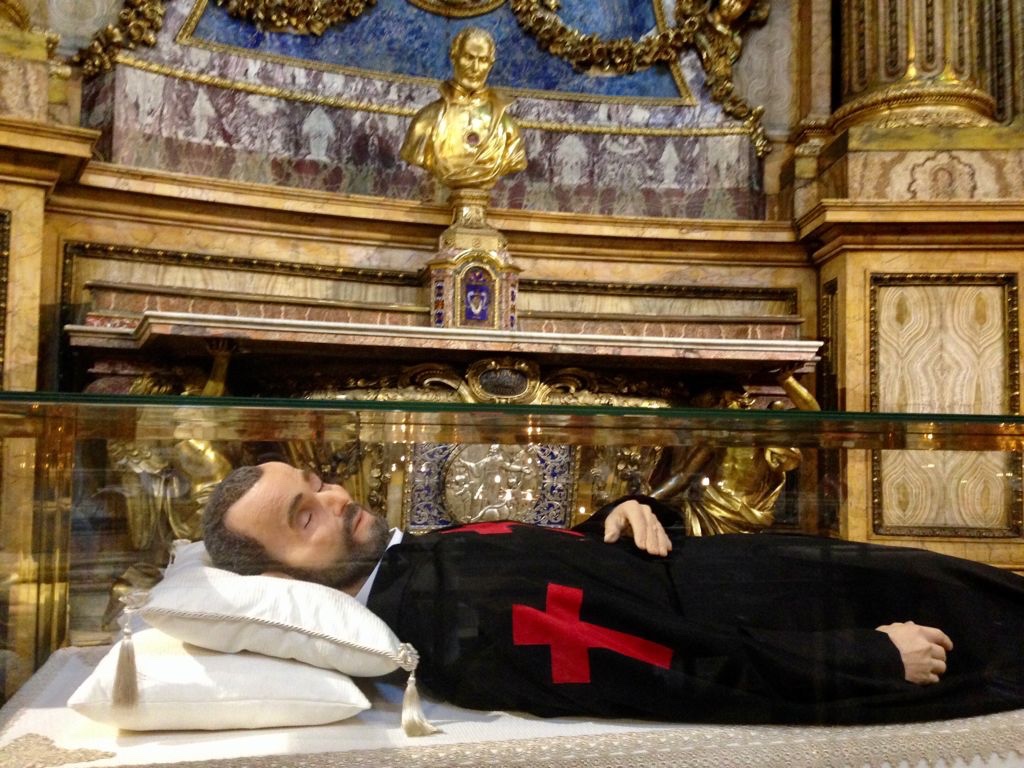
Five years ago, I was attending a cool Thomistic seminar in Norcia after which there was an optional trip to Rome.

Flashback to earlier that summer when I had been in America at the Hildebrand Project learning from and conversing with Italian statesman and professor Rocco Buttiglione.

As we sat outdoors, he memorably told me the story of St. Camillus de Lellis about whom I don’t remember having ever heard before.

Professor Buttiglione and I had been discussing end-of-life care when he began to speak to me about this saint who, almost 500 years ago, founded the Servants of the Sick.

Given my interest in these topics, I was happy to encounter the story of this saint in conversation.

Continue reading

Hair, makeup, and palliative care

I was interested to come across several news stories about a new documentary created by filmmaker Lorraine Price. The film tells the story of an 83-year-old woman named Kathleen Mahony who, as Price tells us, “volunteered to do hair and makeup for the terminally ill at the palliative care unit at Notre-Dame Hospital in Montreal [for the past 31 years].”

Price was inspired to make the documentary in honour of her grandmother who had been a very classy and elegant woman. In this interview, Price reflects:

Her style was loud and unapologetic. But when my grandmother passed away in hospice care, on top of having dementia, she was barely recognizable to me—her hair was short and white, her nails nude, and her lips pale. It felt as though she was gone long before she left us. I was so absorbed by my grief and the desire to mitigate her suffering that I neglected to consider the importance of that outward-facing identity that she had cultivated her whole life.

I would love to see this documentary because we desperately need good examples of how to treat those who are approaching the end of life.

There is a universal, inherent dignity that is innate, yes. But there is also the matter of dignifying – we can add to a person’s dignity by bestowing honour, appreciation, and affection.

In another interview, Price remarked, “Kathleen doesn’t do their hair because these patients are dying. She does it because they are human and they deserve to feel dignified and like themselves even when they are at their most vulnerable.”

Kathleen’s service is precisely the kind of hidden work that will benefit our culture greatly by being brought into the light.


A Premium for Conversation

The other day I was having a conversation with my nonagenarian buddy.

He regaled me with the highlight of his week which, as many Ontarians can relate, was getting a haircut.

His son, who had just gotten his haircut in BC, had told my friend that he would pay an added fee to avoid needing to talk to his hairdresser.

“You see,” my friend began, “I’m the complete opposite! I’d pay a premium for the conversation!”

He proceeded to tell me all the details he could remember about his 24-year-old Arab barber.

Then he told me about some of the business tips that he’d given to the young man.

“And would you believe it? The young man was so grateful for the advice that he refused to accept payment altogether!”

What an endearing story, I thought.

How incalculable is the value of genuine human relations.

A patron saint of persistence

Today I spent some time contemplating St. Benedict since his feast day is usually celebrated on July 11th and he is a patron saint of the dying.

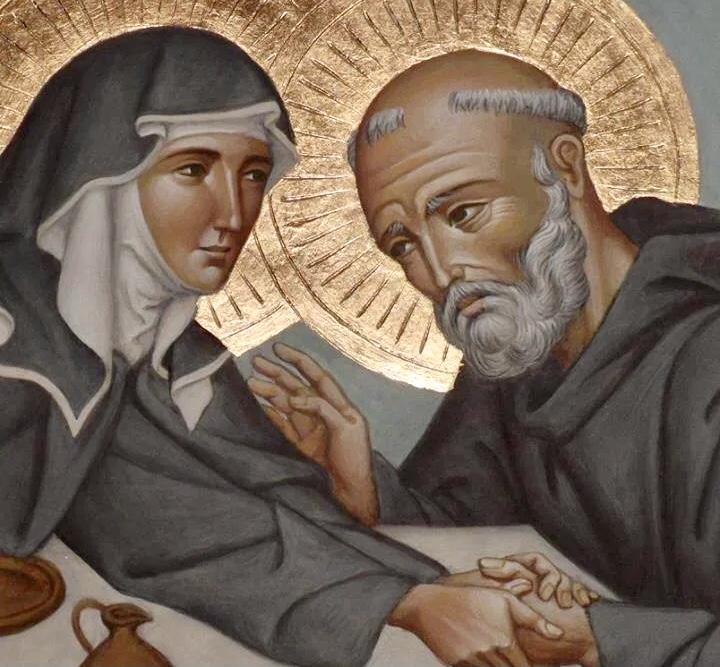
What came to mind, in thinking about Benedict however, is the legendary story of his last visit with his twin sister Scholastica.

Here is the splendid story as recounted by Saint Gregory the Great:

Continue reading

Jordan Peterson: “Part of you must therefore die.”

Rule Four of Jordan Peterson’s new book Beyond Order: 12 More Rules for Life is: “Notice that opportunity lurks where responsibility has been abdicated.”

In this chapter, Peterson discusses how choosing to take responsibility is fundamental to being useful and leading a meaningful life. As usual, he weaves a range of sources together from the Hebrew Bible, to Egyptian myths, to Pinocchio and Peter Pan.

The section of this chapter that especially interested me is about conscience. Since conscience is a word that does not have a great deal of resonance in our contemporary culture, Peterson patiently expounds upon what conscience is and how it works.

Here is the relevant excerpt:

Continue reading

The Martyr Saints of China

July 9th is the feast day of the Chinese Martyrs.

It was October 2000 when Saint Pope John Paul II canonized 120 martyrs in China. As Alejandro Bermudez noted in his recent piece, “87 were Chinese laypeople and 33 were missionaries.”

Bermudez says, “The feast is an occasion for the Chinese Catholic diaspora, and for the Universal Catholic church as a whole, to pray for Christians currently persecuted in Communist China, especially those Catholics who despite being a minority in Hong Kong, constitute the backbone of the freedom movement and are currently being jailed such as Catholic convert Jimmy Lai, owner of the pro-democracy paper Apple News; or those forced to exile, like pro-democracy Catholic leader Joseph Cheng.”

In his homily, John Paul II said the, “martyrs are an example of courage and consistency to us all, and that they honour the noble Chinese people.”

The stories of these modern martyrs are captivating and it is important for them to become accessible and familiar so to bolster the faith and tenacity of Christians and people of good will worldwide.

Continue reading

A Perspective on Danger

Here’s an anecdote:

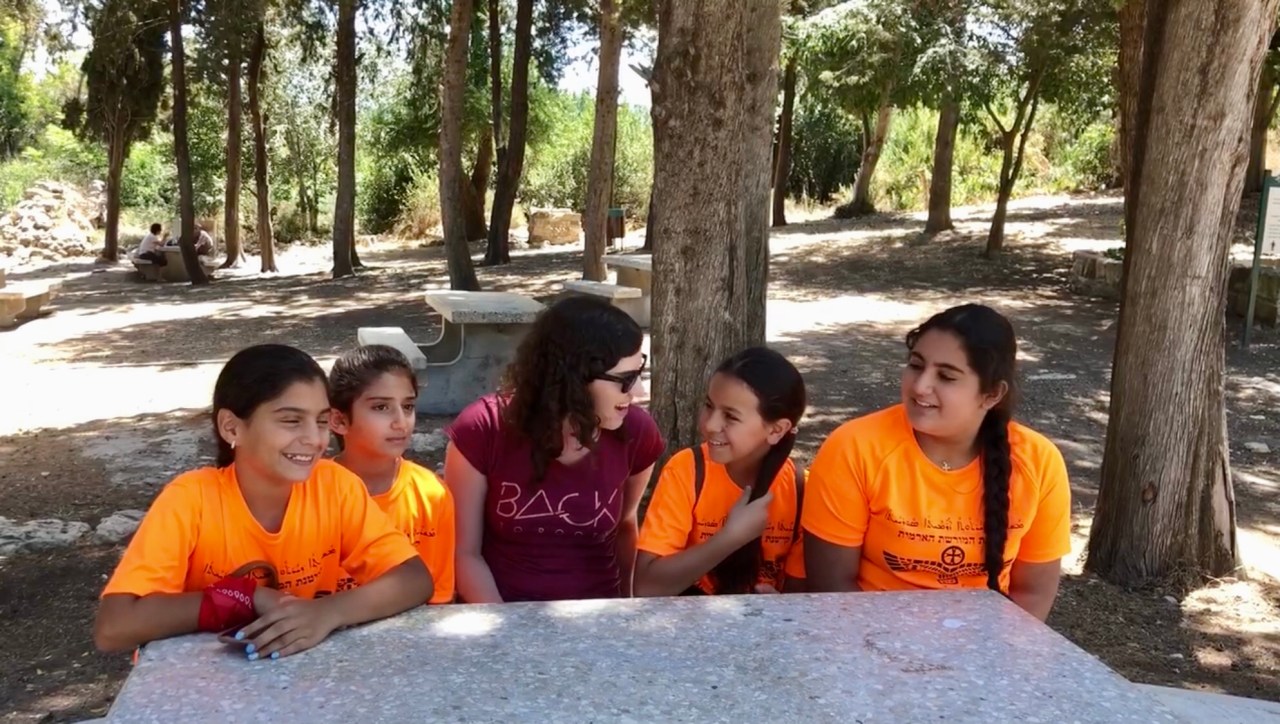
It was the summer of 2018 when I crashed an Aramaic summer camp for Maronite children living in northern Israel. I got to have a blast singing songs and playing games with the children who are growing up navigating a complex identity with an extremely fraught history in a pretty volatile region.

One day during that camp, I decided to ask an 11-year-old girl named Marie who lives just a few kilometres away from the border with Lebanon, “Who do you think is in greatest need of our prayers?”

The preteen immediately answered, “The kids of Florida.”

“Florida?” I repeated curiously.

“Yes,” she told me. “Because of the school shootings there.”

I was quite struck by this answer to the extent that I still remember it.

It is interesting to consider this perspective on danger.

After all, I am sure that, were I interviewing 11-year-olds in Florida about who most needs our prayers that someone there would have told me, “The kids of the Middle East.”

The Day I Almost Died in the West Bank

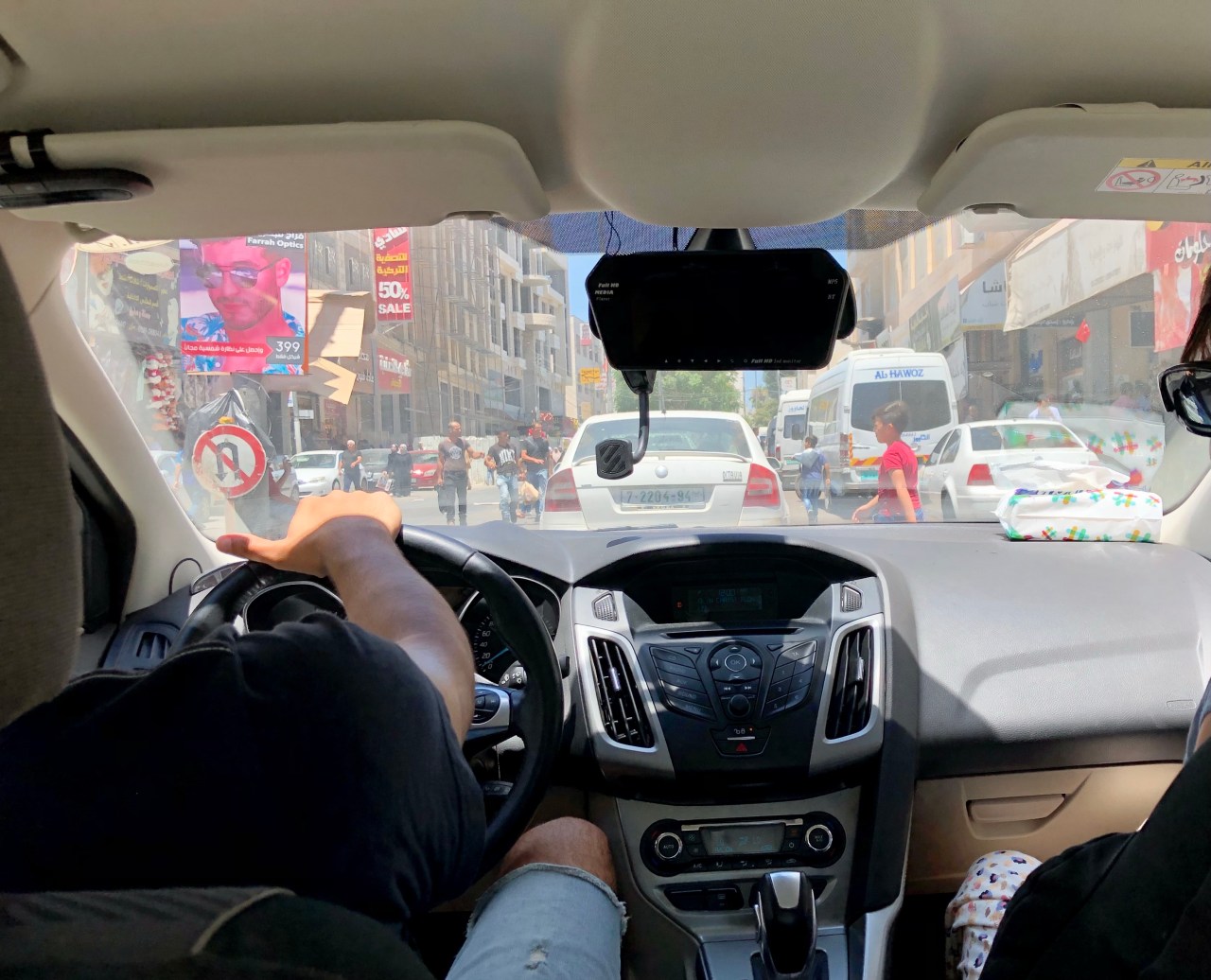
Since today is the three-year anniversary of a near-death experience of mine, I thought I’d blog about the day my friends and I were attacked in the West Bank.

It was a Friday night in Bethlehem when, unlike Jesus, my American friend Ashley and I had managed to find overnight accommodations at an AirBnB there.

The following morning, on July 7, 2018, our Palestinian Christian friend Khalil came to pick us up, greeting us with the cappuccinos he’d brought for us.

Next we picked up my Canadian friend Amy and set off on our West Bank adventure. I remember we said a quick prayer for our trip.

The first place we visited was the Shrine of Our Lady of the Garden at Artas. “Tour groups almost never come here and it isn’t really a tourist site,” Khalil told us. “But this is my favourite place in Bethlehem and the most beautiful.”

Continue reading

Deaths worth remembering

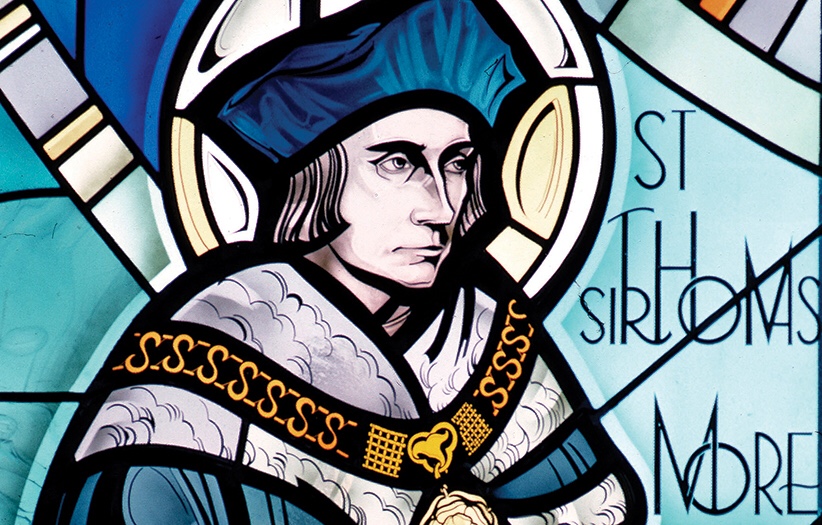
Today’s the anniversary of the martyrdom of St. Thomas More who was executed for refusing to swear the Oath of Supremacy.

I find it interesting to note that this 1535 oath began with the words, “I [name] do utterly testifie and declare in my Conscience, that the Kings Highnesse is the onely Supreame Governour of this Realme, and all other his Highnesse Dominions and Countries, as well in all Spirituall or Ecclesiasticall things or causes, as Temporall […].”

In a collection of More’s correspondence written before his death, Father Alvaro De Silva writes in the introduction that More used the word conscience more than 100 times throughout these letters.

More would not say with the solemnity of assertion that he “declares in his conscience” something he believed to be false.

Now conscience is not a word that has widespread resonance and people are not usually asked about what they “declare in their Conscience.”

Yet, there is a reason why the deaths of martyrs are worth remembering long beyond the memory of the powerful people who martyred them.

Continue reading