Have Eulogies Become Résumés?

For several years, David Brooks has been drawing the distinction between résumé virtues and eulogy virtues.

“The résumé virtues are the skills you bring to the marketplace. The eulogy virtues are the ones that are talked about at your funeral — whether you were kind, brave, honest or faithful. Were you capable of deep love?” Brooks says.

Recently, a friend of mine remarked on how, perhaps, this distinction is being blurred. More and more obituaries and eulogies are sounding like résumés.

She told me that she had read the obituary of a well-loved man named Dr. Paul Vincent Coldrey Adams who died in 2019 at age 99. While aspects of his obituary certainly testify to his character, much of the obituary reads more like a résumé insofar as it chronicles his education, profession, community service, committee participation, volunteer commitments, and hobbies. In this case, his faith and family also feature prominently.

But what is particularly interesting with this obituary is a comment left beneath it by Dr. Adams’ son, Michael.

About his father, Michael wrote:
Continue reading

This World Day of the Sick

In 1993, John Paul II inaugurated the World Day of the Sick to be celebrated each year on February 11th. He wanted the annual day to serve as “a special occasion for growth, with an attitude of listening, reflection, and effective commitment in the face of the great mystery of pain and illness” and he specifically addressed all those who are sick, calling them “the main actors of this World Day.”

What did he mean by this?

Continue reading

Facing Up to One Another

There is a philosopher named Emmanuel Levinas who said, “The relationship with the face is immediately ethical in nature. The face is what you cannot kill, or at least in the sense that says: ‘thou shalt not kill’.”

And so, whenever I see a news article accompanied by an image of an elderly person’s hand, or a syringe, or an empty hospital hallway, this quotation always comes to my mind. How different it is to actually see faces. It is almost as if seeing faces (even if only as images) is to be given a different set of facts altogether.

Continue reading

“I Want to Burden My Loved Ones”

In a short essay, Gilbert Meilaender reflected on attending a workshop on “advance directives” at a nearby hospital. Throughout the workshop, participants expressed their intent not to be a burden on their family members at the end of life. But the more Meilaender thought about this, the more he determined that this was not his view. He reflected, “I don’t know how to make the point other than too crassly–other than by saying that I want to be a burden to my loved ones.”

He then goes on to discuss the various ways he cared for his children that “burdened” him but that he certainly does not resent – teaching sports, playing games, attending recitals, volunteering at school, negotiating dinner choices. While he does not begrudge these things, he does ask, “Is this not in large measure what it means to belong to a family: to burden each other–and to find, almost miraculously that others are willing, even happy to carry such burdens?”

Continue reading

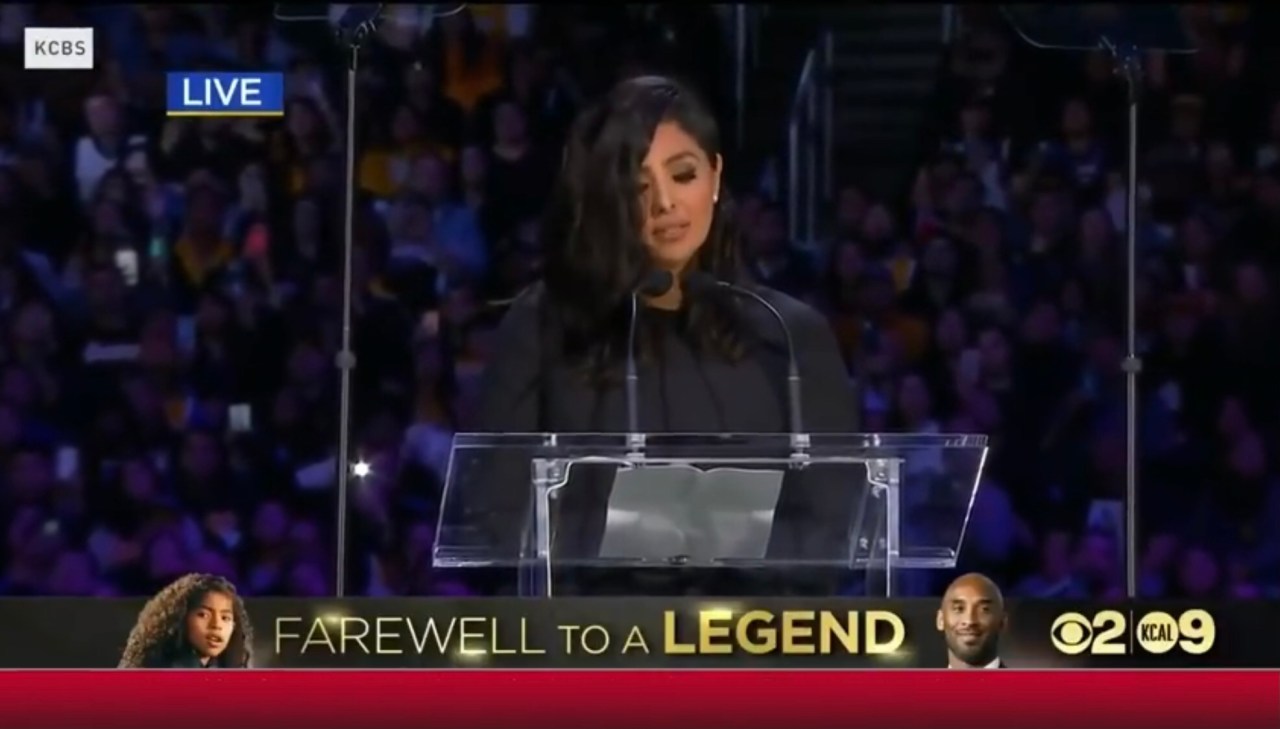
The Past and Present Tense in Vanessa Bryant’s Tributes

Today marks the first anniversary of the death of Kobe and Gianna Bryant.

Much has been said and written about the faith of the family, and there is something that I find remarkably demonstrative of that faith in the speech Vanessa Bryant delivered at a memorial.

In her 20-minute speech about her husband and daughter, Vanessa Bryant alternated, in a subtle way that seemed very deliberate, sincere, and full of faith, between speaking in the past and present tense.

Continue reading