The Opposite of Throwaway Culture

The author of the book Resisting Throwaway Culture has laid out some concrete proposals for how to do so at the end of his newly published book, Losing Our Dignity.

Like Pope Francis, author Charles Camosy agrees that it is our cultural consumerism that is contributing to a “throwaway” mentality extending toward human beings.

The opposite of throwaway culture, Camosy suggests, is to “live out a counterculture of responsibility, encounter, and hospitality.”

Continue reading
Not just façades

The other day I was attending a lecture by a scholar who is interested in architecture.

He spoke about why he considers façades to be the most important aspect of architecture given that this is what gets projected outward into the public realm.

Perhaps there is something neighbourly and civic-minded in this view.

Still, upon reflection, I think that the beauty of houses, buildings, tombs, and churches depends largely on the reverence shown toward what is inside.

Continue reading

How we remember 9/11

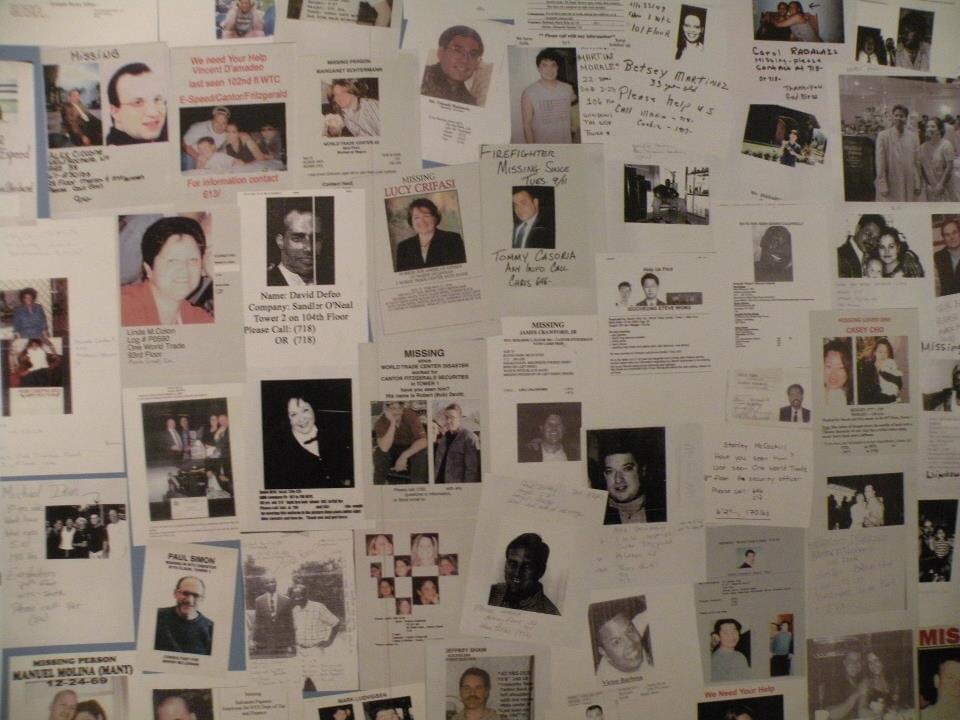
On September 11th, I am remembering my visits to the 9/11 memorial in New York City.

Earlier this year, I listened to this interesting podcast episode by Malcolm Gladwell discussing both the 9/11 memorial as well as memorials for the homeless. If that sounds intriguing to you, click here.

The 9/11 Memorial and Museum has a lot of elements that very much reveal the character, spirit, and approach of the American people to tragedy, patriotism, and the value of human life.

Here are some snaps from my visits:

Continue reading

Declaration of Dependence

The other day a friend of mine shared this profound aphorism from Nicolás Gómez Dávila which says:

Death is the unequivocal sign of our dependence.
Our dependence is the unequivocal foundation of our hope.

In 1993, a Canadian Supreme Court judge included the following statement in his decision:

“Although palliative care may be available to ease the pain and other physical discomfort which she will experience, the appellant fears the sedating effects of such drugs and argues, in any event, that they will not prevent the psychological and emotional distress which will result from being in a situation of utter dependence and loss of dignity.”


Here “utter dependence” is conflated with a “loss of dignity”, not the foundation of our hope.

Continue reading

Mysterious Reminders

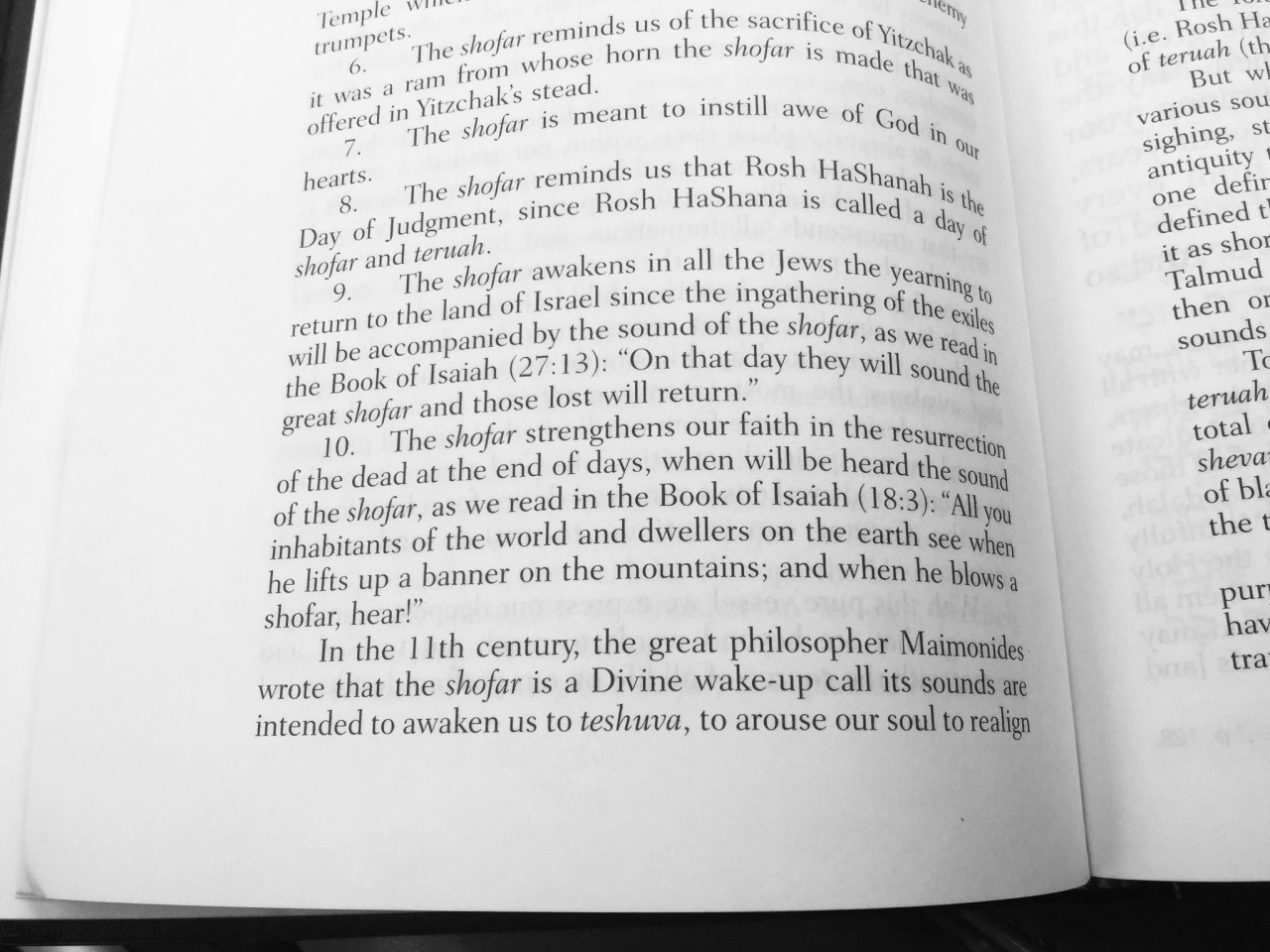
My mother sent me the snap accompanying this post of a page from a booklet she received when she went to hear the sounding of the shofar on Rosh Hashanah.

I was curious to look up these various symbolic interpretations of the significance of the shofar. This list was devised by a rabbi from the late ninth-to-early tenth century.

I had heard Rabbi Jonathan Sacks recall how Maimonides considered the shofar as “God’s Alarm Clock“, but I had never before heard about the connection between the sounding of the shofar as a reminder of the resurrection of the dead.

Eliyahu Kitov’s article says, “The sounding of the shofar serves to remind us of the resurrection of the dead, as the verse [Isaiah 18:3] states: All those inhabitants of the world and those who dwell in the earth, when a sign is lifted upon the mountains you shall see and when the shofar is sounded you shall hear.”

I went and tried to read that chapter of Isaiah in context and I could not really figure out what it had to do with the resurrection of the dead.

I also tried to find other Jewish sources speaking to the importance of being reminded about resurrection on Rosh Hashanah and I didn’t really find anything.

The shofar can only be the spiritual wake-up call it’s meant to be if it’s understood what exactly we are being awoken to and for.

What difference would it make if we were reminded, even annually, to think about resurrection?

Musical aid in suffering

The other day I met a woman who is a classical singer and musical therapist. Over lunch she told me about how she works with some stroke patients who cannot speak, yet who can sing.

The photo accompanying this post is from this article explaining how this works.

Take a look at this quick clip showing showing an example of neurologic music therapy:

This classical singer has also worked with orphans, palliative care patients, and others in vulnerable states.

Another musician at the lunch explained to us that the more complexity there is to the music, the more order the music can put into your soul. This led me to think: Instead of medical aid in dying, we need musical aid in suffering.

First things first

A few days ago, I attended a conference at which I met a Venezuelan currently in exile in the U.K.

This young man is passionate about politics and philosophy.

When I shared with him about some of the current debates in Canadian politics concerning bioethics, he was perplexed.

Essentially he expressed his perplexity as follows: My country is a mess. There is massive corruption, countless human rights violations, and many basic needs of citizens are unmet. We imagine that Canada is so much more advanced. Yet, you seem to be divided on the most fundamental questions.

Indeed, Canadians are divided about what it means to be a man, to be a woman, to be married, to be a person, to be alive.

Despite industrial development, material prosperity, and impressive longevity, we are still unsure about a lot of the basics.

It is revealing that someone from Venezuela can question our supposed advancement in this way.

Black & White

Recently I was getting ready to head to the U.K. for a five-day seminar.

Before leaving, I showed the webpage announcing the program to a Chinese student at my residence.

As he scrolled the webpage, a concerned expression spread across his face.

“Why are these photos black and white?” he asked nervously, perusing the headshots and bios of faculty and fellows.

“Just for branding and aesthetic,” I shrugged. “Why?”

“In China, black and white photos indicate the person has died,” he explained to me.

Ah, I realized.

No wonder he had looked so startled upon seeing my black and white headshot on his laptop as I sat across from him.

“The light she has lit in my life is still burning.”

On this feast day of Saint Mother Teresa, I read the address that she gave upon being awarded the Templeton Prize and came upon this striking anecdote:

“And in one of the places in Melbourne I visited an old man and nobody ever knew that he existed. And I saw his room in a terrible state, and I wanted to clean his house, his room, and he kept on saying ‘I’m all right!’ but I repeated the same word, ‘You will be more all right if you will allow me to clean your place’, and at the end he allowed me. And there in that room there was a beautiful lamp covered with dirt of many years, and I asked him ‘Why do you not light your lamp?’ Then I asked him, ‘Will you light the lamp if the Sisters come to see you?’ He said, ‘Yes, if I hear a human voice I will do it.’ And the other day he sent me word, ‘Tell my friend the light she has lit in my life is still burning.’”

How many in our world, particularly after this painful season of mandatory isolation, also need to hear a human voice for the light of their life to be rekindled in their soul?

You can read the full address here:

In Silence and Solitude

“I’m looking forward to a season of retreat and contemplation,” I told a Dutch priest upon my arrival to Italy.

“And you’re moving to Rome?” he asked incredulously. “Have you been there before?”

Of course I had been to Rome before and I knew exactly what he meant. Rome is extremely chaotic, noisy, and bustling.

But I have the great privilege of living in a place known as a “retreat” of the Passionist Congregation – a beautiful site atop the Celian Hill – about which the founder of this religious community wrote in 1747:

It is one of the most solitary places in Rome, a place of great silence and recollection, almost a mountain, with good air, a garden, with water […] There are cabbages, enough fruit for summer and winter, at least partially, figs, grapes, artichokes, beans, broccoli, enough even to give to your novices. […] It is a fine location, not a better one is to be found in Rome with delightful air – a place prepared by our Great Father for his servants.

Continue reading