Curious about Costumes

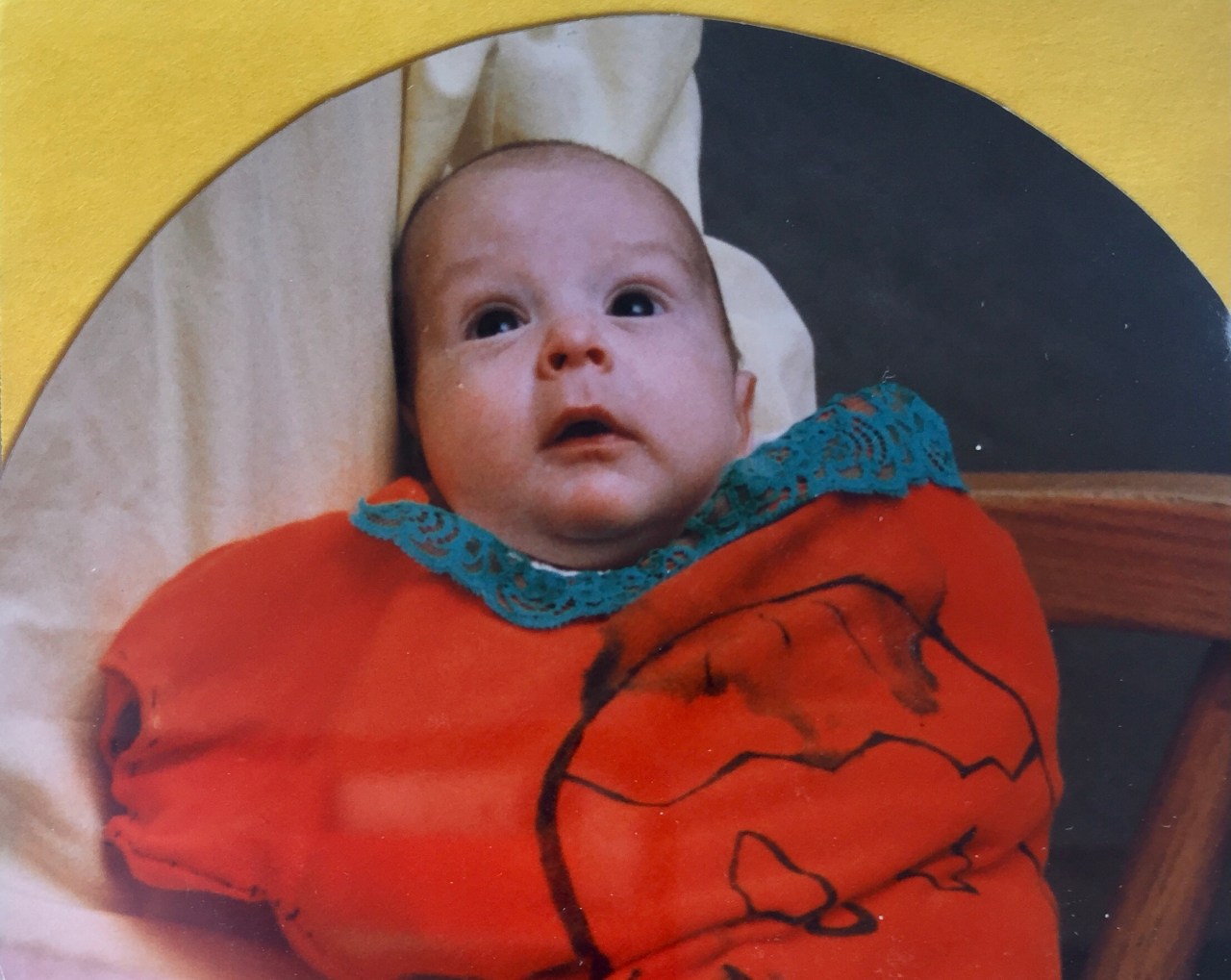
Once, when I was 7-years-old and my brother Evan was 4, my mom brought us to the cemetery on Halloween.

We had been driving by anyway, and so she considered it a good occasion to introduce us to the upcoming feasts of All Saints’ and All Souls’ Days even as our attention was fixated on costume-wearing and trick-or-treating later that evening.

My mom began, “This is the place where people are buried.”

“What?” my little brother asked incredulously. “You bury the person in the ground?”

My mom clarified, “The body is buried in the cemetery because you don’t need your body when you die because your soul goes to heaven to be with God. The body is like a costume.”
Continue reading

Strategic Dying

While we’re alive, we have a lot of workshops, education, and professional development on how to do things more strategically.

But, when is the last time you considered a strategy for how to die better?

The other day, I came across this great podcast episode by Dr. Yosefa (Fogel) Wruble on precisely this.

In it, she reflects on how Moses is an exemplar of dying well.

Here are three intriguing reasons she gives, which continue to be instructive and resonant today:

1) Appoint your successor

“One of the biggest gifts that a leader can give to his or her followers, to his or her community, is the clear – very clear – appointment of a successor. We know so many Hasidic sects and groups and different political parties and there’s so much history surrounding the lack of appointment of a successor and whenever I read the number of passages in which Joshua is appointed, it always makes my heart so happy because it’s one of the most basic lessons of leadership: When you’re a leader, learn how to delegate and when you’re done leading, when your time has come to a close, make sure that you find someone who can take your place and who can bring the institution or this group of people into their next era.”

Continue reading

“We Will Outlive Them!”

Three years ago, on October 27, 2018, a white supremacist committed the deadliest attack on Jews in the United States, killing eleven worshippers at a Shabbat morning service in Pittsburgh.

That weekend, I was attending a Shabbaton [program of Jewish learning over the Sabbath] in Thornhill. Since I was staying with an Orthodox family, I did not use my phone during Shabbat. And so, like many in the Jewish community, I found out about the shooting once Shabbat ended.

My heart sank. I read a few articles before heading upstairs and I wasn’t going to mention the news to my hosts until they had seen it for themselves.

That weekend, I had experienced what it is to be guarded by the oasis of time that Shabbat had been for all of us. I recalled Heschel’s words: “The Sabbath is no time for personal anxiety or care, for any activity that might dampen the spirit of joy. The Sabbath is no time to remember sins, to confess, to repent or even to pray for relief or anything we might need. It is a day for praise, not for petitions.” How could we have avoided anxiety and petitions on that day had we not been observing Shabbat?

Continue reading

Avoiding Easy Answers

The other day I had my first class called “Post-Holocaust Jewish Theologies and Selected Christian Responses.”

Among the readings with which we began the course, we were given this single page containing the following epitaph:

From the Psalms I learned to pray: “May the words of my mouth and the meditation of my heart be acceptable in your sight, O Lord, my rock and my redeemer.” (Psalm 19)

From Irving Greenberg I have learned to add:

“May they be credible in the presence of the burning children.”

The rabbi teaching our class also introduced us to some pages of Zalmen Gradowski who gave an eyewitness account of the death camps. Gradowski perished in October 1944 and his manuscripts were found after the war, hidden underground near the crematoria at Auschwitz.

Continue reading

Deserving Tomorrow

This evening I came upon this quotation attributed to Rabbi Nachman of Breslov:

“If you are not going to be any better tomorrow than you were today, then what need have you for tomorrow?”

That is a serious provocation to self-examination and personal responsibility.

What have I done to deserve tomorrow?

Tomorrow is a gift I cannot merit, but what would it look like to try to become more worthy of it?

What difference would it make, every night, to create new day’s resolutions?

“Once a flower, I have become a root.”

I have got to share with you this remarkable excerpt from Pope Francis’s recent address to members of the Jewish community in Hungary:

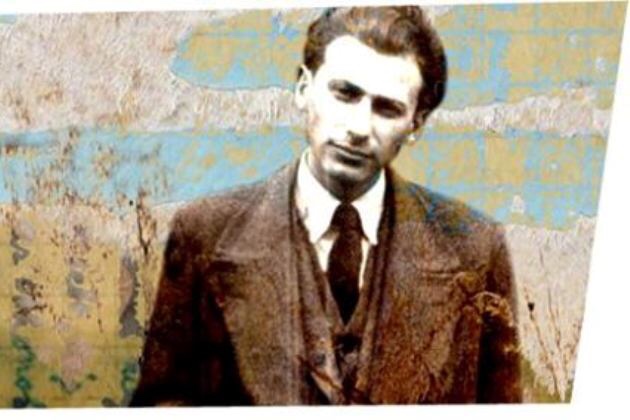
I am moved by the thought of all those friends of God who shone his light on the darkness of this world. I think in particular of Miklós Radnóti, a great poet of this country. His brilliant career was cut short by the blind hatred of those who, for no other reason than his Jewish origins, first prevented him from teaching and then separated him from his family.

Imprisoned in a concentration camp, in the darkest and most depraved chapter of human history, Radnóti continued until his death to write poetry. His Bor Notebook was his only collection of poems to survive the Shoah. It testifies to the power of his belief in the warmth of love amid the icy coldness of the camps, illumining the darkness of hatred with the light of faith. The author, crushed by the chains that constrained his soul, discovered a higher freedom and the courage to write that, “as a prisoner… I have taken the measure of all that I had hoped for” (Bor Notebook, Letter to his Wife). He also posed a question that resonates with us today: “And you, how do you live? Does your voice find an echo in this time?” (Bor Notebook, First Eclogue). Our voices, dear brothers and sisters, must not fail to echo that Word given us from Heaven, echoes of hope and peace. Even if no one listens or we are misunderstood, may our actions never deny the Revelation to which we are witnesses.

Finally, in the solitude and desolation of the concentration camp, as he realized his life was fading away, Radnóti wrote: “I am now myself a root… Once a flower, I have become a root” (Bor Notebook, Root). We too are called to become roots. For our part, we usually look for fruits, results or affirmation. Yet God makes his word fruitful on the earth with a soft rain that makes the fields flower (cf. Is 55:10). He reminds us that our faith journeys are but seeds, seeds that then become deep roots nourishing the memory and enabling the future to blossom. This is what the God of our fathers asks of us, because – as another poet wrote – “God waits in other places; he waits beneath everything. Where the roots are. Down below” (Rainer Maria Rilke, Vladimir, the Cloud Painter). We can only reach the heights if we have deep roots. If we are rooted in listening to the Most High and to others, we will help our contemporaries to accept and love one another. Only if we become roots of peace and shoots of unity, will we prove credible in the eyes of the world, which look to us with a yearning that can bring hope to blossom. I thank you and I encourage you to persevere in your journey together, thank you! Please forgive me for speaking while seated, but I am no longer fifteen years old! Thank you.

Continue reading

Death Rehearsal

This year I came upon this interesting sermon for Yom Kippur titled, “Let Death Be Our Teacher.”

This piece explains the way in which Yom Kippur is traditionally understood to be “a rehearsal of our death.”

In it, Rabbi Dara Frimmer says:

Let’s be honest, most of us wait until a crisis is upon us to make significant changes in our lives.

My father had a great life before he was diagnosed. He worked hard AND played golf every Wednesday. He loved photography, travel, and good food. He collected recipes from the New York Times and once a month our kitchen would become a gastronomy lab.

And when he was diagnosed, as most of us might do, he took account of his life – a Cheshbon Ha- Nefesh – literally, an accounting of his soul. Which is exactly what we are asked to do on Yom Kippur. A Cheshbon HaNefesh invites us to take inventory: Are we wasting moments of our life or are we lifting up and celebrating what is most precious?

Continue reading

Vocation Grasped in Retrospect

Today is the feast day of St. Edith Stein, a Jewish-Catholic saint and martyr born one century before me and to whom I have special devotion and affection.

In fact, I even spent one month a few years ago living in her former childhood home in Wroclaw, Poland (formerly Breslau, Germany).

Edith Stein was a German Jewish philosopher who became a Catholic nun and patron saint of Europe. Martyred in the Holocaust, she has been on my mind as I reflect on the meaning of vocation.

Continue reading

“I know that he will rise again…”

On the Feast Day of St. Martha, I am thinking about what I consider to be one of the most intriguing sentences in the New Testament – “I know that he will rise again in the resurrection on the last day.” (John 11:24)

This statement demonstrates the forcefulness and solidity of Jewish belief in an eventual resurrection of the dead.

Another pertinent section is 1 Corinthians 15 in which St. Paul discusses the importance of Christ having been raised from the dead saying, “If Christ has not been raised, then our proclamation has been in vain and your faith has been in vain.” (1. Cor. 15:14)

Continue reading

The Breath of the Spirit of Life

I have very much been enjoying Charles C. Camosy’s new book, Losing Our Dignity: How Secularized Medicine is Undermining Fundamental Human Equality.

Camosy begins with sketching the anthropological views undergirding our contemporary secular bioethics and then proceeds to explore recent cases, particularly at the beginning and end of life, where human equality has been questioned or undermined.

In a fascinating chapter on brain death, I was interested to learn about how Jews have succeeded in challenging the notion that brain death constitutes the death of the person.

Continue reading