From Disbelief to Advocacy: A son responds to his father’s ALS diagnosis

Brett Wilson was just 22 years old in the summer of 2019 when his father Rick was diagnosed with ALS.

ALS stands for amyotrophic lateral sclerosis and is a fatal nervous system disease.

In Canada, Rick was unable to secure a definitive diagnosis and so he travelled to the U.S.

“The verdict that he ‘might have ALS’ was not good enough for us,” Brett explained. “We needed clarity about what is essentially a death sentence of a disease since ALS involves a usual prognosis of a 2-5 year lifespan after the onset of symptoms.”

While awaiting confirmation of the disease, Brett refused to believe that his father had the terminal illness.

“I refused to believe it or talk about it,” he told me. “I kind of shunned my extended family who wanted to talk about it and, of course, for a while, it’s all they would talk about.”

Once Rick received the formal diagnosis, Brett remembers that his own life became “a cloud of stress.”

His grades took a hit in his fourth year of university and he marvels at how something about which he had previously known next to nothing became a consuming and omnipresent reality.

Continue reading

The beauty of deeds without repayment

This evening my friend shared a story with me about a couple she knows.

The couple is in their 80s and both the husband and wife are undergoing the loss of their memory.

This couple has been married for more than sixty years and they have three adult children.

One son and one daughter, who each have families of their own, have been committed to caring for their aging parents in the home in which they had all spent their life together as the children were being raised.

In an effort to preserve the routine and normalcy of family life, and in order to avoid needing to put the parents into a long-term care home, the adult son and daughter have developed a ritual of care.

Every single day, for the past six years, the daughter arrives to the home at 11:00 a.m. to serve her parents lunch.

And every single day, for the same six years, the son has arrived at 5:00 p.m. to serve dinner to his parents and then to open the door to the personal support workers who then take over in assisting with the parents’ care into the evening.

Continue reading

Caregiving as a school in humanity

This evening I read a short book written by my friend and colleague’s grandmother.

In the brief memoir, Walk with Me: growing rich through relationships, author Judy Rae reflects on the experience of caring for her husband Joe while he developed Alzheimer’s.

Presented with honesty and infused with a faith, Rae offers a window into how caregiving can be a school in humanity.

Judy recounts the pain and sorrow of watching her husband lose his memory and she does not skirt the undeniably tragic dimensions of this disease.

“I have been told that when a person is diagnosed with Alzheimer’s disease, he is introduced to a world of loneliness, rejection, terror, confusion, misinformation, and termination. Can this tragedy bring with it any victory into our lives?” she asks.

Rae speaks about how Joe became embarrassed and humiliated by what he could no longer do or remember. Despite the continual accompaniment, affection, and affirmation of his wife, Joe’s feelings of uselessness regularly caused him to get frustrated with himself and even to cry.

Continue reading

“If we die, we want to die together.”

Today I listened to this podcast episode that one of my best friends recommended in which Rahf Hallaq, a 21-year-old English language and literature student, speaks about the terror of experiencing the Israeli airstrikes in Gaza.

“She’s so articulate in humanizing herself and her community,” my friend told me in offering the recommendation.

When I listened, I was amazed. I think it is the first time that I ever cried while listening to a podcast. In fact, there were a couple occasions that I teared up while listening to Rahf share her story.

Apart from geopolitical calculations and political arguments, Rahf gives us a window into the impact that wider events are having on her own life in a way that is very concrete and personal.

In fact, Rahf’s testimony reminded me of what Eva Hoffman noticed about a Dutch Jewish woman who kept a diary during the Holocaust when she said, “Etty Hillesum lived at a time when the macrocosm of historical events almost completely crushed the microcosm of individual lives.”

Like Etty Hillesum, Rahf Hallaq, through this podcast episode, sought not so much to give a sweeping account of the political situation as to give us an account of her own soul.

It is moving to hear of her speak about her passion for books.

“My dad is the one who made the love of books grow inside me,” she reflects.

Then she shares about the impact of reading Orwell’s 1984 saying, “I mean, when you’re living under oppression, and when you read those books, you feel like you’re not the only one who’s going through this. You feel like these words are actually speaking about you and to you. They give you the power to talk about your own ideas after that.”

Naturally, she was totally devastated about the bombing of a local bookstore that was connected to so many memories for her and her friends.

In the episode, Rahf also speaks about how families in Gaza all huddle together in the same room during the airstrikes because, “If we die, we want to die together.”

Listening to her speak about how her dad used to try to tell her that the bombs were fireworks, in an effort to put her at ease, is also heartbreaking.

My friend was completely right. This story humanized Rahf and the people of Gaza.

It is hard to fathom the real lives of Gazans, but hopefully Rahf will be able to continue bearing witness to “the microcosm of individual lives” by sharing her own experiences with such candor and poise.



“I should be dead, so what’s the worst that can happen?”

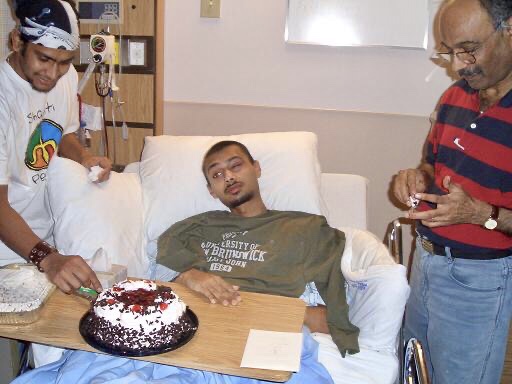
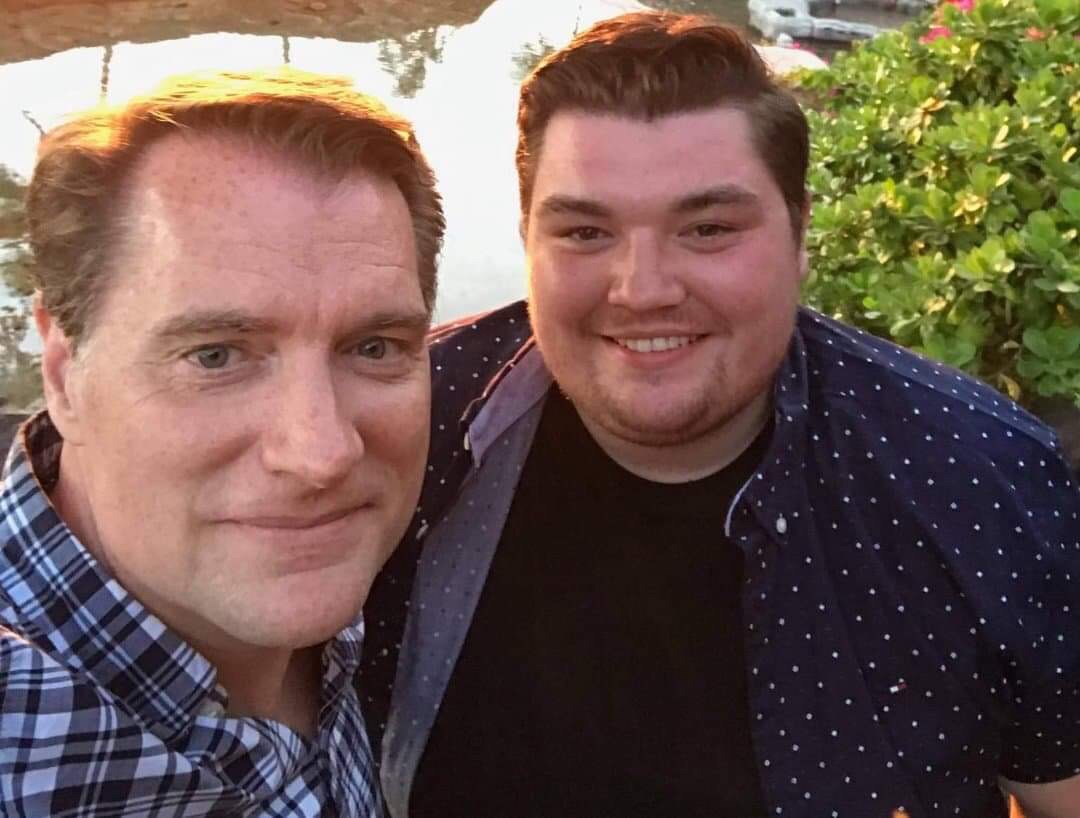
Recently, I spoke with Ottawa resident Darryl Sequeira about his near-death experience fifteen years ago.

In September 2005, Darryl was a 20-year-old university student in Saint John, New Brunswick.

He got drunk at a party one night and was passed out in the back seat of the car of a friend’s friend.

Unbeknownst to Darryl, the driver was also drunk and so, “It was the wrong car to fall asleep in.”

When the drunk driver crashed, the driver broke both his legs, the front seat passenger broke his right arm, the guy to Darryl’s left broke his left arm and the guy to Darryl’s right managed to get just a few cuts and bruises.

Because Darryl had been the only one asleep in the vehicle, he suffered the worst consequences. The car flipped over three times and he flew forward.

Continue reading

My Last Visit with My Last Grandparent

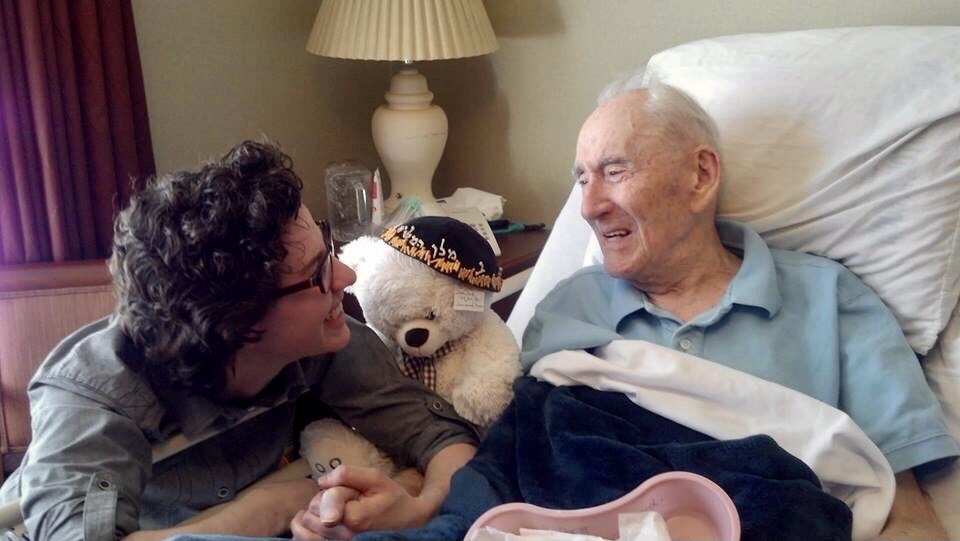
I didn’t know it at the time, but April 11th, 2015 marked my last visit with my last grandparent.

Joseph Achtman (Zaida) died two weeks later, and I am so grateful not only for my final visit with him, but also that I took the time to journal about our visit right after the fact.

Here is an excerpt from exactly what I wrote in April 2015.

Continue reading

No One Dies Alone

This evening my aunt, who is a primary nurse at the Rockyview General Hospital, shared with me a bit about her experiences as a nurse both before and amidst the pandemic.

In particular, she told me about a program initiated in 2015 called No One Dies Alone. This project of Alberta Health Services is a effort to ensure that any patient, who is without family or friends to visit them as they approach death, is met with some form of intentional companionship.

My aunt told me that, throughout the entire pandemic, she does not think anyone has died alone at her hospital. Most have had family and friends who were able to visit and for those who did not, they were accompanied by volunteers or clergy.

Continue reading

Thumbs Up for Life with Down Syndrome

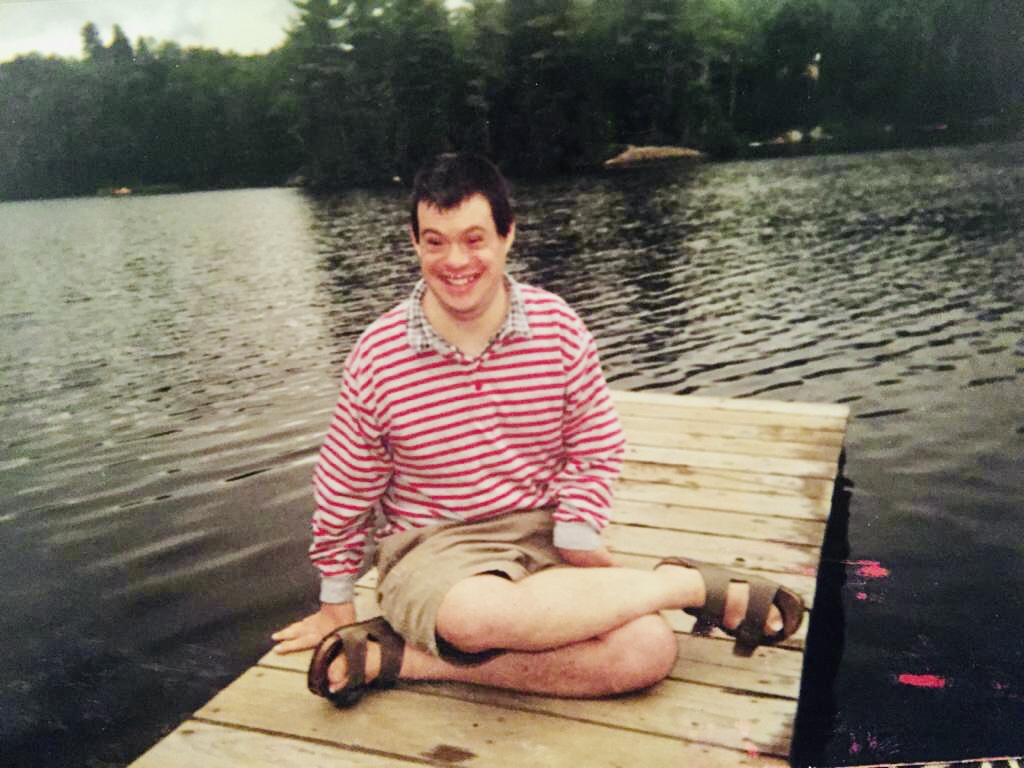
Today is World Down Syndrome Day, and so this evening my friends and I were reflecting on the value of those with Down Syndrome in our lives.

My favourite story my friend shared was about a man named Peter for whom she cared for one year while working as a live-in assistant at a L’Arche community in Montreal.

Peter was in his 30s and his kidneys did not work well. He was on dialysis and, because he could not urinate properly, he also had a catheter that, in his case, was surgically changed every six months.

Continue reading

Happy Are Those Who Don’t Fear Death

This evening I was having a chat with a friend who shared with me about growing up with parents who differ considerably in terms of their outlook on the risks of life.

My friend’s father is the social, energetic, and adventurous type. Whereas her mother has always been more cautious – even to the point of being afraid of flying, anxious in the passenger seat, and worried about safety.

“Maybe it comes from a good place,” my friend reflected, wanting to offer the most charitable interpretation. “Maybe it’s a matter of gratitude – knowing that you have a lot and simply wanting it to stay that way, not wanting to risk damage or disruption to that which you cherish so much.”

My friend told me that her mother’s fear of loss can be crippling but that, as a mother herself, she can also understand it to some extent.

Continue reading

Giving Death Its Due

On of my favourite sections of the book After One-Hundred-and-Twenty: Reflecting on Death, Mourning, and the Afterlife in the Jewish Tradition by Hillel Halkin is about the proper measure of grief in our lives and our communities.

Hilkin writes:

“The basic approach of the rabbis in Semahot [a rabbinic text on death and mourning] is to allow sufficient space for grief while channeling it into formulaic expressions and surrounding it with numerous prescriptions that make sure its desirable limits are not exceeded. Death is a blow that must not be faced alone; it requires the support of others; the emotions it arouses must be acknowledged and given voice to; yet they are best expressed in time-tested ways that never carry mourners past the point from which they can find their way back to normal functioning within a reasonable amount of time. Mourning is not just a private affair. It is the concern of the community, which is thrown off balance if one of its members fails to recover from a death quickly enough. Life has its rights, too. If a funeral and a wedding procession meets in the streets of the town, Semahot rules, the mourners must turn aside from the path of the bride, since ‘respect for the living precedes respect for the dead.’ Should you have to choose between paying a condolence call and attending a celebration for the birth of someone’s child, choose the celebration.”

Next, Halkin recounts this story from the same source about Rabbi Akiva when his son became seriously sick:

Continue reading