“You will not always have me.”

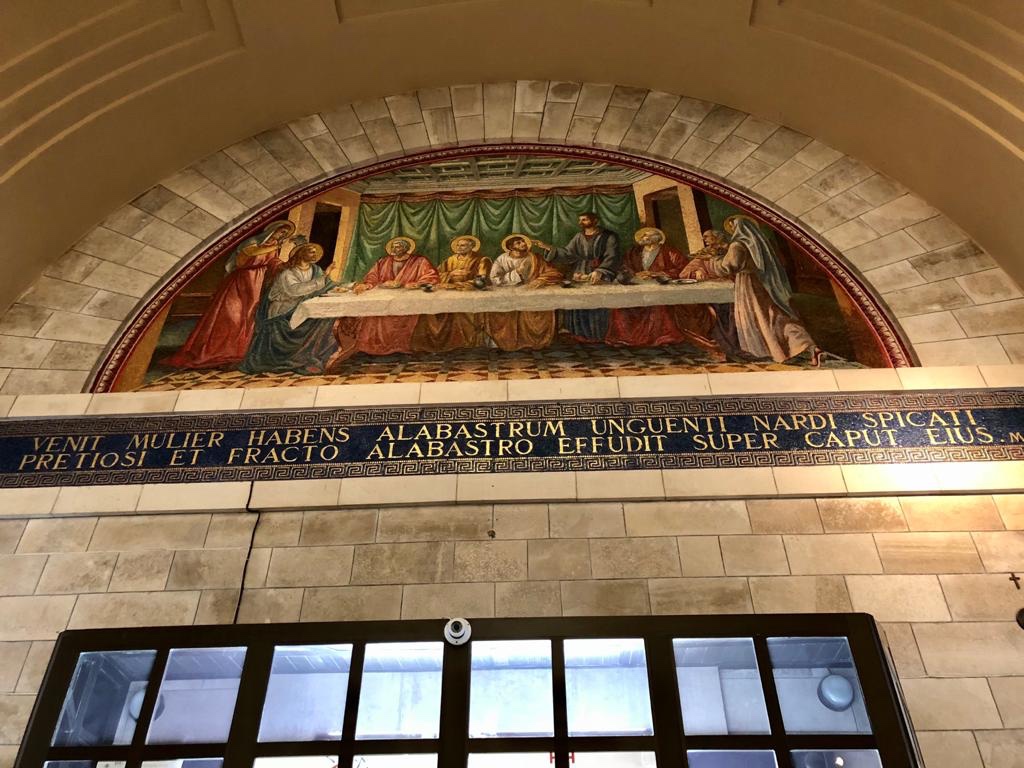
In the long gospel reading for Palm Sunday, we hear the story of the woman who anointed Jesus at Bethany.

Of the entire Sunday gospel reading from Mark, this section really struck me this year.

The woman anoints Jesus with a costly ointment from an alabaster jar that she bursts open in order to pour the ointment on his head.

The action provokes anger among observers over the ointment having been “wasted” instead of sold so that the money could be given to the poor.

Continue reading

What if you embrace the discordant note?

Most people know that Ludwig van Beethoven was one of the world’s most renowned composers, but not many know that, instead of dying on this date in 1827 at age 56, Beethoven almost died before he was born.

Several years ago, this 15-minute short film called Crescendo was released. I saw an early screening of it at the G.K. Chesterton conference hosted by the film’s producer Jason Jones. (For more about that conference, including Jason’s personal story he shared there, click to my post about it here.)

Asked about the extent of creative license he took with the film, Jason told an interviewer, “There’s one piece of fiction. But Beethoven’s father was indeed an alcoholic, he was abusive, he was a philanderer. And Beethoven’s mother had written in her diary that she wanted an abortion and she was suicidal and depressed.”

Continue reading

The Task Report in Death

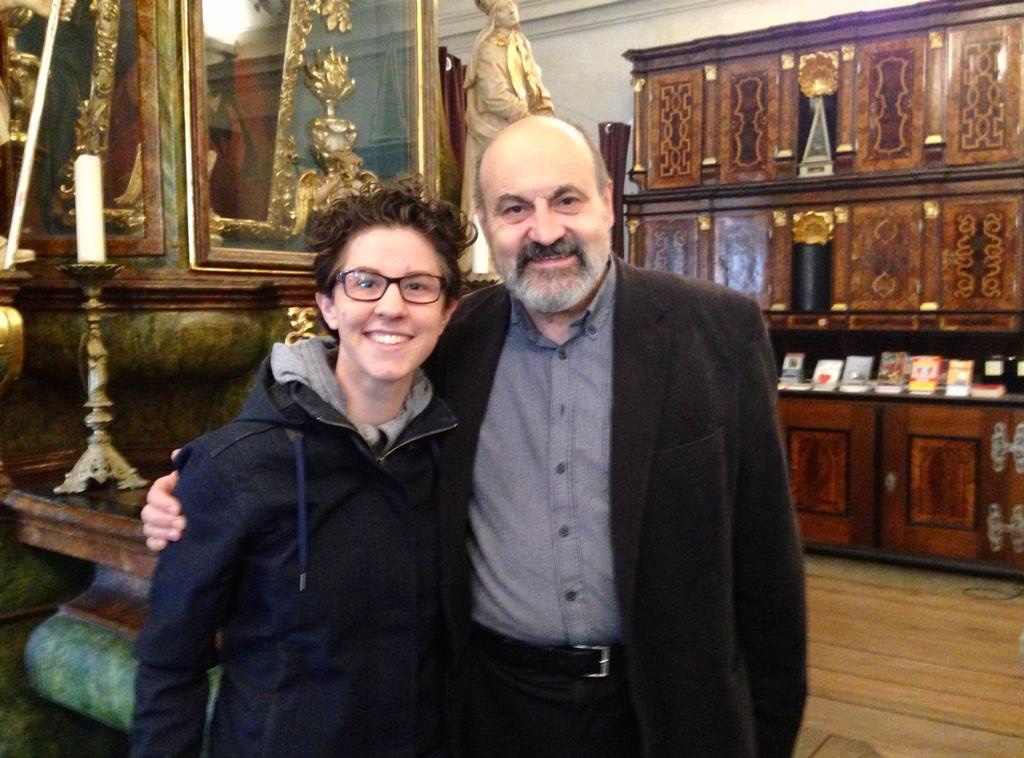
This evening I’ve been reading Tomáš Halík’s book, I Want You To Be: On the God of Love in which the thirteenth chapter is titled, “Stronger than Death.”

In this chapter, the Czech priest, philosopher, and Templeton Prize laureate discusses how, “in order to perceive death as a gift, one must first deeply experience life as a gift.”

Gratitude is the appropriate response to a gift but, importantly, life is not only a gift but also a responsibility. Halik, like Abraham Joshua Heschel, speaks of life as an assignment:

Death is not a mere returning of the gift of life. Only loans are returned, and to return a gift is always regarded as an insult to the donor. The entrance ticket to life (think of the conversation between Alyosha and Ivan Karamazov) is not returnable. Life is not just a gift; it is also an assignment. At the moment of death, the handing on of the life that was given to us as an opportunity and entrusted to us as a task is—in religion terms—a sort of completed task report, the hour of truth about the extent to which we have fulfilled or squandered the opportunity we were given. Aversion to that religious concept of death is possibly only assisted by arguments from the arsenal of materialistically interpreted science, although in fact it is more likely based on the anxiety aroused by the need to render an account to a Judge who cannot be bribed or influenced. Compared to that the atheist view that everything comes to an end at death is a comforting dose of opium!

How often do we consider giving God an inventory about how we have spent our lifetime?

To be accountable for our days is a basis for man’s proper dignity.

As Antoine de Saint-Exupéry put it, “To be a man is, precisely, to be responsible.”

And responsibility is not only a matter of what we do but, most importantly, of who we become through the moral footprint of our deeds in this world.

Photo: With Fr. Tomáš Halík in Prague in April 2016
A Most Noble Surrender

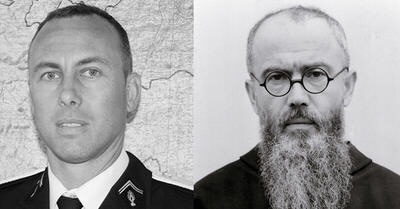
Three years ago today, Arnaud Beltrame offered his life in the place of a female hostage.

I think his story of sacrifice is worth remembering not only because it was formerly news but because it is now an honourable legacy from which we can stand to gain understanding something about the purpose of life.

Here’s some of what I wrote at the time:

Beltrame’s act of heroism was not out of character for him since he had first prepared the ground by surrendering to the call of natural virtues through his commendable military service. He superiors had acknowledged his “resolutely offensive spirit when faced with adversity” and his preparedness to “fight to the end and never give up.” In Beltrame’s life we can see how human virtues, such as the loyalty and selflessness he cultivated through his military training and service, prefigured his act of supernatural virtue in laying down his life for a stranger.

[…]

Beltrame’s act was not mere chivalry or a random act of kindness; it was something more powerful than that. As Hildebrand reminds, “We can never bring about of our own volition this state of being possessed by and lost in what is greater than ourselves.” Beltrame clearly believed in something even greater than his own life. 

“Whenever anything thus causes us to soar above the habitual plane of our life,” says Hildebrand, “Whenever we are possessed by something that overwhelms us… by its objective superiority, we also become delightfully aware that it is precisely this renunciation of our sovereignty which makes us really free.”

This is the freedom of a martyr who – even in losing his or her own life – still bears witness to that profounder and nobler reality than life itself – the love that triumphs over death. 

[…]

Like the death of Maximilian Kolbe, the Polish priest who seventy-seven years ago offered to take the place of a husband and father in Auschwitz, may Beltrame’s self-surrender bear much fruit in witnessing to the fact that we love best when we lay down our lives for God and others.

We need Beltrame’s legacy.

We need his example to fill us with admiration at the nobility of self-surrender for the sake of others.

His willingness to take the place of a stranger, even though it meant death for himself, confirms to us that death is not the greatest evil. What the terrorist did to Beltrame was far worse than the death Beltrame suffered, particularly for the terrorist’s own soul. But for Beltrame, while the loss is certainly tragic for his loved ones, the nobility of his self-surrender remains a resplendent example so that we are free to contemplate what it is that gives a person the freedom to literally lay down their life for another.

An Exemplary Eulogy

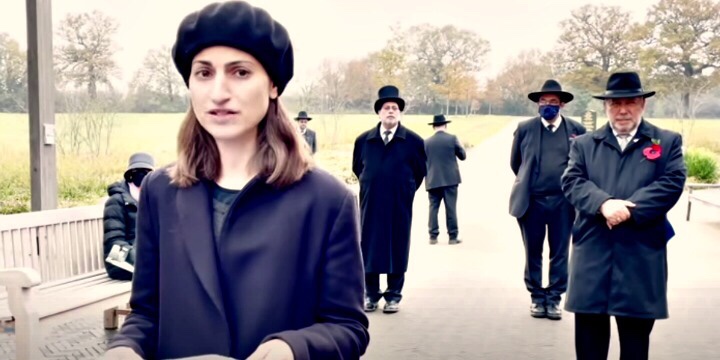
One of the most amazing speeches I ever had the privilege of hearing in person was delivered by Gila Sacks, the daughter of Rabbi Lord Jonathan Sacks. Gila delivered this speech to honour her father on the occasion of him being awarded the Templeton Prize in 2016.

A few years after that event, just this past fall, Rabbi Sacks passed away. When I watched the eulogy (below) that Gila delivered, many of the same qualities I had so admired about her Templeton speech shone through this one as well:

In this eulogy, Gila speaks to her father’s conviction that things can change and people can be responsible for changing them as well as to his character in forging his own children to become who they were created to be.

These are not mere words of sentimentality. What makes the eulogy so compelling is how Gila weaves the lessons from her father together with anecdotes from her ordinary, daily life along with what she learns and grapples with in the Bible.

I was struck by how well this eulogy fulfills the Jewish custom of eulogizing and lament, which has its basis in when Abraham eulogized and mourned his wife Sarah.

According to Jewish tradition, as discussed in this article, “When composing a eulogy, the goal is to praise the deceased, evoke an emotional reaction from the listeners, inspire listeners to improve their own lives by finding the qualities mentioned within themselves, and to consider their own legacies.”

Gila’s eulogy of her father is exemplary of this in every respect. She honoured her father well by reminding her listeners of their own capacity to build the world from love and responsibility.

The Way Teachers Remain With Us After They Die

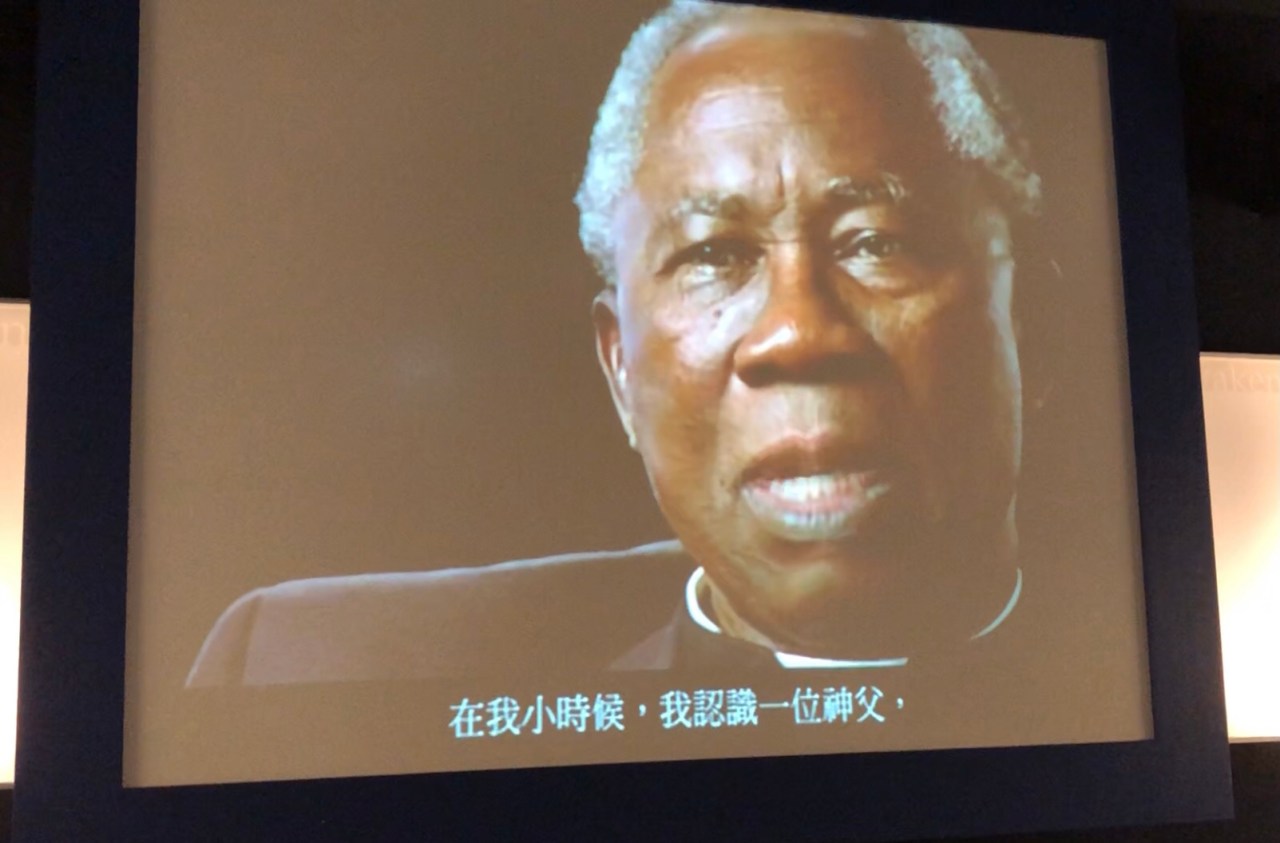
In the highly interactive and exceptionally curated Museum of World Religions in Taipei, there is a permanent exhibit called Awakenings. As described by the museum, “This specially commissioned film includes interviews with world-renowned religious leaders, well-known laity, and other visitors. They bear witness to personal experiences that led to important changes in their lives. The aim of the film is to generate a resonance in visitors, irrespective of their time of life, and encourage them to actively seek changes at all opportunities.”

In the clip below, which I took during my visit, Cardinal Francis Arinze reflects on the formative persons in his life, mainly priests and teachers. One thing that struck me about this brief interview is how much affection he has for his teachers and how, even about teachers who have died he says, “the link remained because they made a change in my life, these people.

When persons instill something of there character, when they teach in such a way that, as Cardinal Arinze says, “you [cannot] be indifferent to [them]”, then these people do not disappear when they die, but rather remain in their students in whom they have made such an impression.

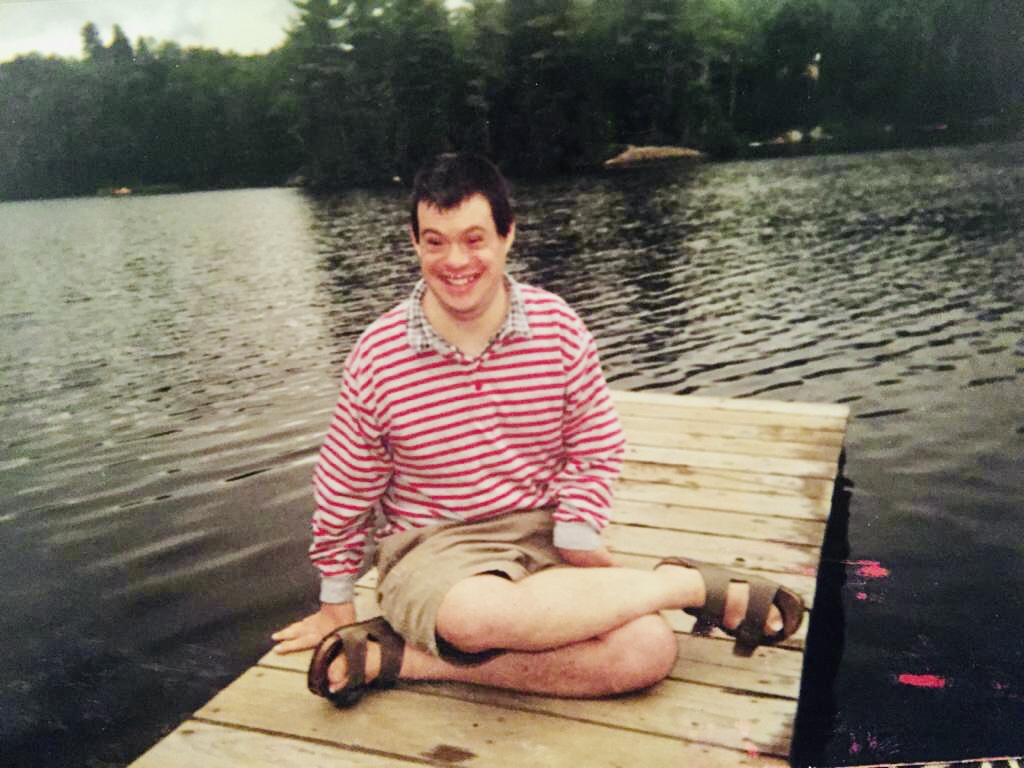
Thumbs Up for Life with Down Syndrome

Today is World Down Syndrome Day, and so this evening my friends and I were reflecting on the value of those with Down Syndrome in our lives.

My favourite story my friend shared was about a man named Peter for whom she cared for one year while working as a live-in assistant at a L’Arche community in Montreal.

Peter was in his 30s and his kidneys did not work well. He was on dialysis and, because he could not urinate properly, he also had a catheter that, in his case, was surgically changed every six months.

Continue reading

Cemeteries As Colourful As Life

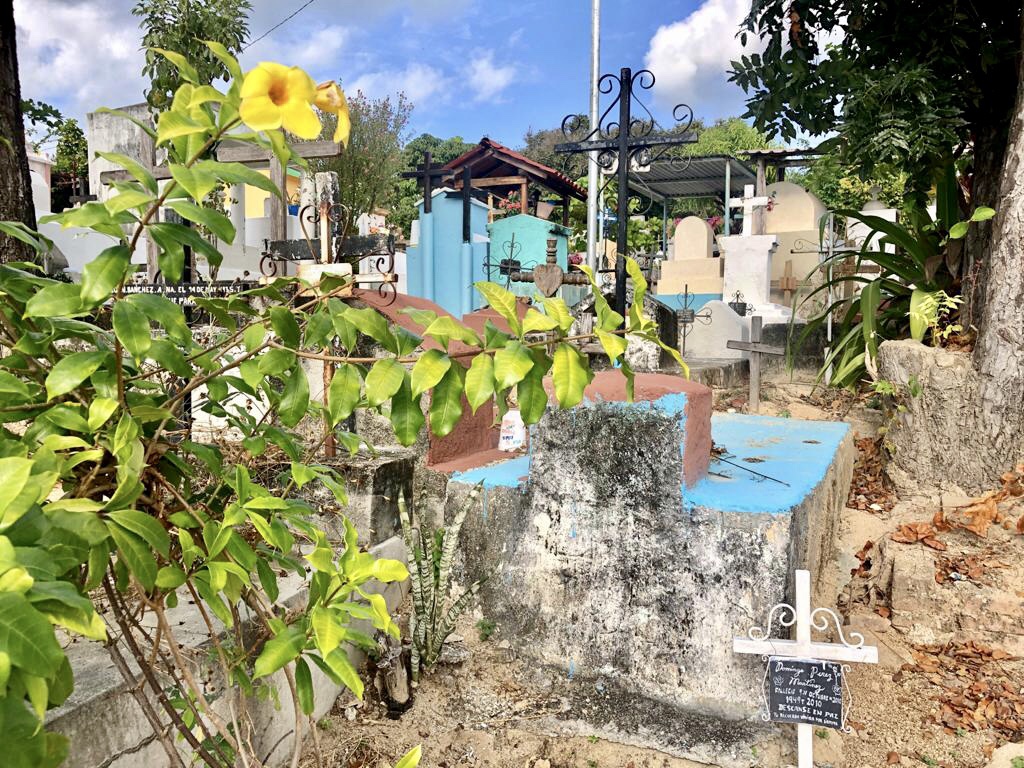
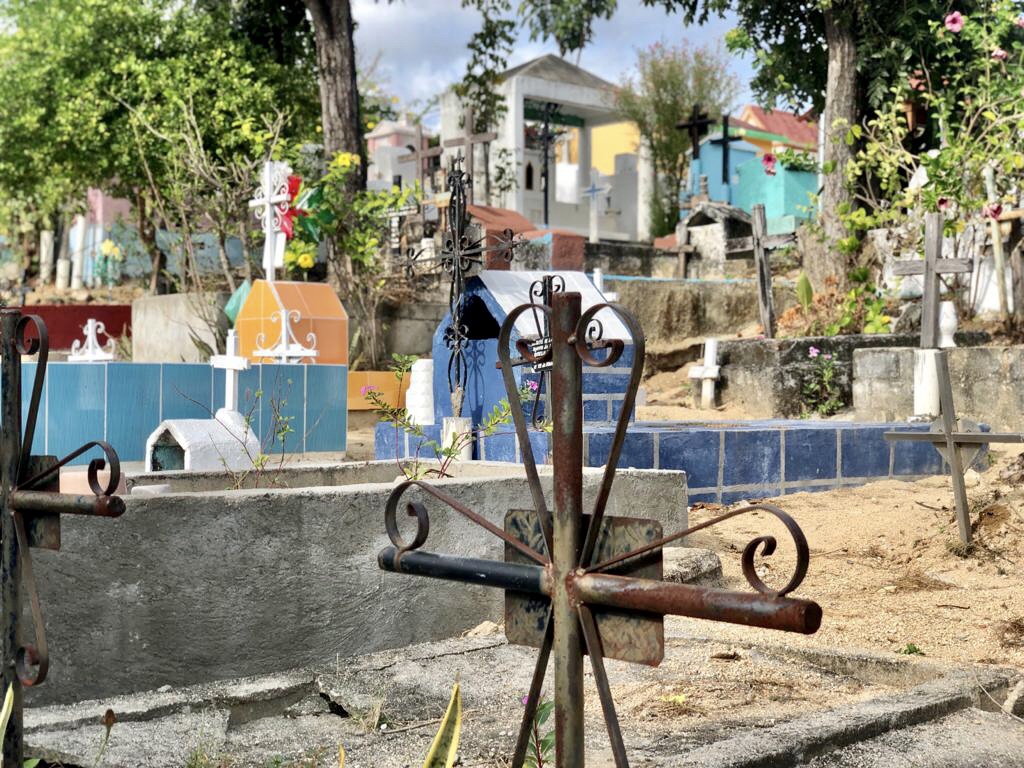
In December 2019, I was strolling through the Cemetery at Santa Maria Huatulco.

It struck me how colourful the Mexican cemetery is, and I noticed that the cemeteries are as colourful as the rest of the community. Take a look at these images:

Probably this cemetery in Mexico is the most vibrantly colourful cemetery I have visited to date.

This serves to make the cemetery as attractive and inviting and as other parts of town.

I often reflect on why it is that our hospitals in Canada are so drab. Only the Children’s Hospitals, if any, seem to be bright and colourful. Most of the time, they live up to what you imagine when you hear the word “clinical.”

What does it say about a culture when the hospitals and cemeteries are colourful and when they are not?

Do you think it’s appropriate or worthwhile for such places to be colourful? Why or why not?

“Dying People Are Not Afraid of Dying”

Yesterday, I was flipping through a new book by Rabbi Steve Leder titled, The Beauty of What Remains: How Our Greatest Fear Becomes Our Greatest Gift. The book emerged from a popular sermon the rabbi delivered about death on Yom Kippur, from the rabbi’s extensive experience accompanying the dying and their grieving families and, importantly, from the fruit of his own experience suffering the loss of his father.

I read the initial chapters and this paragraph in particular really struck me:

Whoever wrote the third chapter of Ecclesiastes (later made famous by the Byrds) was right. There really is a time for everything. Most people are ready for death the way we are all ready for sleep after a long and exhausting day. We just want to pull the covers up around our aching heads and settle in for the peace of it all. We are not anxious about sleeping. We are not depressed about it. We are not afraid of it. Disease, age, and life itself prepare us for death. There is a time for everything, and when it is our time to die, death is as natural a thing as life itself. Consider this very good news for those of us who fear death. Dying people are not afraid of dying. If you are afraid of dying, it is not your day. Anxiety is for the living. So if you are worried and anxious about dying, you’re not dying. Which means you have time to let death teach you about living and loving your life. 

Do you have any reason to dispute Rabbi Leder on this?

If not, does this explanation change your understanding of death?

Lastly, does hearing of the peace that comes with rest alter the anxiety of living at all?

Worthy of the Fight

Today I began reading The Ball and the Cross by G.K. Chesterton, which a friend just gave to me.

Early on in it, two men are brought before a police magistrate named Cumberland Vane. One of the men is a atheist named Mr. Turnbull who owns a secular bookshop and the other is a Catholic named Evan MacIan, who broke the window of Mr. Turnbull’s shop.

When Mr. Vane asks MacIan why he broke the window, he replied, “Because [Mr. Turnbull] blasphemed Our Lady.”

The magistrate then considers MacIan insane and asks, “What conceivable right have you to break other people’s windows because their opinions do not agree with yours? This man only gave expression to his sincere belief.”

In this provocative and imaginative paragraph, MacIan responds:

If he had said of my mother what he said of the Mother of God, there is not a club of clean men in Europe that would deny my right to call him out. If he had said it of my wife, you English would yourselves have pardoned me for beating him like a dog in the market place. Your worship, I have no mother; I have no wife. I have only that which the poor have equally with the rich; which the lonely have equally with the man of many friends. To me this whole strange world is homely, because in the heart of it there is a home; to me this cruel world is kindly, because higher than the heavens there is something more human than humanity. If a man must not fight for this, may he fight for anything? I would fight for my friend, but if I lost my friend, I should still be there. I would fight for my country, but if I lost my country, I should still exist. But if what that devil dreams were true, I should not be—I should burst like a bubble and be gone. I could not live in that imbecile universe. Shall I not fight for my own existence?”

What makes the fight worthwhile, in spite of everything?

And what it is that is worthy of the fight ultimately?

How, at first disappointing, and then irrelevant, would the greatest earthly victories and worldly successes be if good did not ultimately triumph over evil and life and love did not ultimately conquer death?

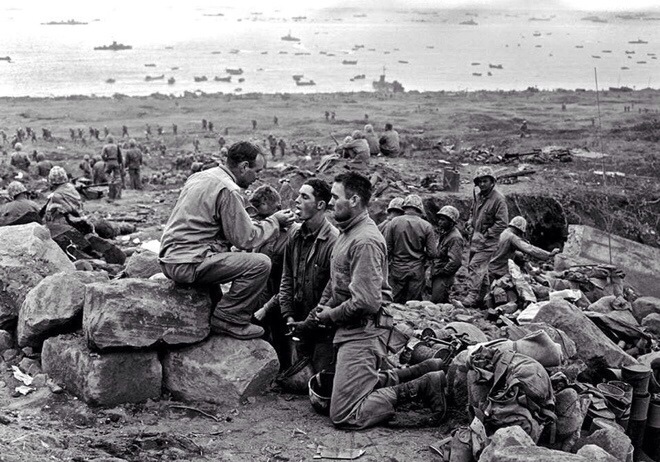
Photo: Soldiers receiving Communion