Doing away with superstitions

One of my favourite classical texts is Plutarch’s Parallel Lives. In writing about the lives of noble Greeks and Romans, Plutarch said his intention was not so much to write history as to write edifying moral biographies.

He said, “For I do not write Histories, but Lives; nor do the most conspicuous acts of necessity exhibit a man’s virtue or his vice, but oftentimes some slight circumstance, a word, or a jest, shows a man’s character better than battles with the slaughter of tens of thousands, and the greatest arrays of armies and sieges of cities. Now, as painters produce a likeness by a representation of the countenance and the expression of the eyes, without troubling themselves about the other parts of the body, so I must be allowed to look rather into the signs of a man’s character, and thus give a portrait of his life, leaving others to describe great events and battles.”

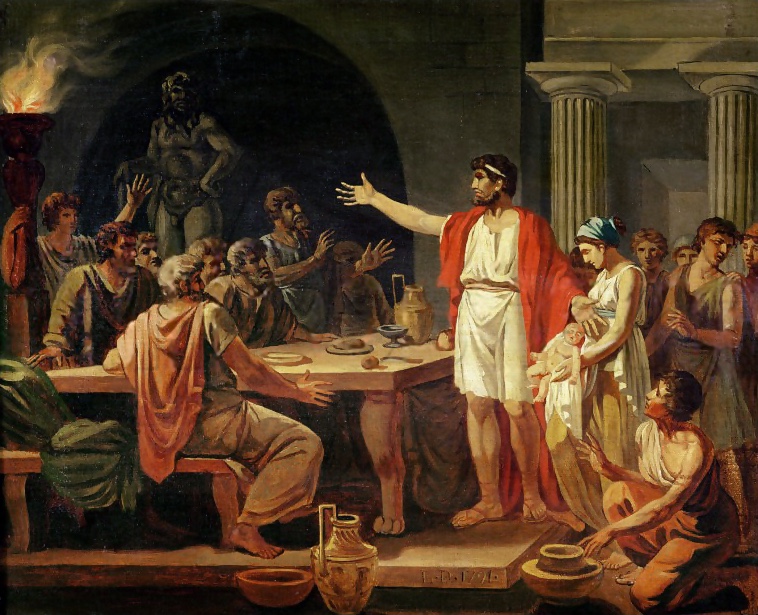
In introducing the life of Lycurgus, Plutarch even admits, “Concerning Lycurgus the lawgiver, in general, nothing can be said which is not disputed, since indeed there are different accounts of his birth, his travels, his death, and above all, of his work as lawmaker and statesman.”

Nevertheless, he has much to say about Lycurgus and his efforts “to make his people free-minded, self-sufficing, and moderate in all their ways.”

One section that I found particularly interesting is about burial. Here’s what Plutarch tells us:

Continue reading

What if you embrace the discordant note?

Most people know that Ludwig van Beethoven was one of the world’s most renowned composers, but not many know that, instead of dying on this date in 1827 at age 56, Beethoven almost died before he was born.

Several years ago, this 15-minute short film called Crescendo was released. I saw an early screening of it at the G.K. Chesterton conference hosted by the film’s producer Jason Jones. (For more about that conference, including Jason’s personal story he shared there, click to my post about it here.)

Asked about the extent of creative license he took with the film, Jason told an interviewer, “There’s one piece of fiction. But Beethoven’s father was indeed an alcoholic, he was abusive, he was a philanderer. And Beethoven’s mother had written in her diary that she wanted an abortion and she was suicidal and depressed.”

Continue reading

Resting in Abraham’s Bosom

Thomas Aquinas died on this date 747 years ago. Accordingly, I decided to see what came up first with a quick search about Aquinas on death. I was led to the Summa Theologiae and, specifically, to Question 69 on “Matters concerning the resurrection, and first of the place where souls are after death.”

During his lifetime, Thomas Aquinas considered many questions that most people would never consider at all. Take, for example, Article 4 of Question 69 in which he asks: “Whether the limbo of hell is the same as Abraham’s bosom?”

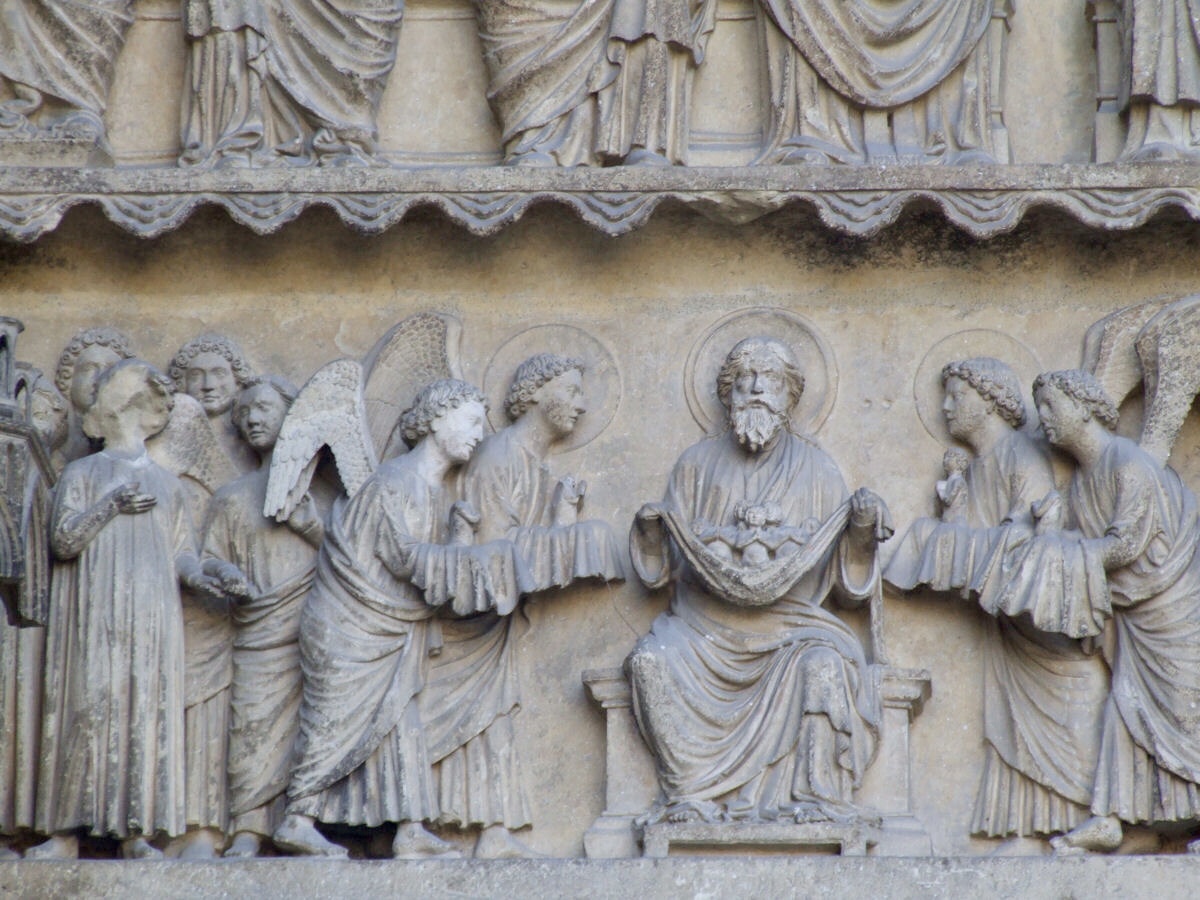
I had not heard (or didn’t particularly recall hearing) of “Abraham’s bosom” but a detailed Wikipedia article discusses the concept as it appears in the Bible, Jewish and Christian history, and religious art and literature.

Continue reading

Sketching Memories

On my iPhone, I have 33,250 photos.

Yesterday, when reading Janusz Korczak’s Ghetto Diary, I came across a section in which Korczak is conversing with a well-known painter who says to him:

“Everyone should know how to sketch in pencil what he wants to retain in memory. Not to be able to do that is to be illiterate.”

I read this sentence over and over again, and thought about it. I have 33,250 photos on my phone and only one of them is, in fact, an image of something I sketched in pencil.

Continue reading