The Courage of Kolbe

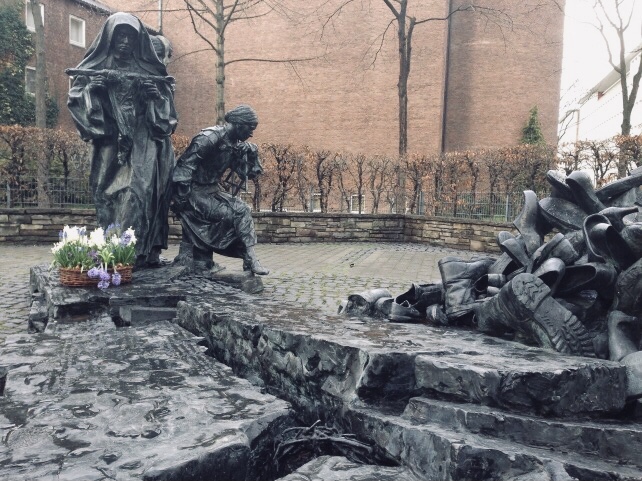
Today is the Feast Day of St. Maximilian Kolbe, the Polish priest who willingly offered to take the place of a prisoner destined for death in Auschwitz.

For many years this story has permeated my moral and spiritual imagination, and it has always been a great honour to get to share this remarkable story for the first time.

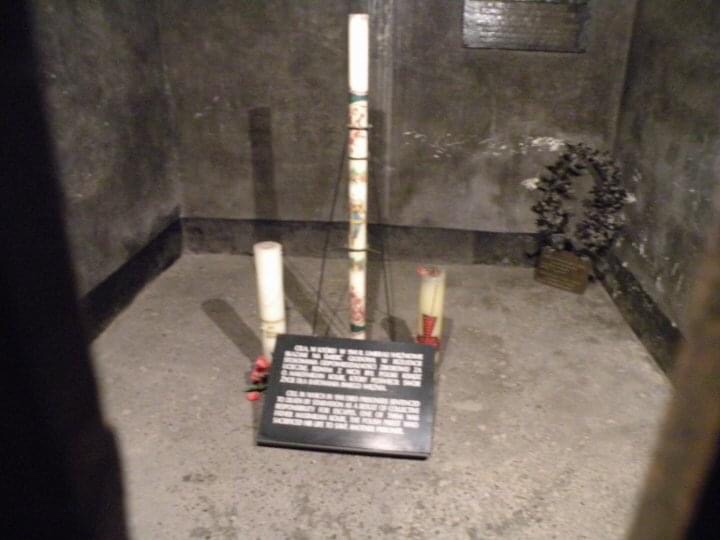
When you visit Auschwitz, it is possible to see the starvation cell in which Maximilian was held and to contemplate this story of sacrifice.

Maximilian’s selfless act was not a moral fluke. It was, to use an expression a friend offered recently, very much “in character.”

Earlier this year I heard another anecdote about Kolbe that I hadn’t heard before. I don’t have the source for it with me now, but from memory I will endeavour to retell it.

It is told that there was a prisoner in Auschwitz who was made to retrieve a corpse from a pile of bodies and move it to another place, probably to be burned. This prisoner, a Catholic man, was so repulsed by the pile of corpses that he could hardly bring himself to do it. Of course, not complying would have its own consequences for him. Fr. Maximilian saw this man’s distress and, looking between this man and then to the pile of bodies, whispered, “And the Word was made flesh.”

At this, a slight brightness returned to the prisoner’s eyes and he was consoled by this word (and the Word) to the extent that he was able to pick up the dead body and carry it reverently.

I am so taken by this story that shows that the Incarnation is a breakthrough. The compassion that God has for man is shown in His willingness to come alongside us and lift us up from the world of sin and darkness.

Will we have the courage, whenever and wherever we see a desecration of persons, to give encouragement and consolation with the poignant reminder that God is truly with us?

Who might have a truth that you need?

There is a verse in the Book of Sirach that has always resonated with me profoundly that says, “If you see an intelligent person, rise early to visit him; let your foot wear out his doorstep.” (Sirach 6:36)

Likewise, Rabbi Lord Jonathan Sacks has been an example to me of applying this principle concretely.

When he was a university student, he decided to travel throughout America to meet the leading rabbis of the day. All of them insisted he had to meet the Lubavitcher Rebbe, Menachem Mendel Schneerson.

Upon requesting the meeting, Sacks was initially laughed at for his audacity. However, some days later he got a phone call informing him, “The Rebbe will see you on Thursday.”

Continue reading

The Shelter of Wounds

Recently a friend of mine said something to me that was an epiphany. She reflected, “I don’t know anything about suffering being redemptive without others’ suffering being open to me.”

This immediately struck a chord and resonated within me profoundly.

Sometimes we need a friend to speak the truths we’ve known all along with the credibility of living witness.

In Spe Salvi, Pope Benedict XVI explains the way in which suffering that is shared becomes transformed:

Indeed, to accept the “other” who suffers, means that I take up his suffering in such a way that it becomes mine also. Because it has now become a shared suffering, though, in which another person is present, this suffering is penetrated by the light of love. The Latin word con-solatio, “consolation”, expresses this beautifully. It suggests being with the other in his solitude, so that it ceases to be solitude. 

Something else that comes to mind in thinking about this is the line from the Anima Christi prayer which says: “Within your wounds hide me.”

What is it to be hidden within another’s wounds?

How can a loved one’s wounds actually be a shelter for us?

Have we considered the ways in which a wound creates the actual space for greater openness and depth?

Without attempting to justify any evil, hurt, or injustice, how can revealing our woundedness to others create the hospitality in us for others in their woundedness such that “suffering is penetrated by the light of love”?

Not for a million dollars

As I reflect on the elderly who are, far too often, subjected to our cruel and dehumanizing throwaway culture, I recall an oft-repeated story about Mother Teresa.

She was tending to the poorest of the poor and the sickest of the sick when someone exclaimed, “I wouldn’t do that for a million dollars!”

To this, Mother Teresa replied, “Neither would I.”

It is important for caregivers to be well compensated for their deeply important and meaningful work of accompanying persons in their vulnerability, particularly as they near the end of their lives.

But do we understand that this kind of work cannot be reduced to being a means to a paycheque without creating a crisis in the hearts and minds of those who come face to face every day with human suffering, weakness, and fragility?

Mother Teresa, of course, saw herself as capable of doing the work that she did insofar as she could see God in His “distressing disguises.”

What is it that will enable caregivers today to do the necessary service about which many would say, “I wouldn’t do that for a million dollars?”

Roberto Clemente’s Immortality

Today while visiting my friends John and Sarah Beth in Houston, John brought home a book to show us titled, Clemente: The Passion and Grace of Baseball’s Last Hero by David Maraniss.

“I don’t find it easy or natural to think about death, but when I think about this book…” John began, excited to share with us the story of a noble life and death.

I had never heard of baseball player Roberto Clemente before but John’s sincere enthusiasm – and even reverence – for Clemente immediately signified to me his undeniable importance.

John told us that his passion for Clemente’s story was piqued in third grade. An excellent teacher had given the assignment of doing a biographical book report on any famous person he wanted to learn about, admired, or found interesting.

Continue reading

Vocation Grasped in Retrospect

Today is the feast day of St. Edith Stein, a Jewish-Catholic saint and martyr born one century before me and to whom I have special devotion and affection.

In fact, I even spent one month a few years ago living in her former childhood home in Wroclaw, Poland (formerly Breslau, Germany).

Edith Stein was a German Jewish philosopher who became a Catholic nun and patron saint of Europe. Martyred in the Holocaust, she has been on my mind as I reflect on the meaning of vocation.

Continue reading

Familiarity and Concern

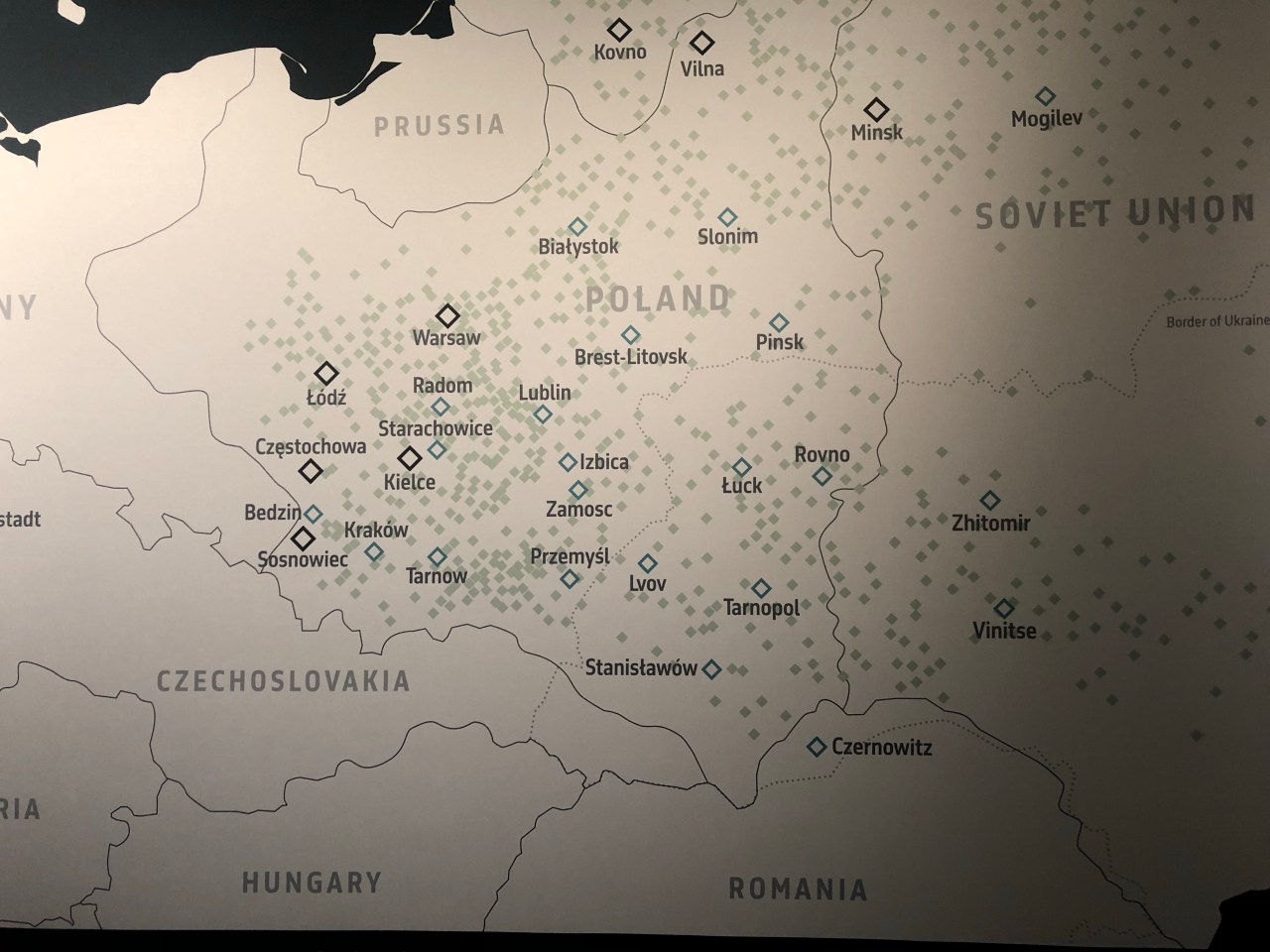
Yesterday when I was visiting the Houston Holocaust Museum, I saw the map above.

The first thing that struck me about this map is that it has Rovno on it. Rovno is where my grandfather was born. It’s not always on maps of central Europe, just as it hasn’t always been on the map for me until I began to take a greater interest in his story.

The other thing that comes to mind whenever I visit Holocaust Museums now is that, looking at the maps, I now know how to correctly pronounce the names of many of the places that I wouldn’t have dared to attempt pronouncing just a few years ago.

Continue reading

Genocide Education as Moral Formation

I still remember my utter perplexity at a so-called professor of Genocide Studies at a Canadian university having accused me of “voyeurism” for having travelled to Germany, Poland, and Rwanda on genocide study trips.

Now, I can see that such a bizarre accusation might stem from failing to see the way in which studying genocide properly can actually constitute an education in moral sense. By learning about perpetrators and meeting with rescuers and survivors, my friends and I with whom I studied and travelled encountered the moral drama of human action and responsibility in persons and deeds, not in mere systems or abstractions.

Continue reading

We are 38 million hostages

This morning I read Ursula K. Le Guin’s 1973 short story “The Ones Who Walk Away from Omelas.”

The story is about an idyllic town, flourishing with music, processions, decorations, horses, abundant food, flowers, bells, and so on.

The only trouble is that, in order to sustain all of this revelry and satisfaction, one child must be kept trapped in a small broom closet with no light, malnourished, naked, covered in sores, and sitting in its own excrement.

We read that, “this is usually explained to children when they are between eight and twelve, whenever they seem capable of understanding.”

Continue reading

“The Opposite of Everything Bad I Ever Did”

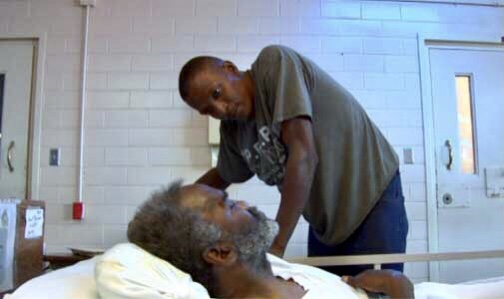
In Charles Camosy’s Losing Our Dignity, he mentions a documentary about prisoners providing hospice care for their fellow innates.

Intrigued, I searched for the trailer for this film titled Serving Life.

Take a look:

Continue reading