The other day, Fr. Mike Schmitz released this video, “The Key to a Happy Death” in which he shares that a student recently asked him, “In your experience, have you found that people who live a long and fulfilling life are more prepared, or better prepared to die–that they’re able to let go of their life more easily?”
And to this, he answered no.
The Opposite of Social Distancing
Jozef De Veuster was a Belgian Catholic who asked God to be sent on a mission.
Having done his formation for the priesthood in Belgium, he was then sent to Honolulu and was ordained two months later.
He took the name Damien and began his priestly ministry in the Hawaiian Islands.
During Fr. Damien’s time, there was a public health crisis. Mortality rates were high due to infectious diseases for which there was no herd immunity. Chinese workers were suspected of having brought the disease to the islands. The outbreak was not well understood and experts were unsure as to how it spread, whether it could be cured, and whether transmission could be stopped. The government passed mandatory quarantine legislation, even sending some people to isolate in remote locations. The officials insisted that these were not prisons, but there was certainly not enough medical supplies or doctors and nurses. Some experts thought the lepers would be better off dead. One health official conjectured, “It would seem that even demons themselves would pity their condition and hasten their death.”
Continue readingDoes your education fix your mind on eternal life?
In the chapter on Hope in Mere Christianity, C.S. Lewis discusses the paradox that “If you read history you will find that the Christians who did most for the present world were just those who thought most of the next.”
I certainly observed this during my studies and travels throughout Europe during which I was continually struck that the most beautiful art and architecture was made by people who believed in the immortality of the soul whereas materialists always seemed to produce the most ugly and bland structures and stuff.
There is something about looking forward longingly to the world to come that makes us more effective in this world than we could possibly be otherwise.
Continue readingCommemoration for All Ages
Today marks the 81st anniversary of the Katyn Forest Massacre and is the designated day of remembrance for the victims.
I don’t remember really learning about this event until I moved to Poland.
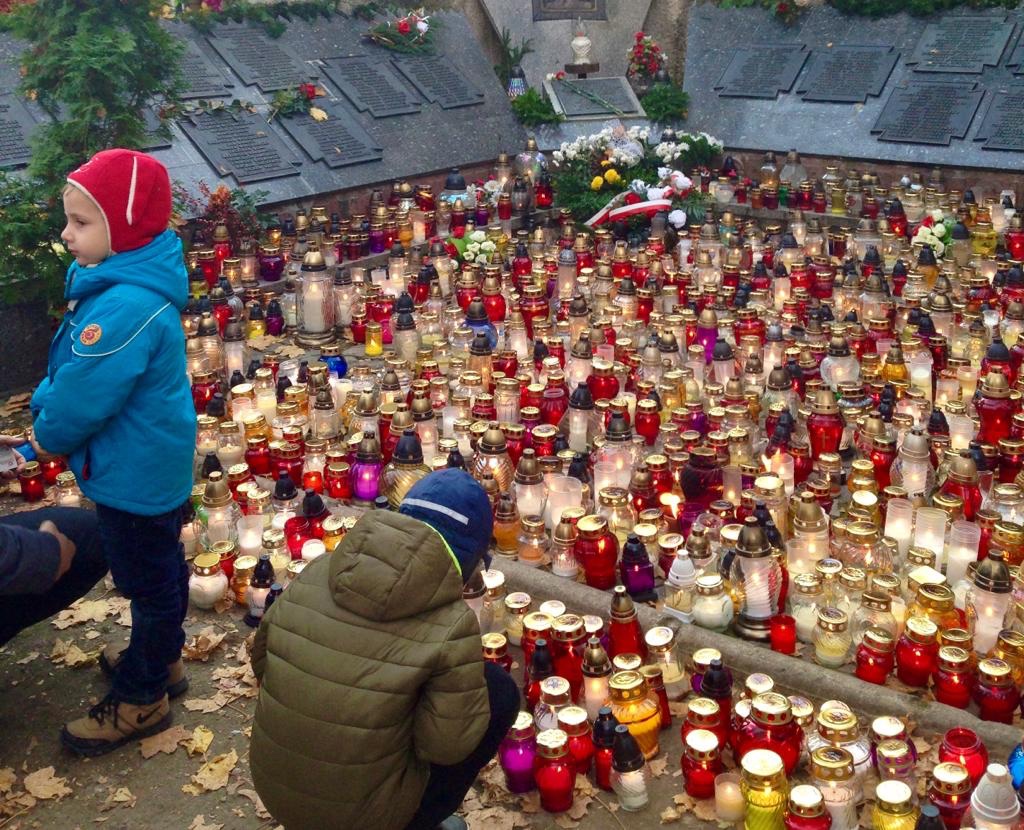
But once I was in Poland, I saw lots of monuments and memorials commemorating the more than 20,000 Poles who were murdered by Soviets in 1940. Since many of the mass graves were discovered in the Katyn Forest, this became the name by which the massacre came to be known.
One of the prominent Katyn memorials I saw was this one at the Lipowa Cemetery in Lublin, Poland.
Continue readingMade for Inexhaustible Joy
Today Facebook reminded me of this quotation I’d posted a few years ago from Brother Alois’ 2018 letter:
In privileged circles, where people are well fed, well educated, and well taken care of, joy is sometimes absent, as if some people were worn out and discouraged by the banality of their lives.
At times, paradoxically, the encounter with a destitute person communicates joy, perhaps only a spark of joy, but an authentic joy nonetheless.
This reminded me of what has been among the most joyful times of my life – the semester I lived at a homeless shelter as part of an intentional community at the Calgary Mustard Seed.
Continue readingMy Last Visit with My Last Grandparent
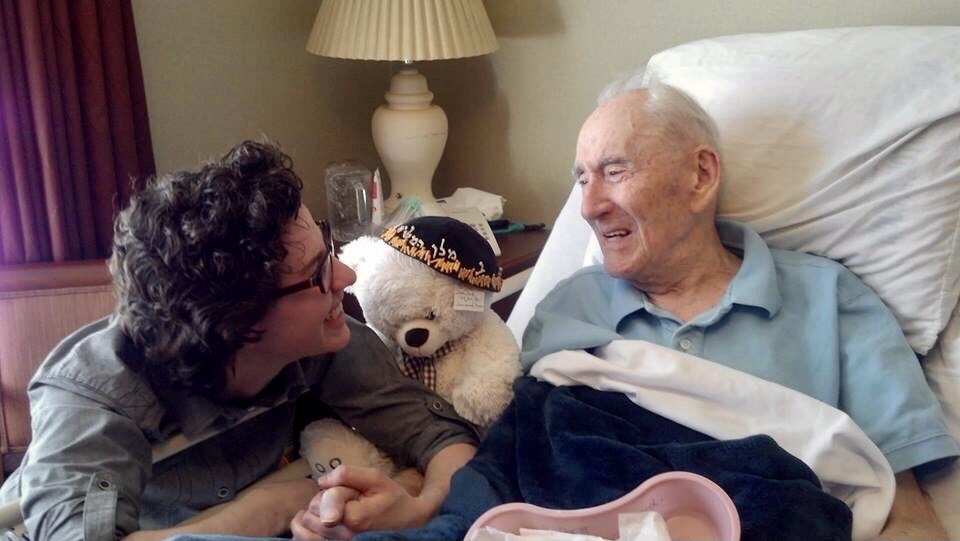
I didn’t know it at the time, but April 11th, 2015 marked my last visit with my last grandparent.
Joseph Achtman (Zaida) died two weeks later, and I am so grateful not only for my final visit with him, but also that I took the time to journal about our visit right after the fact.
Here is an excerpt from exactly what I wrote in April 2015.
Continue readingDoes Tragedy Confer Dignity?
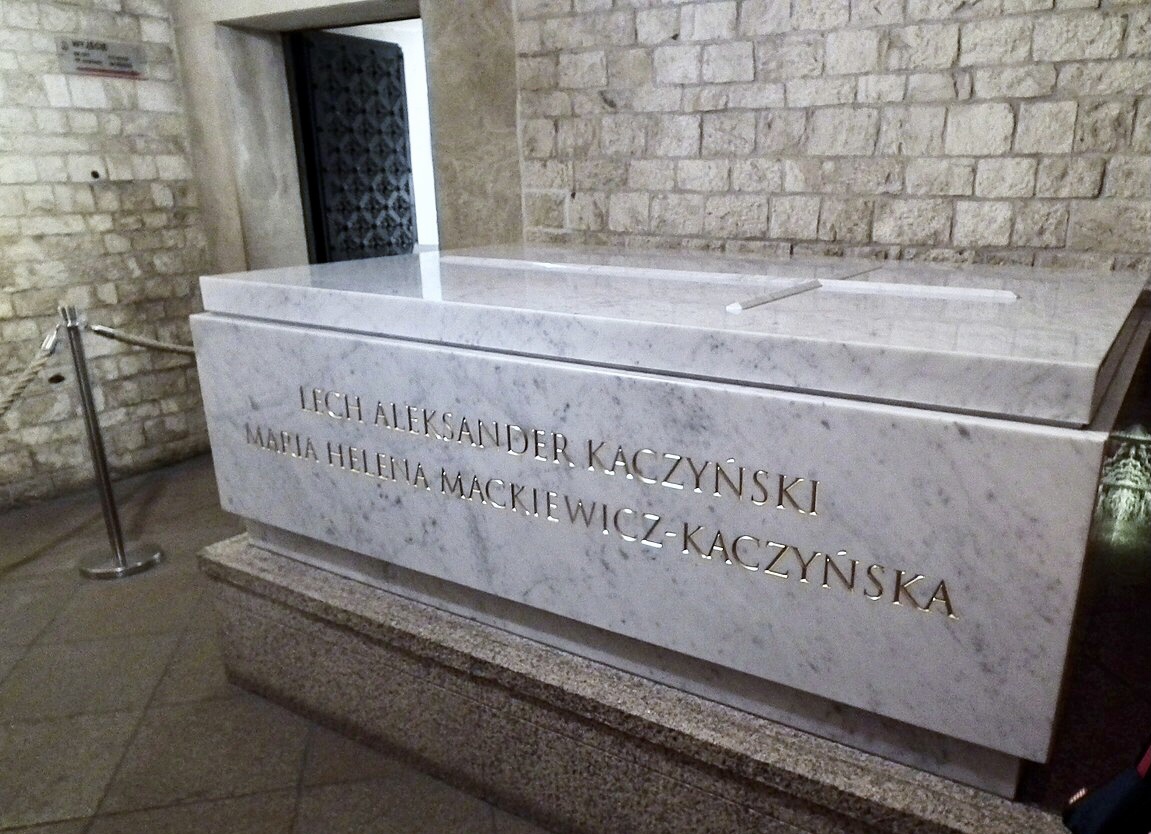
Today marks the 11th anniversary of the 2010 plane crash in which 96 people, including Poland’s then president Lech Kaczyński and his wife Maria, died.
They were en route to commemorate the 1940 Katyn Forest Massacre in which more than 20,000 Poles had been murdered by Soviets.
Those on the flight composed an official delegation and so many of the other crash victims were political, church, and military leaders in Poland.
I still remember a religious sister guiding me toward a monument commemorating victims of the crash in the Lublin cemetery. She whispered, “Some do not refer to this as the Smolensk disaster but rather as Katyn the Second.”
Bonhoeffer’s Worldliness
On this date in 1945, Dietrich Bonhoeffer, a Protestant pastor and theologian known for his ardent resistance to Nazism, was hanged at the Flossenbürg concentration camp.
Reportedly, an SS doctor who saw his execution testified to Bonhoeffer having been “devout, brave, and composed.” He said, “His death ensued after a few seconds . . . I have hardly ever seen a man die so entirely submissive to the will of God.”
Today I am reflecting on this excerpt from a 1944 letter that Bonhoeffer wrote to a friend in 1944 in which he reflects on what he calls “the worldliness of Christianity.”
Continue readingWith Eyes Open
I first heard the following story told by the incredible storyteller and guide Michael Bauer during the 2010 March of Remembrance and Hope Holocaust study trip to Germany and Poland.
Shmuel Gogol was a Polish Jew who was born in Warsaw. His mother died and his father was expelled from Poland. For a time, Shmuel was raised by his grandmother before she eventually brought him to Janusz Korczak’s orphanage.
One day, Shmuel saw a boy playing a harmonica and he immediately longed to have one of his own so that he could learn to play it. Janusz Korczak finally gave him one for his birthday.
As I have written about before, Korczak and 200 children of the orphanage were deported to the death camp called Treblinka. However, Shmuel was not among these children because his grandmother had smuggled him out of the Warsaw Ghetto to stay with his uncle in a different Polish town during the war.
However, despite these efforts to protect him, Shmuel still ended up getting deported to Auschwitz.
At Auschwitz, all of Shmuel’s possessions were confiscated, including his harmonica.
Time went on and, one day, Shmuel could hear the sound of a harmonica from within the concentration camp. So intent was he at the prospect of once again having a harmonica that he traded several days of food rations in order to obtain it from the other prisoner.
Remembrance in the Living Room
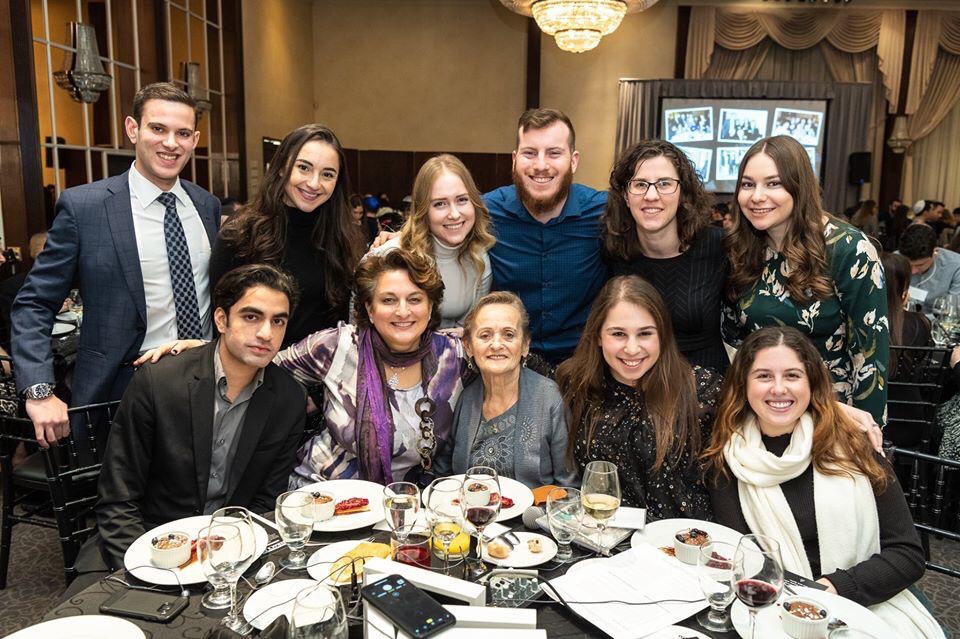
In 2010, some friends gathered in a living room to discuss the Holocaust, the testimony of survivors, and its impact on society over time in an intimate and familiar setting.
Since then, this experience has become an annual international initiative called Zikaron Basalon, which means “remembrance in the living room.”
The event usually takes place on Yom HaShoah, Israel’s official date of commemoration for those who perished in the Holocaust.
Continue reading