“May the wolf die!”

Today I learned an Italian idiom for wishing someone good luck that struck me as rather intriguing.

The phrase In bocca al lupo literally means “into the wolf’s mouth.”

The common reply on being wished good luck in this way is crepi il lupo – may the wolf die, or simply Crepi! meaning “May it die!”

The superstition embedded in such idiomatic phrases is that it is bad luck to wish someone good luck directly.

It is amusing to consider the ways in which presuming the worst can be a way of actually hoping for the best.

The Italian who taught me this idiom said that this mentality is quite deeply embedded in the culture. For example, before going rock climbing with some of his Mexican friends recently, he suggested to them that they would all be in the news after the trip having fallen off of the cliffs to their deaths.

Continue reading

Suffering in the Spotlight

I have been captivated by a recent audition on America’s Got Talent.

It is worth every second of your next seven and a half minutes to watch it, here:

Since watching Nightbirde’s audition a few times, I have also watched a couple interviews that she has given in recent days, checked out these podcasts between her and Virginia Dixon, and perused some of her blog posts.

Continue reading

Worth Doing Badly

Tonight I am remembering the oft-cited G.K. Chesterton quotation, “If a thing is worth doing, it is worth doing badly.”

It is seems to me that some of the things I find particularly worth doing and so that remain worth doing, even badly, are: studying new languages, attempting new skills, and learning more about cultural and religious traditions.

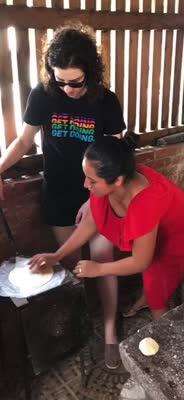
In the clip above, I was on a coffee plantation tour in Mexico when I stopped to attempt to make tortillas.

As you can see, it went rather badly.

As you can also see, I was smiling quite a lot and found it worth doing.

What is it about certain things that make them worthwhile even if we are not excellent at them?

In one of his letters, the poet Rainer Maria Rilke wrote:

Continue reading

Twitter Has a Character Limit that Epitaphs Do Not

Twitter has a character limit – by which I do not mean the 160 maximum characters allowed in a Twitter bio nor the 280 maximum characters allowed in a tweet.

Of course I mean to highlight the limits we find in bio blurbs and tweets when it comes to revealing anything substantive about a person’s actual character from a moral standpoint.

However, it is not the circumscribed brevity that leads to the omission of character.

The case in point for this for me came from reading Martin Mosebach’s The 21: Journey into the Land of Coptic Martyrs.

In the chapter titled, “With the Martyrs’ Families”, Mosebach recounts travelling to visit the homes of the families of the Coptic Christians who were martyred by Islamists on the coast of Libya in 2015.

These poor Egyptian Christian martyrs did not have Twitter accounts. In fact, Mosebach gives us a sense of their lifestyle by indicating that these men didn’t sleep on sheets, didn’t have bathtubs, and were likely acquainted with fleas and lice.

Continue reading

What would you do with a longer life, anyway?

I just finished re-reading Leon Kass’s splendid essay, “L’Chaim and Its Limits: Why Not Immortality?

I was reminded of that 2001 piece when I read this interview published yesterday about Archbishop Emeritus Charles Chaput’s new book Things Worth Dying For: Thoughts on a Life Worth Living.

Leon Kass begins his piece by exploring the primacy of life in Judaism and our wider culture’s interest in prolonging life and forestalling death.

Then, he raises some questions:

Continue reading

Sanctity Amidst An Epidemic

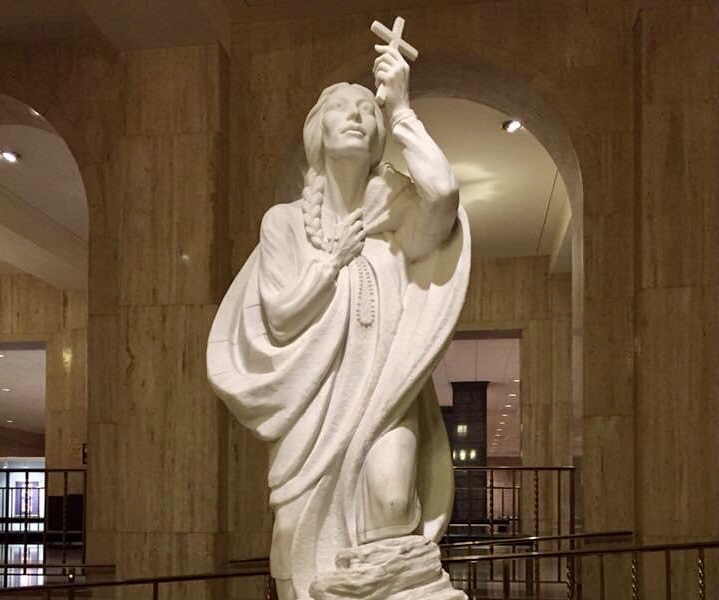
Today is the death anniversary and feast day of St. Kateri Tekakwitha – an indigenous Catholic who was born in 1656 to a Mohawk father and a Christian Algonquin mother.

During the homily announcing her canonization in 2012, Pope Benedict XVI said: “Kateri impresses us by the action of grace in her life in spite of the absence of external help and by the courage of her vocation, so unusual in her culture. In her, faith and culture enrich each other! May her example help us to live where we are, loving Jesus without denying who we are.”

In honour of the occasion, I discussed the life, death, and legacy of St. Kateri with my good friend Maria Lucas who is herself an indigenous Catholic.

Check out our discussion about St. Kateri’s virtues, her willingness to chart her own course in obedience to God’s will, the ways she navigated her indigenous Catholic identity, and how she died with tremendous faith and peace at age 24.

Photo: Statue of St. Kateri at the Basilica of the National Shrine of the Immaculate Conception in Washington, D.C. (2017)

Doing away with superstitions

One of my favourite classical texts is Plutarch’s Parallel Lives. In writing about the lives of noble Greeks and Romans, Plutarch said his intention was not so much to write history as to write edifying moral biographies.

He said, “For I do not write Histories, but Lives; nor do the most conspicuous acts of necessity exhibit a man’s virtue or his vice, but oftentimes some slight circumstance, a word, or a jest, shows a man’s character better than battles with the slaughter of tens of thousands, and the greatest arrays of armies and sieges of cities. Now, as painters produce a likeness by a representation of the countenance and the expression of the eyes, without troubling themselves about the other parts of the body, so I must be allowed to look rather into the signs of a man’s character, and thus give a portrait of his life, leaving others to describe great events and battles.”

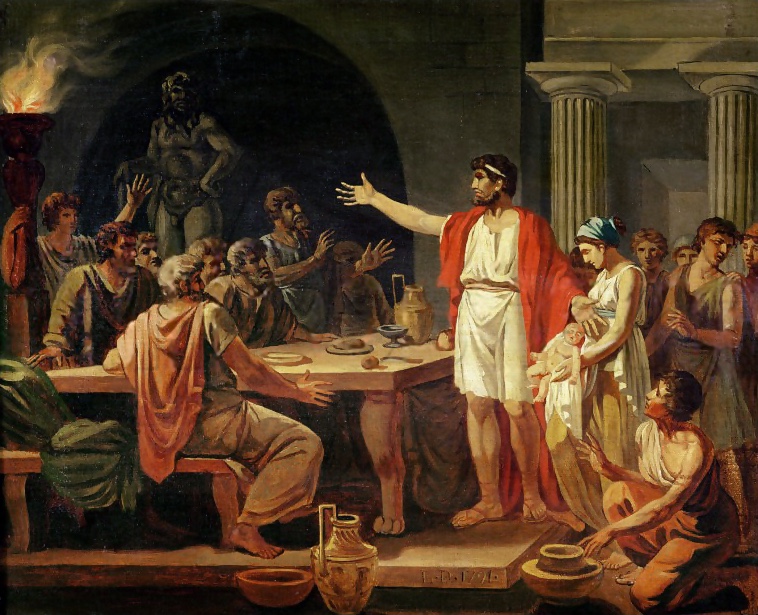
In introducing the life of Lycurgus, Plutarch even admits, “Concerning Lycurgus the lawgiver, in general, nothing can be said which is not disputed, since indeed there are different accounts of his birth, his travels, his death, and above all, of his work as lawmaker and statesman.”

Nevertheless, he has much to say about Lycurgus and his efforts “to make his people free-minded, self-sufficing, and moderate in all their ways.”

One section that I found particularly interesting is about burial. Here’s what Plutarch tells us:

Continue reading

What if you embrace the discordant note?

Most people know that Ludwig van Beethoven was one of the world’s most renowned composers, but not many know that, instead of dying on this date in 1827 at age 56, Beethoven almost died before he was born.

Several years ago, this 15-minute short film called Crescendo was released. I saw an early screening of it at the G.K. Chesterton conference hosted by the film’s producer Jason Jones. (For more about that conference, including Jason’s personal story he shared there, click to my post about it here.)

Asked about the extent of creative license he took with the film, Jason told an interviewer, “There’s one piece of fiction. But Beethoven’s father was indeed an alcoholic, he was abusive, he was a philanderer. And Beethoven’s mother had written in her diary that she wanted an abortion and she was suicidal and depressed.”

Continue reading

Giving Death Its Due

On of my favourite sections of the book After One-Hundred-and-Twenty: Reflecting on Death, Mourning, and the Afterlife in the Jewish Tradition by Hillel Halkin is about the proper measure of grief in our lives and our communities.

Hilkin writes:

“The basic approach of the rabbis in Semahot [a rabbinic text on death and mourning] is to allow sufficient space for grief while channeling it into formulaic expressions and surrounding it with numerous prescriptions that make sure its desirable limits are not exceeded. Death is a blow that must not be faced alone; it requires the support of others; the emotions it arouses must be acknowledged and given voice to; yet they are best expressed in time-tested ways that never carry mourners past the point from which they can find their way back to normal functioning within a reasonable amount of time. Mourning is not just a private affair. It is the concern of the community, which is thrown off balance if one of its members fails to recover from a death quickly enough. Life has its rights, too. If a funeral and a wedding procession meets in the streets of the town, Semahot rules, the mourners must turn aside from the path of the bride, since ‘respect for the living precedes respect for the dead.’ Should you have to choose between paying a condolence call and attending a celebration for the birth of someone’s child, choose the celebration.”

Next, Halkin recounts this story from the same source about Rabbi Akiva when his son became seriously sick:

Continue reading

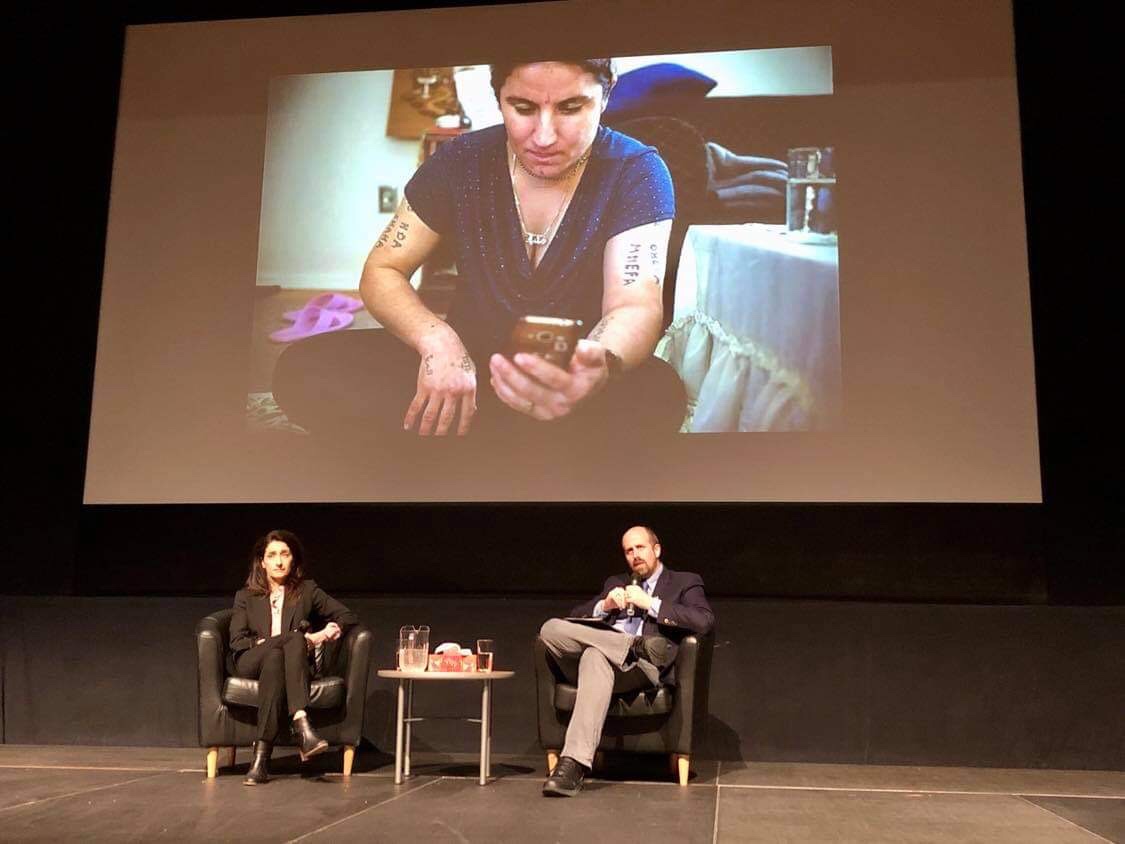
Yazidis in Canada Need a Cemetery

It took far too long in our globalized, hyperconnected, twenty-first century for the world to become alarmed about the genocide committed against Yazidis and other minorities. 

In 2016, the House of Commons unanimously passed a motion recognizing the genocide and pledging to provide asylum to Yazidis. An ancient people indigenous to Upper Mesopotamia compose a fledging new minority here in Canada.

Continue reading