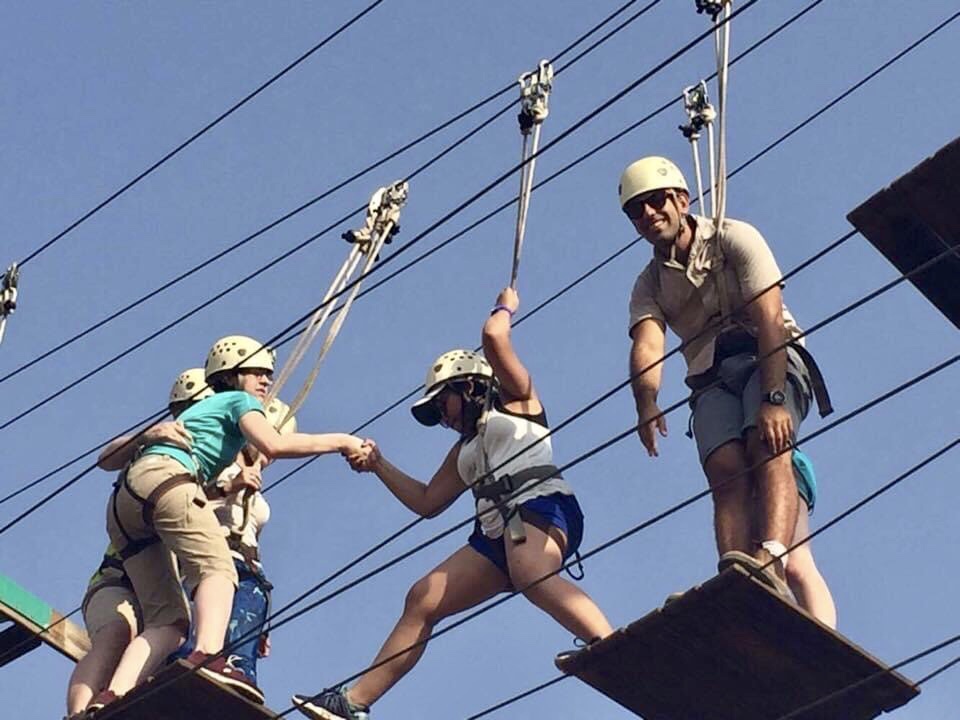
Resting in Abraham’s Bosom

Thomas Aquinas died on this date 747 years ago. Accordingly, I decided to see what came up first with a quick search about Aquinas on death. I was led to the Summa Theologiae and, specifically, to Question 69 on “Matters concerning the resurrection, and first of the place where souls are after death.”

During his lifetime, Thomas Aquinas considered many questions that most people would never consider at all. Take, for example, Article 4 of Question 69 in which he asks: “Whether the limbo of hell is the same as Abraham’s bosom?”

I had not heard (or didn’t particularly recall hearing) of “Abraham’s bosom” but a detailed Wikipedia article discusses the concept as it appears in the Bible, Jewish and Christian history, and religious art and literature.

Continue reading

Happy Are Those Who Don’t Fear Death

This evening I was having a chat with a friend who shared with me about growing up with parents who differ considerably in terms of their outlook on the risks of life.

My friend’s father is the social, energetic, and adventurous type. Whereas her mother has always been more cautious – even to the point of being afraid of flying, anxious in the passenger seat, and worried about safety.

“Maybe it comes from a good place,” my friend reflected, wanting to offer the most charitable interpretation. “Maybe it’s a matter of gratitude – knowing that you have a lot and simply wanting it to stay that way, not wanting to risk damage or disruption to that which you cherish so much.”

My friend told me that her mother’s fear of loss can be crippling but that, as a mother herself, she can also understand it to some extent.

Continue reading

How the Cross Can Be A Gift

This evening I have been watching some of the coverage of Pope Francis’ Apostolic Journey to Iraq. He is the first pope to ever visit the birthplace of Abraham.

It’s fascinating to see how the country is welcoming him and my Iraqi friend tells me that Iraqis wish he would either stay longer or come more often given how the pope’s visit is bringing the country together and even putting it into order in amazing ways.

Gifts are naturally an important part of hospitality, but what to get the pontiff who took the name of one about whom it’s been said, “It is doubtful that anyone desired riches as greatly as [he] desired poverty”?

Continue reading

Dying to Perfectionism

Several years ago, I had the opportunity to attend a seminar called “Freedom on the Big Screen: Communicating Liberty Through Film.” It was jointly hosted by the Foundation for Economic Education and the Moving Picture Institute.

Many of the things I learned during that workshop and, more recently, through Nas Academy courses continue to inform the work that I’m doing now. In fact, I often find that my education through seminars, conferences, and programs is at least as beneficial to my professional life as my traditional education.

And, even when a seminar is only a couple days, often the connections I make last much longer.

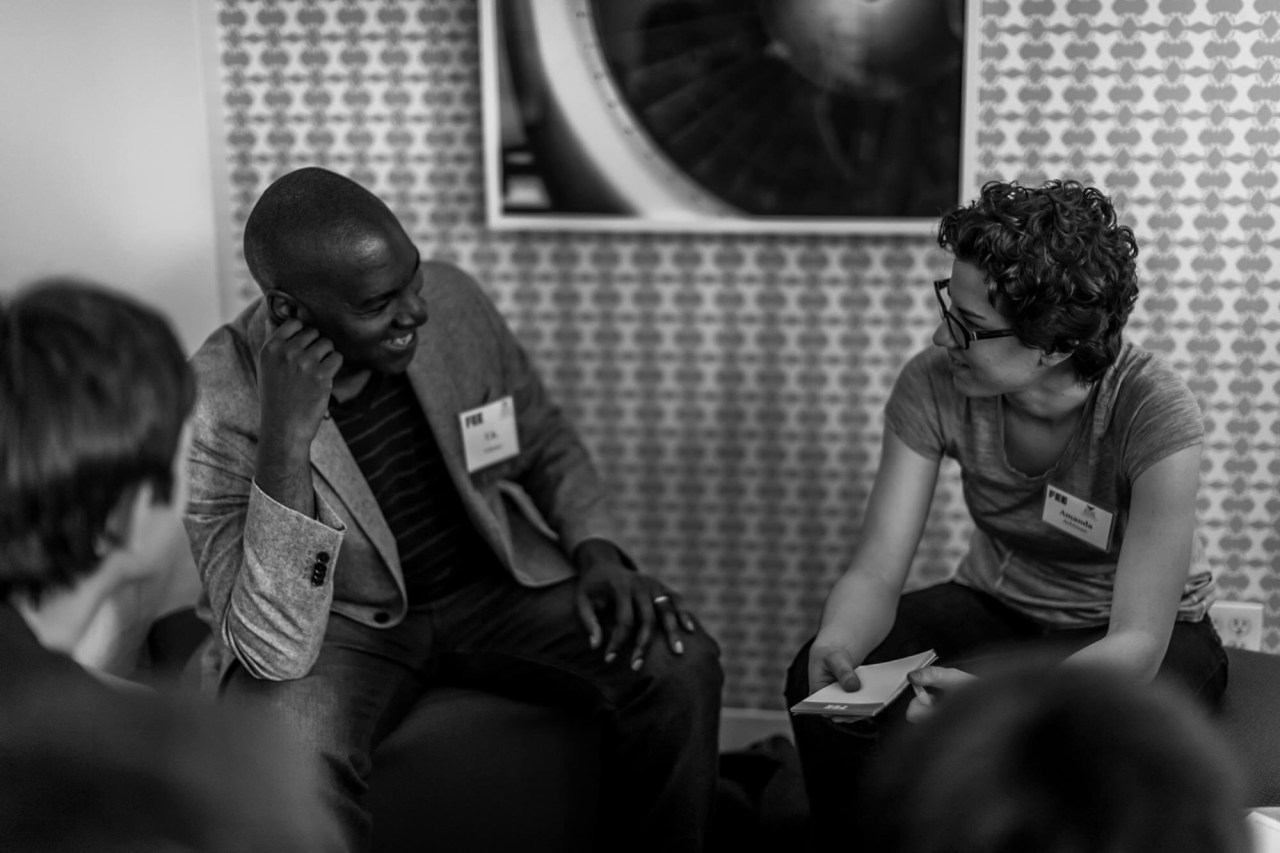
This is certainly true of the Freedom on the Big Screen seminar at which I met T.K. Coleman. T.K. is one of my favourite people to follow on Facebook. I am continually uplifted and inspired by his content.

Recently, he posted this on his page:

When the whole world seems to be losing its mind, that’s the BEST time to dial in on your mission.

The world needs people who can be composed, creative, and consistent in season and out of season.

The world is losing its mind, and I am deciding to blog every single day about death in a way that is consistently humanizing and uplifting. It won’t always be perfect, but part of the mission is the perseverance that comes through dying to perfectionism.

Caring for the Dying Without Props

Several years ago, I heard the story Bosco Gutierrez Cortina, a Mexican architect who was held hostage by kidnappers attempting to extort a ransom from his family. What struck me most about his story is how he devised a disciplined schedule for himself while is solitary confinement and he resolved to make good use of his time even while being held captive. Stripped of all of his ordinary resources, attachments, and supports, he was forced to discover what he actually had within inside himself. Without books, work, family, community, means of communication, and so much more, Bosco discovered what was a matter of his inner reserves versus what he had not yet deeply interiorized and made his own.

Sometimes I think about this and wonder just how well I know my faith, my family, and my friends. If I lost the ability to worship in community and to communicate with those I love, what would I have interiorly that would sustain me amid such deprival?

These thoughts also bring to mind an anecdote shared by Cicely Saunders, the founder of modern hospice and palliative care. In her biography, Shirley du Boulay writes, “When Cecily offered to read to David Tasma [the man who became the ‘founding patient’ of St. Christopher’s Hospice], thinking to comfort him, he said, ‘No — no reading. I only want what is in your mind and in your heart.’ She never forgot that simple reaction; and mind and heart became twin poles of St. Christopher’s philosophy.”

What do we have inside ourselves with which to comfort the dying? Without props, without activities, without prestige, who do we have to give when someone says, “I only want what is in your mind and in your heart”?
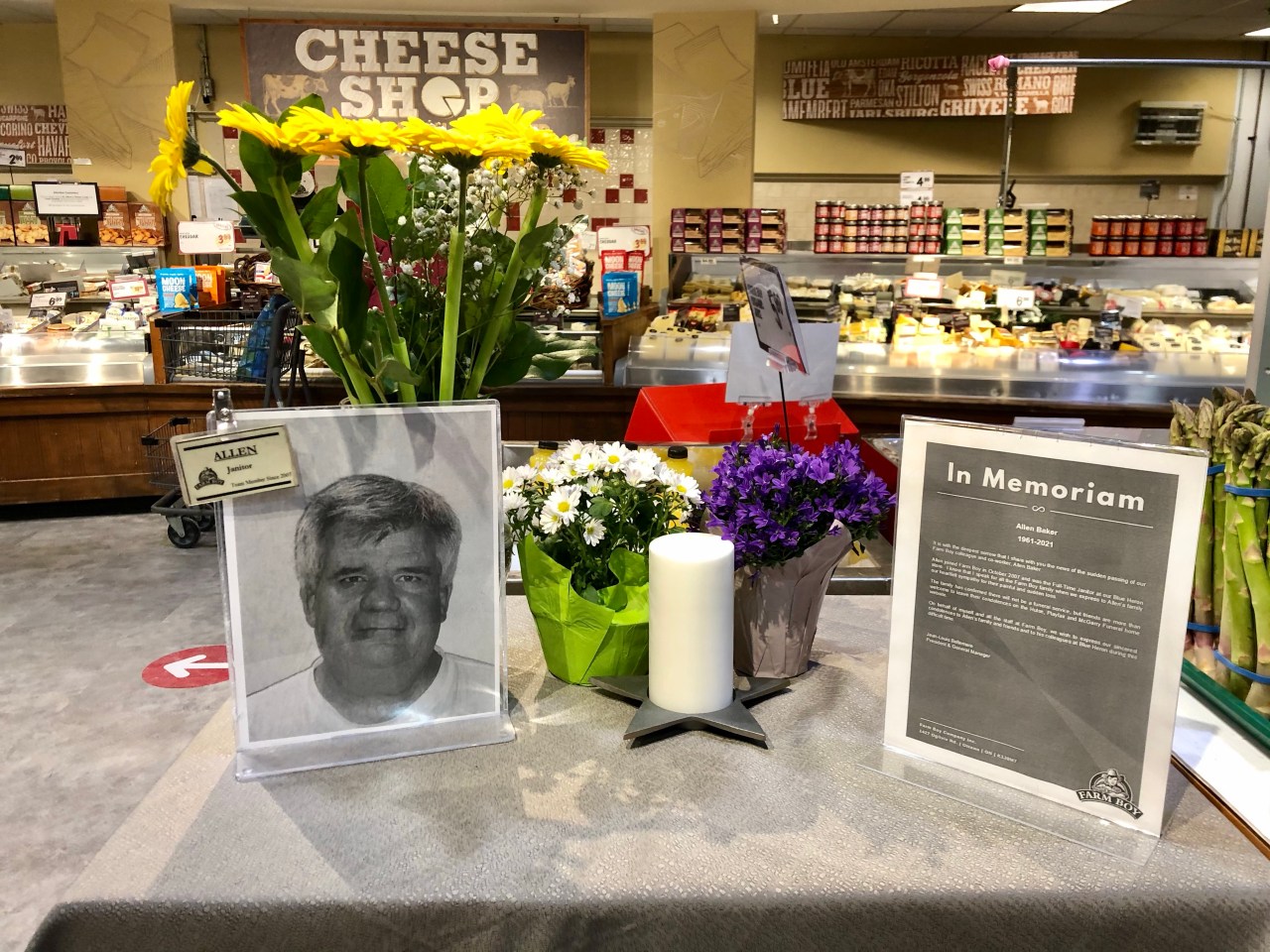
A Grocery Store Memorial

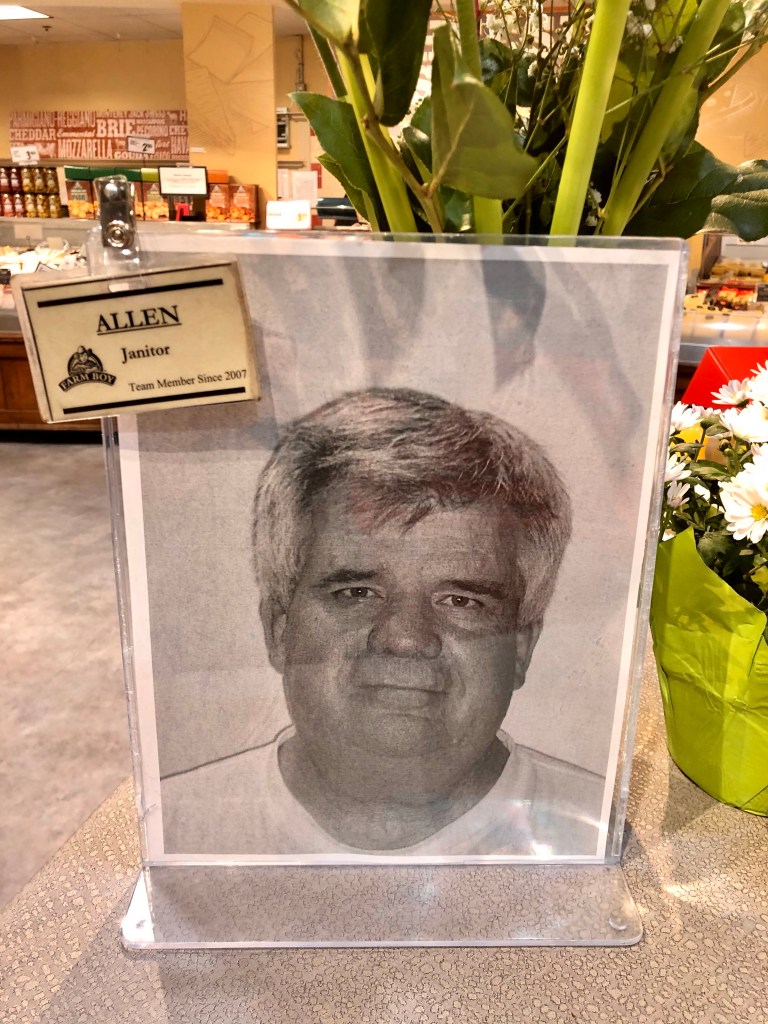
The janitor at my local grocery store was named Allen Baker.

I didn’t know Allen when he was alive, but I came to know of him by this memorial that the Farm Boy team set up to commemorate him at the entrance of the store, right next to the stalks of asparagus and Gruyère cheese.

Continue reading

Meet the People Granting Wishes to the Dying

One of this blog’s readers, Lisa Wright, reached out to me to share about the organization she co-founded called the Living Wish Foundation.

Lisa, who is an Registered Nurse specializing in palliative care, and her co-founders established the Foundation with the mission “to provide medically supervised and supported end of life wishes to patients in the region who are facing a terminal diagnosis.” They do this by granting wishes that enable patients to reframe hope so to enhance their quality of life until their death.

I was fascinated by this initiative, and delighted to interview Lisa by phone to learn more.

In particular, I wanted to hear from her about how granting wishes serves to “reframe hope.”

Continue reading

Dying to Contentment

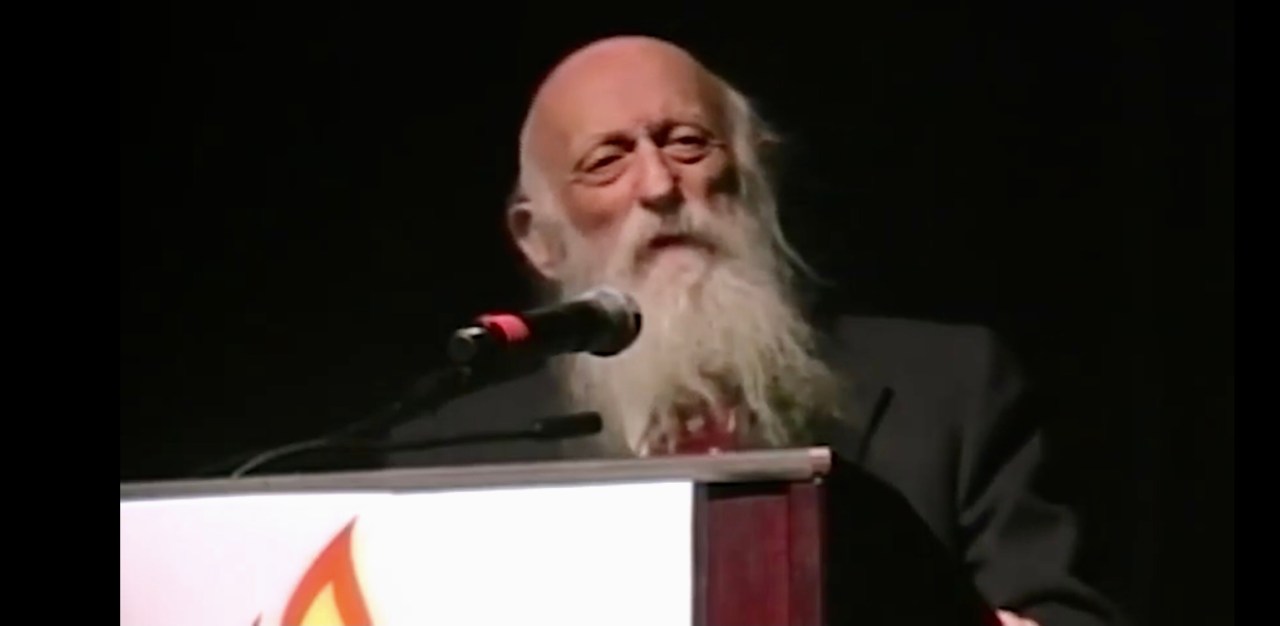
“I’ve never tried cocaine or heroin but I believe the people that tell me it’s a very pleasing, pleasurable feeling,” began Rabbi Dr. Abraham J. Twerski in this talk.

He goes on to discuss how Carnation has long sold evaporated milk with the slogan, “Milk from contented cows.” The rabbi continues, “If contentment is the excellence of a cow and all I look for in life is contentment, then I share a goal in life with a cow, and I’m not ready to lower myself to that stage.”

Rabbi Twerski thought there’s nothing wrong with being content but that making contentment a goal of life is an animal trait, not the human vocation.

Continue reading

Have you tried something at which you could fail lately?

I find it striking that palliative care nurse Bronnie Ware found the top regret of the dying patients she encountered to be, “I wish I’d had the courage to live a life true to myself, not the life others expected of me.”

Today I have been reflecting on the reasons for why this might be. Is it because others’ expectations are in real tension with our own? Or, is it because the expectations of others are so apparent to us and we do not actually know ourselves well enough to have expectations of our own?

Continue reading