Roberto Clemente’s Immortality

Today while visiting my friends John and Sarah Beth in Houston, John brought home a book to show us titled, Clemente: The Passion and Grace of Baseball’s Last Hero by David Maraniss.

“I don’t find it easy or natural to think about death, but when I think about this book…” John began, excited to share with us the story of a noble life and death.

I had never heard of baseball player Roberto Clemente before but John’s sincere enthusiasm – and even reverence – for Clemente immediately signified to me his undeniable importance.

John told us that his passion for Clemente’s story was piqued in third grade. An excellent teacher had given the assignment of doing a biographical book report on any famous person he wanted to learn about, admired, or found interesting.

Continue reading

Hair, makeup, and palliative care

I was interested to come across several news stories about a new documentary created by filmmaker Lorraine Price. The film tells the story of an 83-year-old woman named Kathleen Mahony who, as Price tells us, “volunteered to do hair and makeup for the terminally ill at the palliative care unit at Notre-Dame Hospital in Montreal [for the past 31 years].”

Price was inspired to make the documentary in honour of her grandmother who had been a very classy and elegant woman. In this interview, Price reflects:

Her style was loud and unapologetic. But when my grandmother passed away in hospice care, on top of having dementia, she was barely recognizable to me—her hair was short and white, her nails nude, and her lips pale. It felt as though she was gone long before she left us. I was so absorbed by my grief and the desire to mitigate her suffering that I neglected to consider the importance of that outward-facing identity that she had cultivated her whole life.

I would love to see this documentary because we desperately need good examples of how to treat those who are approaching the end of life.

There is a universal, inherent dignity that is innate, yes. But there is also the matter of dignifying – we can add to a person’s dignity by bestowing honour, appreciation, and affection.

In another interview, Price remarked, “Kathleen doesn’t do their hair because these patients are dying. She does it because they are human and they deserve to feel dignified and like themselves even when they are at their most vulnerable.”

Kathleen’s service is precisely the kind of hidden work that will benefit our culture greatly by being brought into the light.


Investing in the Richness of Life

This morning, I was drinking some orange juice that I had picked up at Shoppers Drug Mart when I realized that it tasted nothing like the freshly squeezed organic orange juice that I have taken to buying at Farm Boy.

And every now and again, I eat some not-so-quality chocolate and realize its inferiority compared to the exquisite and delicious chocolate that I like to buy at Stubbe Chocolates here in Ottawa.

This is not about decadence or extravagance, but about quality and appreciation.

I remember reading a personal finance book when I was a teenager that discussed how foregoing $5 daily lattes (and similar “unnecessary” routine expenses) could lead to “building wealth” or “finishing rich.”

Continue reading

Don’t Die Twice

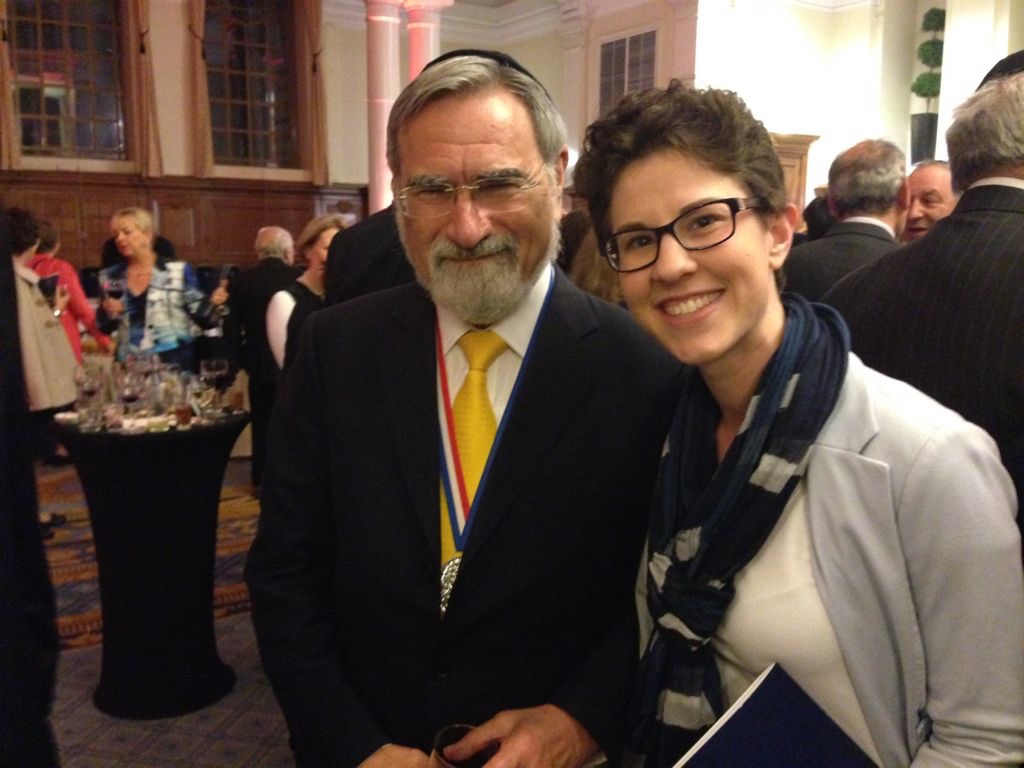
Recently I have been reflecting on a particular chapter in the last book Rabbi Lord Jonathan Sacks published just before his death. The book is titled Morality: Restoring the Common Good in Divided Times and the chapter that I have in mind is titled “Victimhood.”

Rabbi Sacks opens the chapter with a discussion of Yisrael Kristal, a Holocaust survivor who lived to be 113.

During the Holocaust, Yisrael’s wife and children were murdered. And, after years in ghettos and concentration camps, he weighed just 82 pounds.

We learn that Yisrael remained a religious Jew throughout his life. He married another survivor with whom he had children and they settled in Haifa and opened a business selling sweets and chocolates as he had done in Poland.

Rabbi Sacks goes on to compare Yisrael Kristal to Abraham insofar as Yisrael was able to integrate into his life completely the transformative idea: “To survive tragedy and a trauma, first build the future. Only then, remember the past.”

“There are real victims,” Rabbi Sacks affirms. “And they deserve our empathy, sympathy, and compassion. But there is a difference between being a victim and defining yourself as one. The first is about what happened to you. The second is about how you define who and what you are. The most powerful lesson I learned from these people I have come to know, people who are victims by any measure, is that, with colossal willpower, they refused to define themselves as such.”

Continue reading

This Is What Indigenous-Catholic Reconciliation Looks Like

The other day, my friend Ada and I were discussing the discovery of Indigenous children’s undocumented remains outside of the former residential school in Kamloops.

Ada is passionate about the Arctic and through her studies, research, and work is involved in cooperating with Inuit in the north with sensitivity, respect, and mutuality.

I could tell the news had shaken her and so I asked whether she had ever been to a First Nations cemetery.

“Yes, twice,” she said.

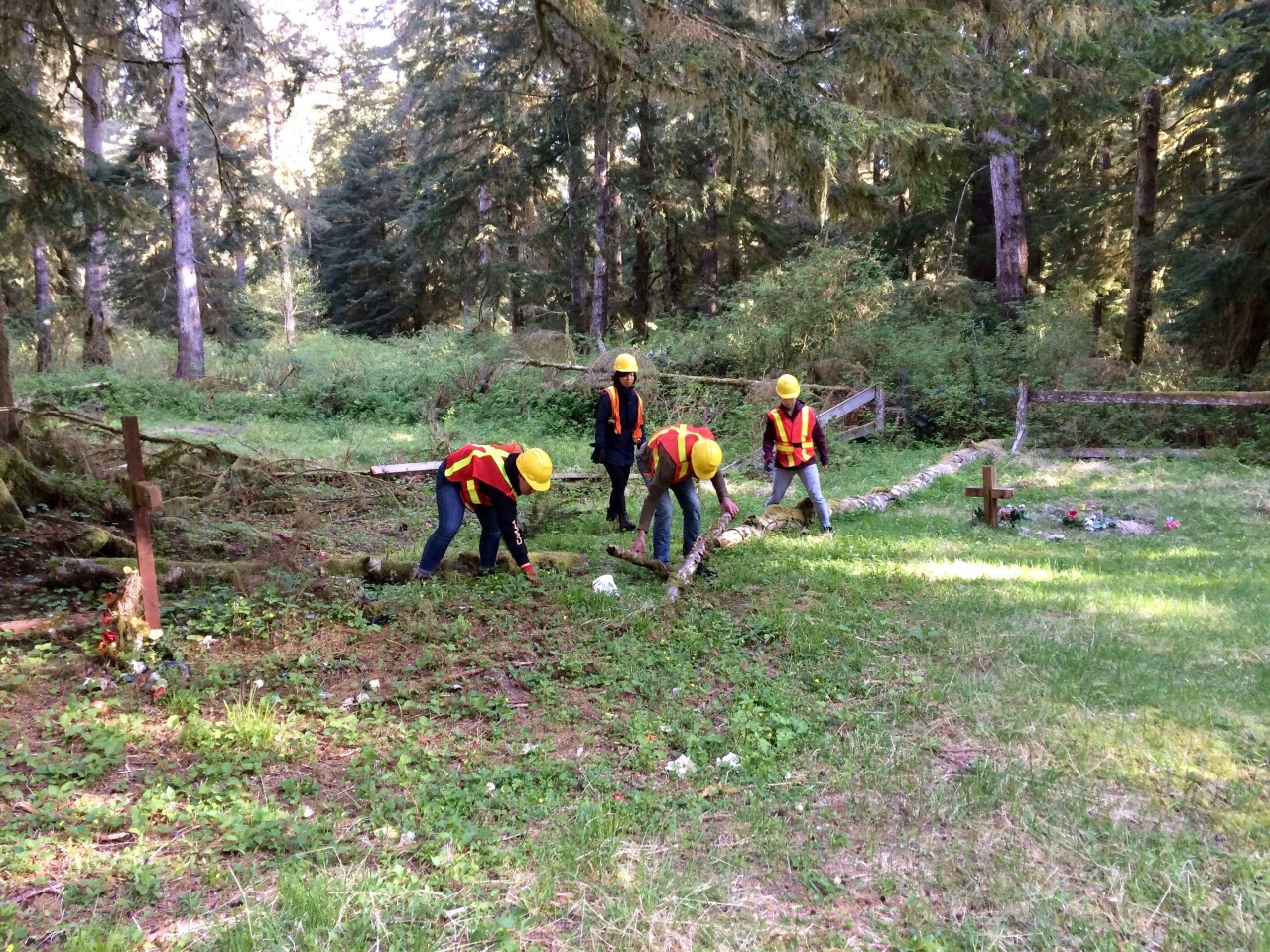
It was 2018 and Ada had just completed her undergraduate degree at the University of Victoria. As a member of the Catholic Students’ Association, she joined four other students, led by university chaplain, former Anglican-turned-Catholic priest, Fr. Dean Henderson, on a cultural mission exchange to a First Nations reserve in British Columbia.

Continue reading

Thou shalt not kill a book

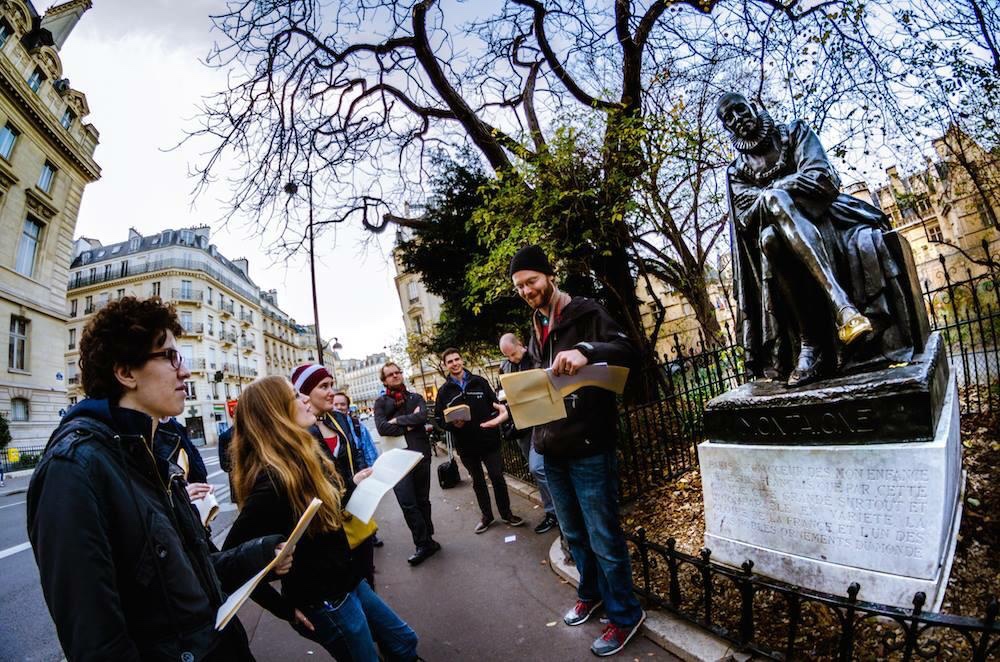
This evening I’m thinking about these passages from Areopagitica, John Milton’s defense of freedom of speech against the restrictions of his day:

[…] for books are not absolutely dead things, but do contain a potency of life in them to be as active as that soul was whose progeny they are; nay, they do preserve as in a vial the purest efficacy and extraction of that living intellect that bred them. I know they are as lively, and as vigorously productive, as those fabulous dragon’s teeth: and being sown up and down, may chance to spring up armed men. And yet, on the other hand, unless wariness be used, as good almost kill a man as kill a good book: who kills a man kills a reasonable creature, God’s image; but he who destroys a good book, kills reason itself, kills the image of God, as it were, in the eye.

[…]

We should be wary, therefore, what persecution we raise against the living labours of public men, how we spill that seasoned life of man preserved and stored up in books; since we see a kind of homicide may be thus committed, sometimes a martyrdom; and if it extend to the whole impression, a kind of massacre, whereof the execution ends not in the slaying of an elemental life, but strikes at that ethereal and fifth essence, the breath of reason itself; slays an immortality rather than a life.

Why are these excerpts coming back to me tonight?

Three years ago on this date, I was attending an event hosted by the Montreal Press Club with keynote speaker Dr. Jordan Peterson to honour the inaugural “Freedom Award” recipient Raif Badawi.

Continue reading

Does Tragedy Confer Dignity?

Today marks the 11th anniversary of the 2010 plane crash in which 96 people, including Poland’s then president Lech Kaczyński and his wife Maria, died.

They were en route to commemorate the 1940 Katyn Forest Massacre in which more than 20,000 Poles had been murdered by Soviets.

Those on the flight composed an official delegation and so many of the other crash victims were political, church, and military leaders in Poland.

I still remember a religious sister guiding me toward a monument commemorating victims of the crash in the Lublin cemetery. She whispered, “Some do not refer to this as the Smolensk disaster but rather as Katyn the Second.”

Continue reading

Something to offer

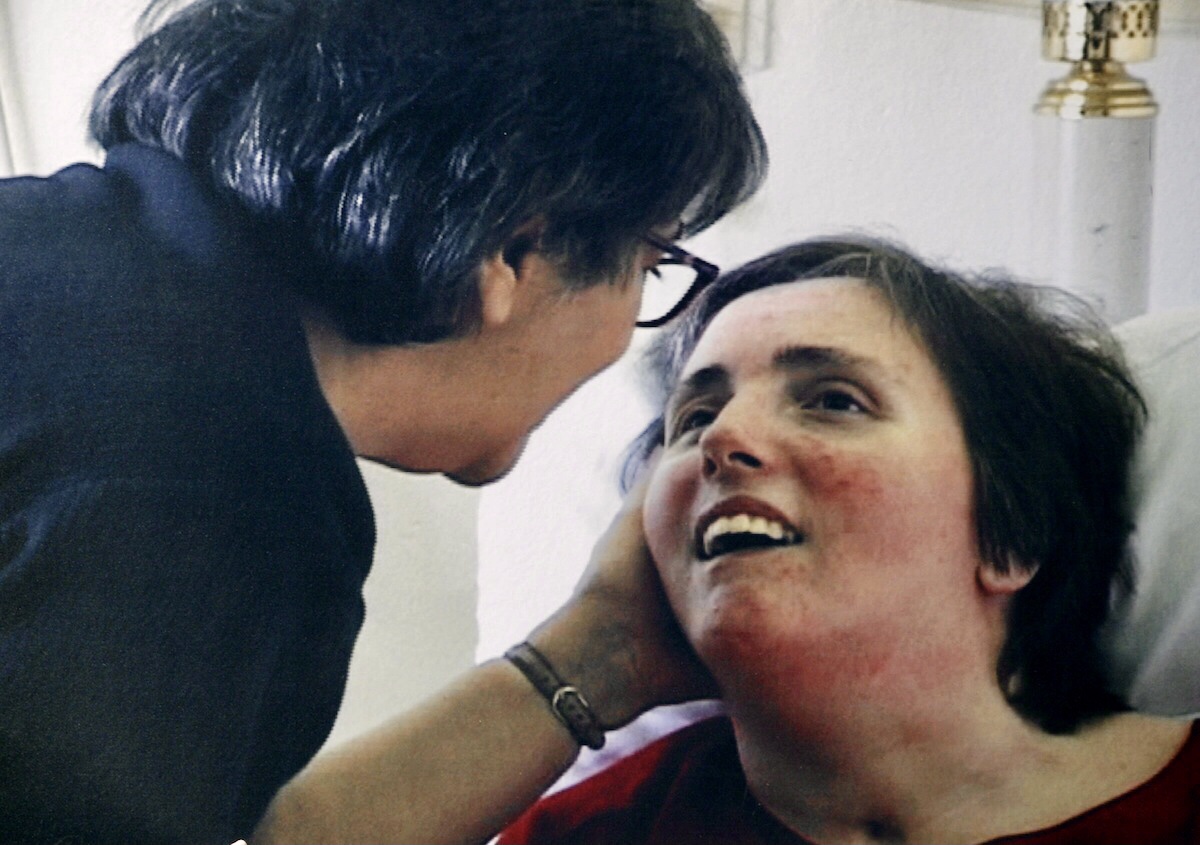
Sixteen years ago, Terri Schiavo died.

I remember that when she was in the news, I heard the term “vegetative state” for the first time. It immediately struck me as a completely inappropriate term for any person since it explicitly dehumanizes someone by applying an incorrect analogy. Initially the adjective meant, “endowed with the power of growth” but it has come to denote exactly the opposite in public bioethics – that a person is incapable of any significant growth or development. We do not tolerate those who would dehumanize others by calling them cockroaches, so we ought not tolerate the dehumanizing language that refers to persons as “vegetables.”

When I think about Terri Schiavo, I think especially about the impact that her life and death had on my friend Taylor Hyatt. She wrote this great piece several years ago titled, “13 days that changed my life: Remembering Terri Schiavo.”

In the piece, Taylor reflects on how Terri’s story captivated her when she was in Grade 7.

She wrote:

Continue reading

The Task Report in Death

This evening I’ve been reading Tomáš Halík’s book, I Want You To Be: On the God of Love in which the thirteenth chapter is titled, “Stronger than Death.”

In this chapter, the Czech priest, philosopher, and Templeton Prize laureate discusses how, “in order to perceive death as a gift, one must first deeply experience life as a gift.”

Gratitude is the appropriate response to a gift but, importantly, life is not only a gift but also a responsibility. Halik, like Abraham Joshua Heschel, speaks of life as an assignment:

Death is not a mere returning of the gift of life. Only loans are returned, and to return a gift is always regarded as an insult to the donor. The entrance ticket to life (think of the conversation between Alyosha and Ivan Karamazov) is not returnable. Life is not just a gift; it is also an assignment. At the moment of death, the handing on of the life that was given to us as an opportunity and entrusted to us as a task is—in religion terms—a sort of completed task report, the hour of truth about the extent to which we have fulfilled or squandered the opportunity we were given. Aversion to that religious concept of death is possibly only assisted by arguments from the arsenal of materialistically interpreted science, although in fact it is more likely based on the anxiety aroused by the need to render an account to a Judge who cannot be bribed or influenced. Compared to that the atheist view that everything comes to an end at death is a comforting dose of opium!

How often do we consider giving God an inventory about how we have spent our lifetime?

To be accountable for our days is a basis for man’s proper dignity.

As Antoine de Saint-Exupéry put it, “To be a man is, precisely, to be responsible.”

And responsibility is not only a matter of what we do but, most importantly, of who we become through the moral footprint of our deeds in this world.

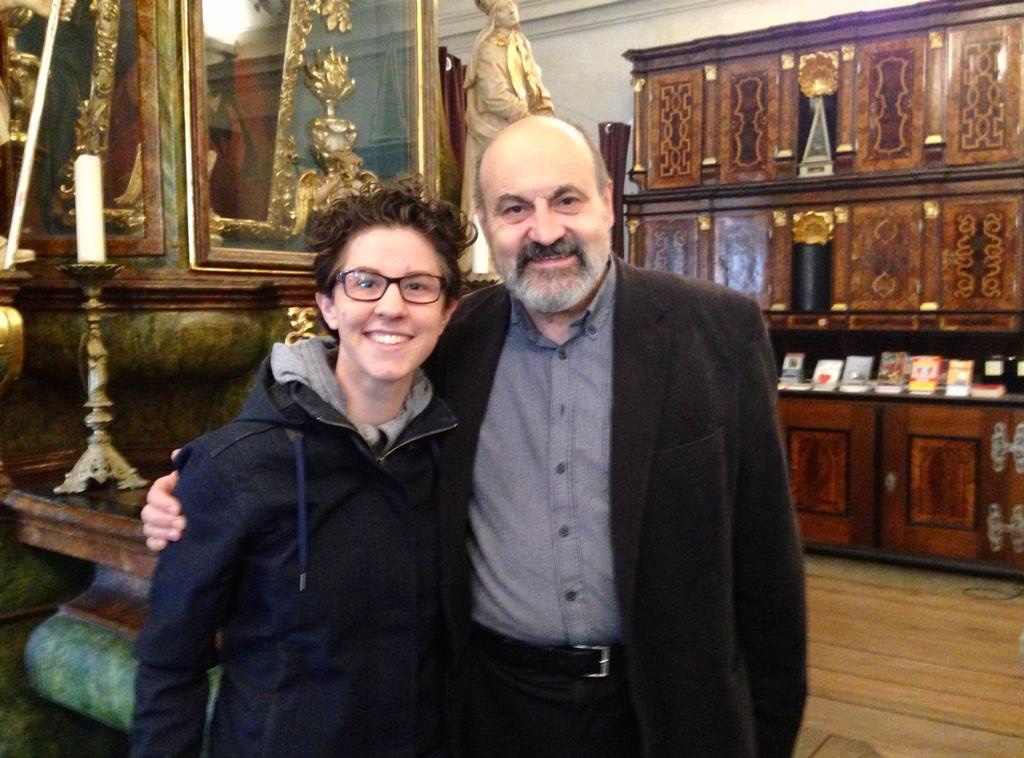
Photo: With Fr. Tomáš Halík in Prague in April 2016

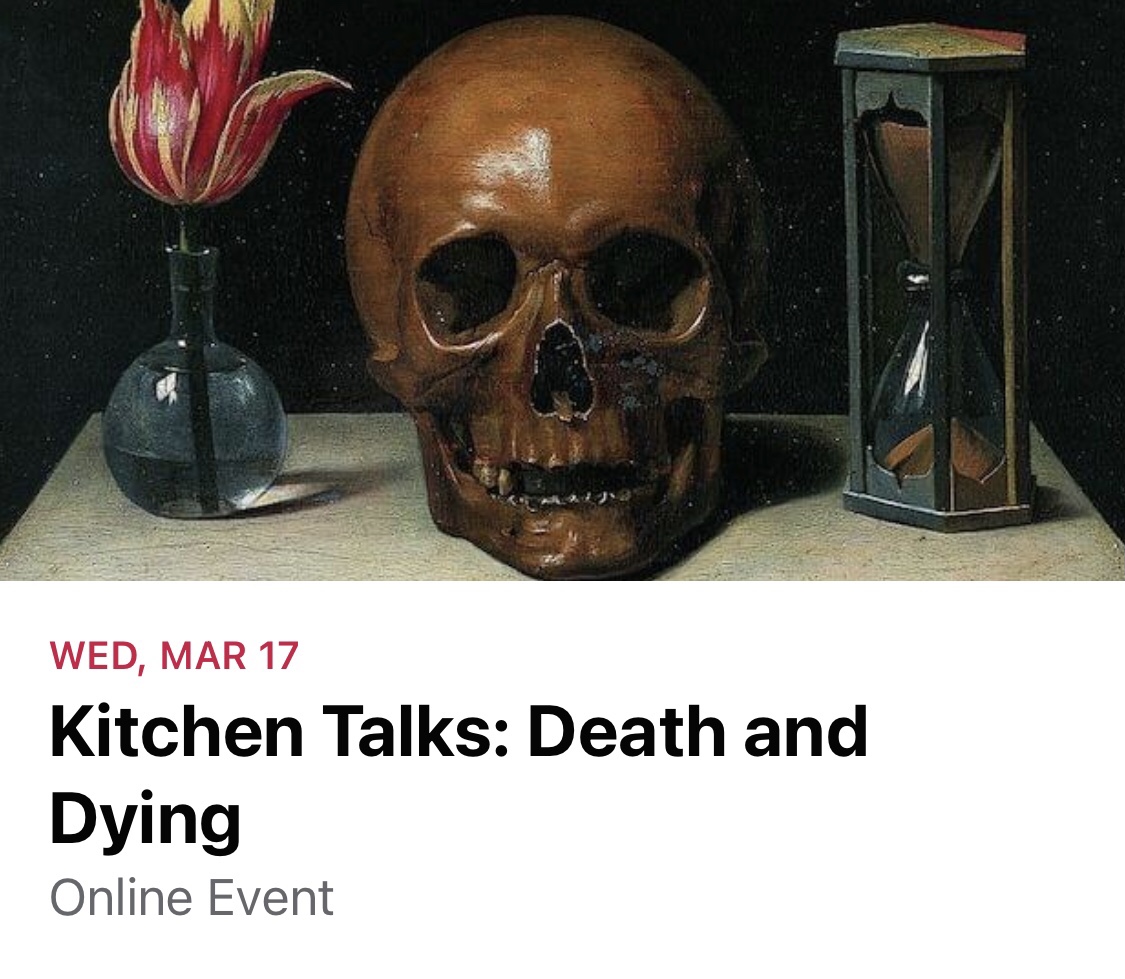
Kitchen Talks: Death & Dying

This evening, a friend of mine named Josh Nadeau hosted a “Kitchen Talks” event on death and dying and so, naturally, I had to attend.

Josh describes the broader initiative as follows:

Kitchen Talks is a series of events where people from different walks of life gather to discuss controversial topics. It was dreamed up in Saint Petersburg, Russia, where ‘kitchen talk’ refers to the conversations that, back in the Soviet Union, were too contentious to be had outside the home.

A generation ago, the kitchen was a safe space to discuss history, politics, sex, religion and everything else under the sun. We hope that our own “kitchen” provides an opportunity, and a safe space, to engage with the people and the ideas we don’t always encounter in our everyday lives. We strive not only to speak, but to facilitate an encounter that respects the fact that we all have different life experiences and come at important questions from different angles.

Our meetings involve introductions, discussions, large-group exercises, small group work, anonymous activities and more. We encourage all participants to join the conversation, but understand if some decide to listen more than to share. Our facilitators come with a prepared set of discussion questions and exercises, but often adjust their plans depending on the group and what participants are interested in discussing that day.

I was struck by Josh’s ability to offer compelling prompts to the diverse participants he convened. Everyone certainly diverged in terms of viewpoints, however it was a group that self-selected on the basis of having a willingness to listen respectfully to others and to affirm what Rabbi Jonathan Sacks called “the dignity of difference.”

Continue reading