I still remember my utter perplexity at a so-called professor of Genocide Studies at a Canadian university having accused me of “voyeurism” for having travelled to Germany, Poland, and Rwanda on genocide study trips.
Now, I can see that such a bizarre accusation might stem from failing to see the way in which studying genocide properly can actually constitute an education in moral sense. By learning about perpetrators and meeting with rescuers and survivors, my friends and I with whom I studied and travelled encountered the moral drama of human action and responsibility in persons and deeds, not in mere systems or abstractions.
Poland
Networking in a cemetery
Almost everyone has been to cocktail receptions and networking events.
Given my interest in visiting cemeteries, it just occurred to me to contemplate networking with the dead. There is no exchange of business cards, but there can be an exchange nonetheless. A thoughtful walk through a cemetery has sometimes been as helpful as any career advice.
Networking with the dead, it would seem, demands getting out of your comfort zone, going over to the tombs with the most personality, but also seeking out the ones that are neglected or discreet. It involves being curious and interested. It involves not being intimidated to talk to people who are older than you, wiser than you.
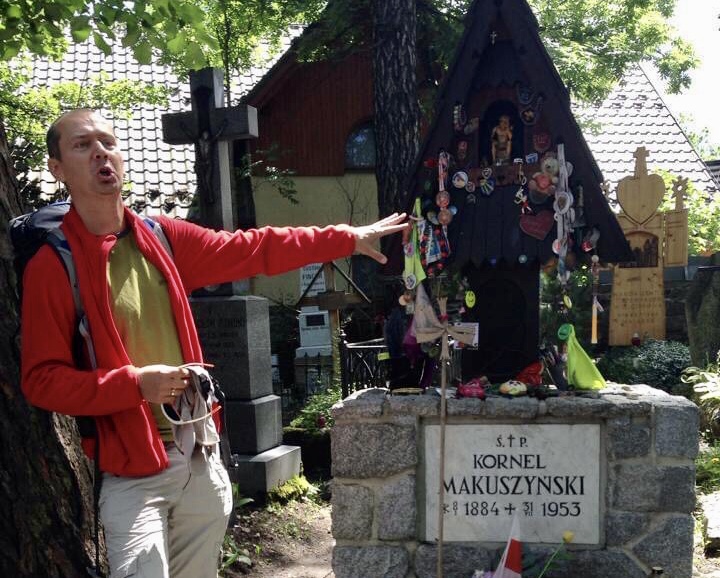
Sometimes, on special occasions, I have visited cemeteries on guided tours which means that I have had someone else making introductions for me to the dead.
This has been most helpful for breaking the ice, especially when I do not know whether or not we have very much in common.
Not Wholly Gone
This Father’s Day, I have noticed many people acknowledging the ongoing influence of fathers, grandfathers, and other father figures in their lives – even after these men have died.
It is interesting to consider the ways in which, through memory and legacy, a person can continue to be a part of a family even after death.
This evening, my mother shared an anecdote with me to this effect about my paternal grandfather.
My paternal grandfather was Polish and he died in 2015.
He knew how to suffer
Today is the anniversary of the death of a Polish poet named Cyprian Kamil Norwid.
Unfortunately, Janusz Korczak was right when he said, “The world is deaf to the names of many great Poles.”
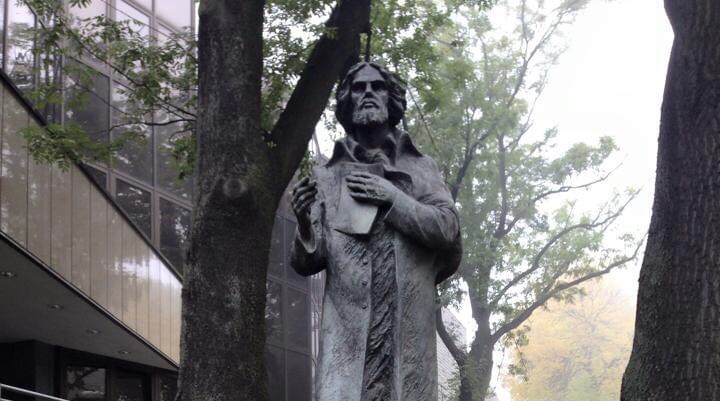
I first learned about Norwid through reading texts and addresses by John Paul II since the pope quoted him often. Then, when I moved to Lublin, I found more traces of Norwid – from schools bearing his name, to collections of his works in bookstores, to the statue of him on the university campus.
It was during an address in 2001 that Pope John Paul II told representatives of the Institute of Polish National Patrimony: “I honestly wanted to offer my personal debt of gratitude to the poet, with whose work I have been bound by a deep spiritual kinship since my secondary school years.”
He went on to acknowledge that, “Norwid’s poetry was born from the travail of his difficult life.”
A Patient’s Fight to Be a Protagonist
Today is the 40th anniversary of the attempted assassination of Pope John Paul II.
Cardinal Stanislaw Dziwisz, the pope’s longtime secretary, was in Rome today marking the occasion and remembering cradling the pope as he felt “his body slip as if paralyzed and fall into my arms.”
The cardinal also reflected, “Today, 40 years after that event, and 16 years after his death, I think with fear of what it would have been like if we had lost him in St. Peter’s Square back then. How poor and different the world and our homeland, Poland, would have been without his witness of faith and doctrine, without his indications and his warnings in the face of the dangers and turmoil that can threaten us in today’s world.”
To the Tomb of a Teacher
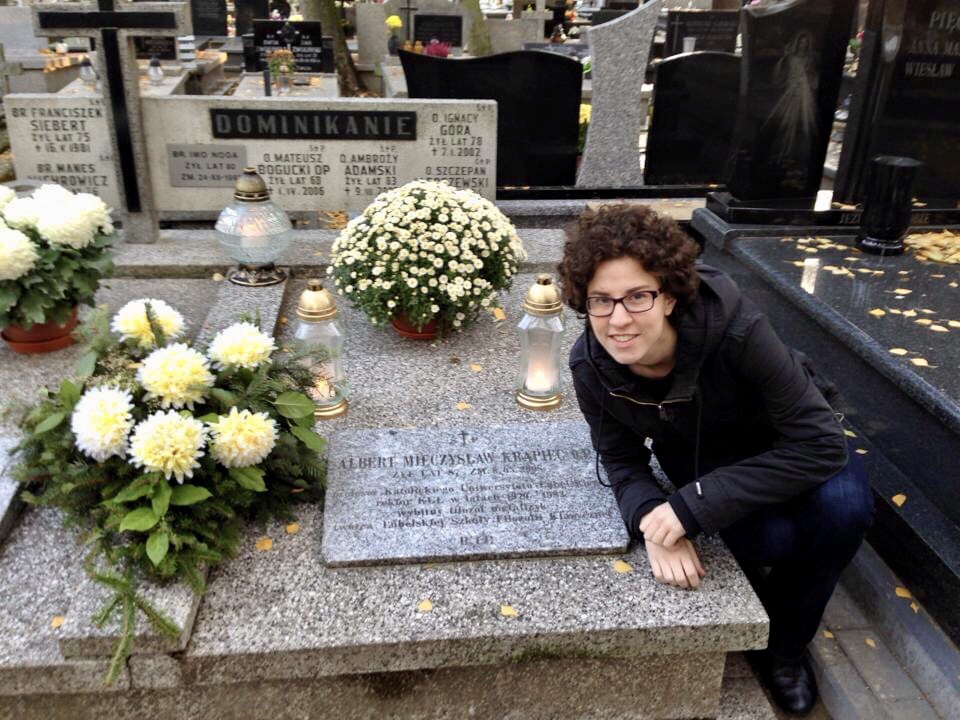
On this date in 2008, Mieczysław Albert Maria Krąpiec OP, passed away.
I learned about this man as I gradually also learned how to pronounce his name.
This Polish priest-professor was a former rector of my university and is considered the founder of the Lublin Philosophical School – the most notable proponent of whom became Karol Wojtyła/Pope John Paul II.
It was in my very first week of classes that a professor of mine named Fr. Maryiniarczk spoke in an earnest yet convivial manner about this tradition saying, “The Lublin Philosophical School prepared, amid a very harsh time, an understanding of the human person and of reality. We aim to continue in this tradition of realistic philosophy. Metaphysics is concerned with discovering the content of being, not a conception of being and not merely a definition of concepts. We do not try to grasp a theory of man, but rather to understand man himself. This is part of what is meant by the approach called existential Thomism – an integration of truth and experience in our lives.”
Continue readingArt guarded with your life
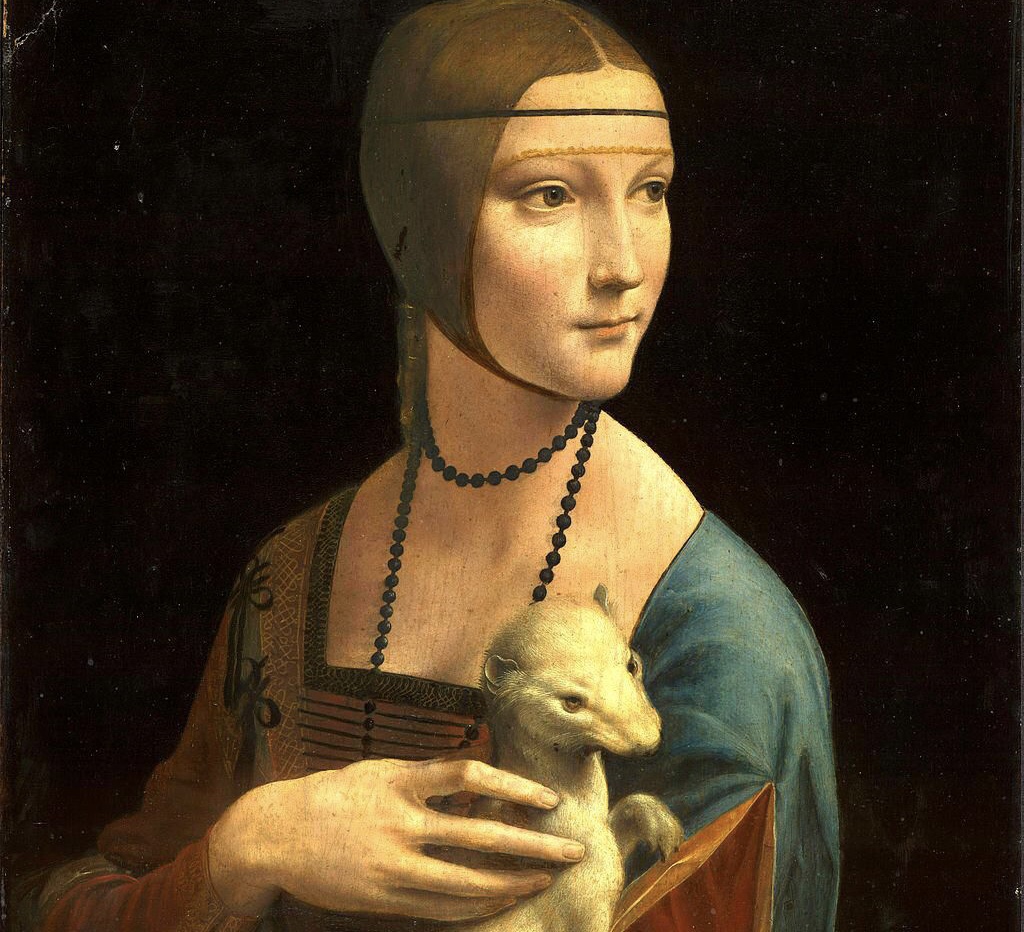
Leonardo da Vinci died on this date in 1519 and so today I am recalling the occasions on which I have had the opportunity to view some of his paintings.
One experience that especially stands out was when I saw the Lady with an Ermine painting at Wawel Castle and Cathedral in Poland. There was a long line to see this painting and only a few museumgoers at a time could enter the room in which the painting was exclusively displayed. Once my friends and I finally crossed the threshold and entered the room containing the painting, we noticed the armed guards attending to it.
This was several years ago when Islamist terrorists were wreaking havoc and attacks were a high threat in Europe. I thought about the armed guards and how it was that they were defending this artwork with their lives, particularly when there was a real threat of terrorism in key sites epitomizing our civilization.
At the End of Life, the Artist is Necessary
According to the Cambridge Dictionary, the word “clinical” may denote “expressing no emotion or feelings” or “showing no character and warmth.” The sentence that is given to illustrate its meaning is this: “We were going to paint our kitchen white, but we decided that would look too clinical.”
Do you ever wonder why hospitals and doctor’s offices are so drab? Why does there seem to be so little attention paid to aesthetics? What impact does this have on doctors, nurses, patients, and visitors?
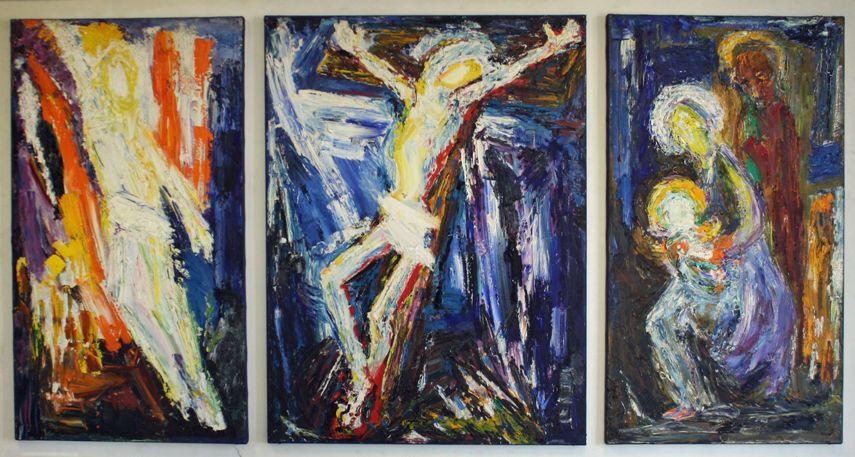
One day, Cecily Saunders, the British pioneer of modern-day hospice care, was “magnetically drawn” to an oil painting in a gallery window. She was so taken by it that she parked her car and entered the gallery moments before they were closing on the last day of the exhibition. Cecily Saunders moved eagerly from painting to painting. The blue Crucifixion had been the piece to catch her eye from the window, but the piece she impulsively chose to purchase was of ‘Christ Calming the Waters.’
The following day, she wrote the following to the artist, Marian Bohusz-Szyszko:
Commemoration for All Ages
Today marks the 81st anniversary of the Katyn Forest Massacre and is the designated day of remembrance for the victims.
I don’t remember really learning about this event until I moved to Poland.
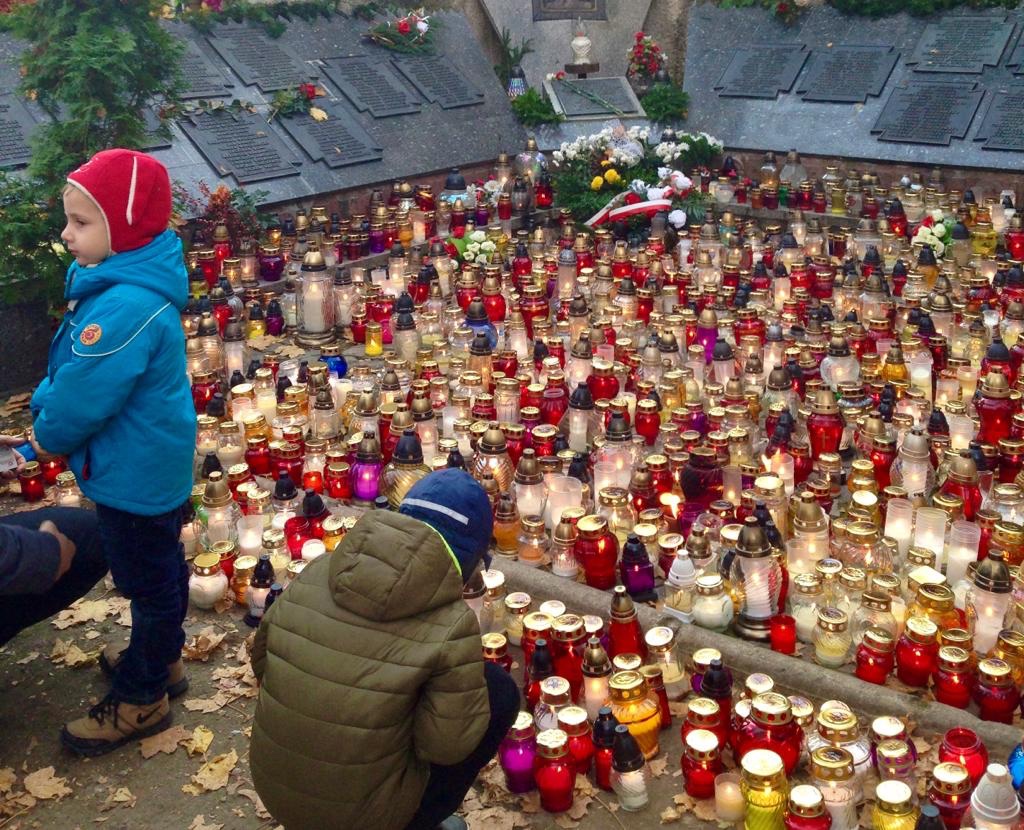
But once I was in Poland, I saw lots of monuments and memorials commemorating the more than 20,000 Poles who were murdered by Soviets in 1940. Since many of the mass graves were discovered in the Katyn Forest, this became the name by which the massacre came to be known.
One of the prominent Katyn memorials I saw was this one at the Lipowa Cemetery in Lublin, Poland.
Continue readingDoes Tragedy Confer Dignity?
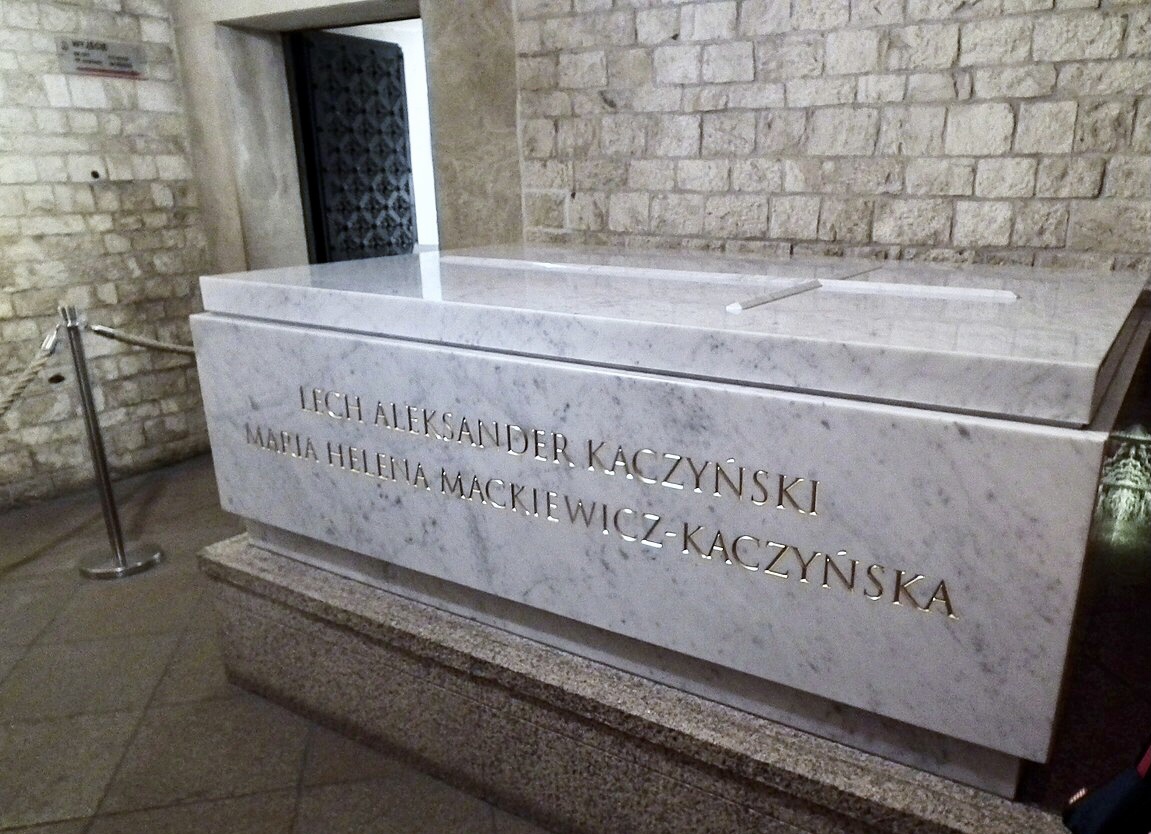
Today marks the 11th anniversary of the 2010 plane crash in which 96 people, including Poland’s then president Lech Kaczyński and his wife Maria, died.
They were en route to commemorate the 1940 Katyn Forest Massacre in which more than 20,000 Poles had been murdered by Soviets.
Those on the flight composed an official delegation and so many of the other crash victims were political, church, and military leaders in Poland.
I still remember a religious sister guiding me toward a monument commemorating victims of the crash in the Lublin cemetery. She whispered, “Some do not refer to this as the Smolensk disaster but rather as Katyn the Second.”